

[비즈한국] Hospitals that had suspended new recruitment have begun hiring new nurses one after another. According to the medical sector, excluding Severance Hospital, the remaining "Big 5" hospitals have either posted job openings this month or are in the final stages of adjusting their hiring scale. Nurses who were referred to as "Waiting-gales" due to being on standby for nearly a year are now being deployed to the field. However, there are still a significant number of nursing staff awaiting placement, and with persistent backlash from the medical community regarding Physician Assistant (PA) nurses, difficulties in the field are still anticipated.
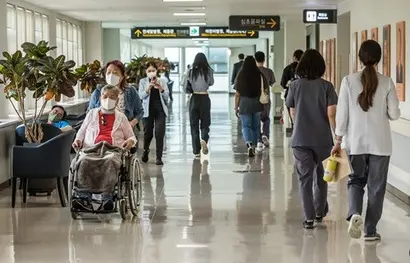
Big 5 begin hiring "triple-digit" numbers of new nurses
The recruitment of new nurses, which had been halted due to financial difficulties following the mass resignation of medical residents in February, has resumed. According to the medical industry on the 27th, Seoul National University Hospital began accepting applications for new nurses on the 20th. The hiring target is 150 people, and eligibility is limited to those holding a nursing license or those scheduled to graduate and obtain a nursing license by February 2025. Samsung Medical Center and Asan Medical Center have also posted job openings in the triple digits. Seoul St. Mary's Hospital is in the final stages of adjusting its recruitment numbers. Severance Hospital has not yet confirmed whether it will hire new nurses.
In addition to the Big 5, Konkuk University Medical Center, Korea University Guro Hospital, Korea University Anam Hospital, and Ewha Womans University Mokdong Hospital are also preparing for second-half recruitment. According to the Korean Nurses Association (KNA), these hospitals will conduct new nurse recruitment over three weeks starting from the third week of November. Among tertiary general hospitals in the metropolitan area, only Kangbuk Samsung Hospital and Chung-Ang University Hospital held recruitment in the first half of the year. The KNA stated, "Medical institutions that haven't finalized their schedules are currently reviewing whether to hire, and we are monitoring the situation in real-time to ensure they can proceed with recruitment within this year if possible."
Some hospitals are also issuing assignments to nurses who have been on standby. Seoul National University Hospital, Samsung Medical Center, and Seoul National University Bundang Hospital are sequentially deploying new nurses hired last year to the field. The number of "Waiting-gales" (a portmanteau of "waiting" and "Nightingale"), who remain without an assignment for nearly a year after being hired, has increased significantly this year. According to an analysis of data from the National Health Insurance Service and the Health Insurance Review and Assessment Service by the KNA, the number of employed nurses in tertiary general hospitals increased by an average of 1,334 in the second quarter compared to the first quarter between 2019 and 2023, but this year, it decreased by 194. General hospitals also saw an increase of 2,046, which is lower than the five-year average (2,252).
Did the passage of the Nursing Act have an impact? The medical community remains in opposition
The financial difficulties of hospitals due to the medical service gap continue. According to data submitted by the National Health Insurance Service to Rep. Han Ji-ah of the People Power Party, a member of the National Assembly's Health and Welfare Committee, the total medical expenses for all medical institutions—including tertiary general hospitals, general hospitals, hospitals, and clinics—from February to June amounted to approximately 28.59 trillion KRW, a 4.7% decrease compared to the same period last year. The decline was most pronounced in tertiary general hospitals, which rely heavily on medical resident staff. During this period, medical expenses for tertiary general hospitals were 6.87 trillion KRW, down 17.5% from last year (8.32 trillion KRW). Medical expenses for general hospitals decreased by 3.9% to 7.26 trillion KRW.

Under these circumstances, analysts suggest that hospitals have begun hiring new nurses because the return of medical residents remains increasingly uncertain, and the passage of the Nursing Act has created a need for PA nursing staff. A hospital official, Mr. A, explained, "There were voices saying that new personnel were needed because some existing staff transitioned into PA nurse roles." It also appears that the government's plan to support labor costs for new hires of doctors and nurses at emergency medical centers, in addition to advance payments for health insurance benefits, has had an impact. However, there is significant concern within the nursing community, given that there are still many staff waiting for assignments and it remains unclear how many hospitals will participate in the "concurrent interview system," which requires final interviews to be held during the same period.
Meanwhile, the medical community continues to protest following the passage of the Nursing Act, arguing that "nurses cannot fill the vacancies left by medical residents." Immediately after the bill passed, Park Dan, head of the emergency committee of the Korean Intern Resident Association, wrote on social media, "The Nursing Act will be another disaster that distorts the medical system of the Republic of Korea. Ultimately, only a few high-ranking officials, the Nurses Association, and hospital directors stand to benefit." Following the promulgation of the law last week, Park Yong-eon, vice president of the Korean Medical Association, caused controversy by posting a KNA press release titled "KNA Welcomes Promulgation of Nursing Act" with a comment saying, "Stop acting out. If you wanted to do that, you should have gone to medical school. You act like you're the player when you're just a chess piece. I'll omit the subject and object. How arrogant."