

[비즈한국] The conflict between food delivery apps and small business owners is intensifying. The Korea Franchise Association has reported Baemin (Baedal Minjok) to the Fair Trade Commission (FTC), citing excessive commission exploitation, while a movement to boycott and delete delivery apps is spreading among small business owners. There is also growing momentum for calls to regulate these delivery platforms.
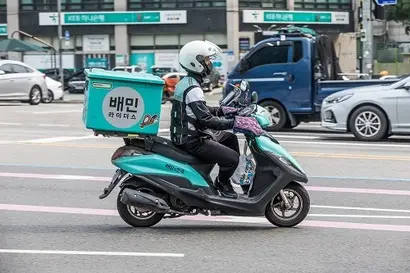
Franchise Association Reports Baemin to FTC… "Discussing Reporting Coupang Eats as Well"
The Korea Franchise Association filed a report with the Fair Trade Commission on the 27th against Woowa Brothers, the company that operates Baedal Minjok. The association pointed out, "Despite no change in the costs required to provide services, Baemin has significantly raised its delivery app usage fees twice without any justifiable reason," adding, "Delivery apps are promising free delivery to consumers while shifting the cost burden onto restaurant owners." They further stated, "We reported Baemin to the FTC first because it is the market leader. We plan to discuss reporting Coupang Eats in the future."
The frustration of small business owners using these delivery apps has also reached a boiling point. Recently, associations of small business owners in Gwangju, Jeonnam, Ulsan, and Gimhae have declared a boycott of the Baemin app. Arguing that the delivery apps' exploitative commission rates threaten their very survival, they are encouraging consumers to use public delivery apps instead of private ones. The franchise industry, concerned about deteriorating profitability for member stores due to these commissions, has introduced a "dual pricing system," further fueling the controversy. McDonald’s, KFC, and Popeyes have adopted this system—where delivery app prices are higher than in-store prices—and Lotte GRS (Lotteria) also raised its delivery menu prices starting on the 24th. A franchise industry official explained, "The introduction of a dual pricing system is inevitable to ensure the profitability of franchises. Since consumers are very resistant to overall price hikes, we have no choice but to adjust delivery prices at the very least."
As the trend of adopting dual pricing spreads, criticism that delivery apps are leading the surge in dining-out costs is growing louder. Conversely, the delivery app industry is busy shifting the blame. On the 24th, Coupang Eats released a statement pointing to Baemin's behavior, saying, "Coupang Eats covers the full cost of customer delivery fees and imposes no burden on business owners," and that "the 'dual pricing system' is caused by certain delivery platforms shifting the costs of free delivery to restaurant owners and raising their commissions." Baemin immediately retorted, calling these "distorted claims" and stating, "If these claims persist, we will actively consider legal action."

Small Businesses are Suffering Daily, But Is a Commission Cap Feasible?
The controversy over delivery app commissions is nothing new. Complaints from small business owners about these fees began as early as 2014, a decade ago. The issue of high commission rates has been a staple of parliamentary audits, and every time the controversy escalated, delivery app companies would attempt to quell it by temporarily introducing policies to lower rates.
Recently, the delivery industry has found itself at the center of the storm once again as it competes over free delivery. Last March, Coupang Eats was the first in the industry to declare free delivery. It provided the radical benefit of free delivery to Coupang's paid members, which allowed it to overtake Yogiyo and rise to second place in the industry. Subsequently, Yogiyo launched its "Yogi-Pass X" subscription service to provide free delivery, and earlier this month, Baedal Minjok also launched its paid membership "Baemin Club" and began offering free delivery to members.
However, the free delivery competition among the top three delivery apps has led to commission hikes and an increased burden on small business owners. Kim Joo-ho, head of the People’s Livelihood Economic Team at the People’s Solidarity for Participatory Democracy, pointed out, "Although the current brokerage commission for delivery apps is 9.8%, additional advertising fees and payment processing fees are added on top of that. This results in businesses paying anywhere from 10% to as much as 30% of the food price in fees," adding, "There are cases where the fees paid to the delivery platform exceed the net profit earned by the restaurant owner. We must examine whether it is appropriate for the brokerage platform to take more profit than the product producer (the restaurant owner)."
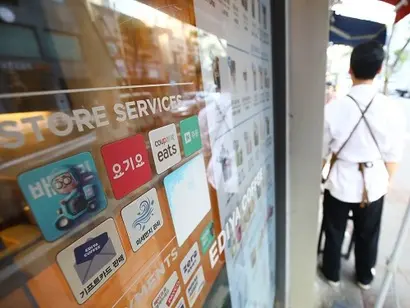
Calls for the establishment of delivery app regulations are also growing. Kim Joo-ho said, "Bills that require prior consultation with member stores when changing key contract terms or bills related to commission caps have been proposed in the National Assembly. I believe the government and the industry need to discuss these sufficiently and move toward legislation." An industry source noted, "Voices calling for platform regulation are getting louder. Previously, such bills were proposed but ultimately fizzled out. However, in the current atmosphere, the government cannot just sit on the sidelines."
Currently, delivery platforms are subject to self-regulation. The government's policy is to allow the operation of online platforms without artificial intervention regarding commission rates. However, as the necessity for regulation grows, the FTC is pushing for an amendment to the Fair Trade Act. The FTC originally intended to introduce an "ex-ante designation" system—which would designate and regulate giant platforms with significant market power in advance—but decided to adopt an "ex-post estimation" system due to industry opposition.
The ex-post estimation system is a method where a platform is presumed to be dominant if it exceeds certain criteria during an investigation into anti-competitive behavior, thereby increasing the level of sanctions. It faces criticism because the status of a platform's monopoly must be determined separately for every violation, preventing swift sanctions.
In particular, there is an issue where major companies in the delivery industry, such as Baemin and Coupang, would not be covered under the ex-post estimation criteria. The FTC’s criteria for ex-post estimation are: 1) a single company with a market share of 60% or more and 10 million or more users, or 2) three or fewer companies with a combined market share of 85% or more, with each company having 20 million or more users. Even if these criteria are met, platforms with annual revenue of 4 trillion won or less are excluded from regulation. Currently, neither Coupang nor Baemin meets these specific thresholds.
There are also suggestions within the industry that the criteria for regulated subjects need to be supplemented. Lee Eun-hee, a professor of Consumer Science at Inha University, pointed out, "It is regrettable that while the FTC classifies industries when determining monopoly status, it did not distinguish by industry for the ex-post estimation system. Rather than relying solely on simple revenue figures, there is a need to distinguish by sector to more accurately identify market-monopolizing firms."
She added, "Countries like the U.S. have commission rate caps, but there are no such regulations in Korea. It seems necessary to at least introduce regulations on commission increase rates first. Recently, Baemin raised its brokerage commission from 6.8% to 9.8%, a 44% increase, and Coupang raised its membership costs by about 58%, did they not? The rates of increase are astronomical. If a commission cap is difficult to implement immediately, we should at least introduce regulations on the increase rates of platform commissions and pricing plans."