

[비즈한국] It has been confirmed that the semi-basement housing acquisition program, launched by the Seoul Metropolitan Government in 2022 to eliminate flood-prone semi-basement dwellings, has been producing sluggish results for two consecutive years. To date, only about 600 units have been purchased through the Seoul Housing & Communities Corporation (SH), a figure that falls far short of the city's self-imposed targets. There are approximately 200,000 households living in semi-basements in Seoul, accounting for 61% of all semi-basement households in South Korea.
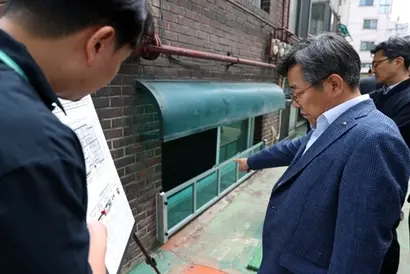
According to data submitted by SH to the office of Representative Yoon Jong-koon of the National Assembly's Land, Infrastructure and Transport Committee, SH has purchased 619 semi-basement units in Seoul since the program began in 2022 (as of the end of August). Of these, 514 were existing semi-basement units, and 105 were acquired through agreements to demolish the existing structures and build new ones. Annual acquisition performance is as follows: 302 units in 2023 (200 existing, 102 new construction agreements) and 317 units this year (314 existing, 3 new construction agreements).
SH's acquisition performance falls well below its own internal targets. Last year, SH set a goal to purchase a total of 5,250 semi-basement-included units (including upper floors), but actual purchases reached only 1,916 units (36% of the target). This year's target was set at 2,351 units—2,899 units lower than last year—but as of the end of August, only 734 units (31%) had been purchased. Most of the semi-basement properties SH acquires are multi-household houses where the basement and upper floors are not separated by title; SH manages its acquisition goals and results including these upper floors.
SH’s acquisition performance is also considered minimal when considering the number of households living in semi-basements within Seoul. According to the 2020 Population and Housing Census by Statistics Korea, there were 201,000 households living in semi-basement (basement) housing in Seoul, representing 61% of the 327,000 such households nationwide. Seoul’s proportion of semi-basement dwellers is 5.8%, which is significantly higher than other metropolitan governments such as Incheon (2.2%) and Gyeonggi (1.9%).
The poor performance of the program is attributed to low application volumes and budget constraints. The number of applications for the purchase of existing homes by SH was low at 3,470 units last year (against a target of 3,450) and shows signs of further decline this year, with 894 applications as of the end of July (against a target of 1,639). SH is currently also managing the supply of public rental housing for low-income families, youth, and newlyweds, and is reportedly facing difficulties in securing the budget for semi-basement acquisitions. Currently, the government subsidy for acquiring a semi-basement unit is 182 million won per unit, with any amount exceeding this shared equally between the Seoul Metropolitan Government and SH.
Following the severe flooding of semi-basement homes in August 2022, the Seoul Metropolitan Government announced "Safety Measures for Households Living in Basements and Semi-Basements." The plan was to stop granting construction permits for new basement or semi-basement dwellings for residential use and to phase out existing permitted basement/semi-basement structures over a grace period of 10 to 20 years. The objective is to eliminate semi-basement dwellings, which are vulnerable to flooding and offer poor living conditions, from the city of Seoul.
In line with the city's policy to eradicate semi-basement housing, SH launched the acquisition program in November 2022. It prioritizes units that have a history of flood damage, units in districts that requested special disaster zone status in 2022, and units where at least two-thirds of the basement level is underground. The acquisition criteria were further relaxed after 2022 to significantly expand the scope. It is reported that units not demolished after acquisition are being repurposed as educational facilities, senior centers, or community spaces for local residents.
An official from SH stated, "We are in discussions with the Seoul Metropolitan Government to change the type of some volume (from existing homes to new construction agreements) and are committed to doing our best to achieve the total target units. To ease the financial burden on the city and our corporation, we have requested that the Ministry of Land, Infrastructure and Transport abolish the subsidy return system and provide full national funding for semi-basement acquisitions. Policies to promote the private-sector elimination of these homes—such as strengthening tax and policy support for private builders who demolish semi-basements and build anew—are also necessary."