

[비즈한국] Every time a ruling finds medical staff liable for damages, the medical community exerts direct and indirect pressure on patients—ranging from spreading malicious comments about patients to comparing the arrested trainee doctor who created and distributed a "medical blacklist" to an independence activist while launching fundraising campaigns for them. One patient advocacy group criticized the blacklist, asking, "How is collectively ostracizing doctors who chose to treat patients any different from open conspiracy to commit murder?" Within the patient community, there are growing calls that instead of a 'Government-Ruling-Opposition-Medical consultative body,' a 'Government-Ruling-Opposition-Patient-Medical consultative body' must be formed as the damages from the medical void continue to accumulate.
"Afraid to speak up even when suffering harm"
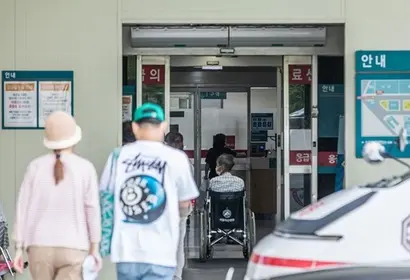
Recently, an increasing number of patients are reporting that they are afraid to voice their grievances even after suffering harm from the medical service disruption caused by the collective action of the medical community. An official from the Korea Alliance of Patients Organizations explained, "Even when the causal relationship or the damage—such as cancer recurrence or death due to surgery delays caused by the medical void—is clear, patients are unable to easily take action. In a situation where the medical community is united, even raising funds to 'make the arrested trainee doctor rich' for creating the blacklist, patients know exactly what kind of retaliation they would face if they filed criminal or civil lawsuits. Patients just endure while getting used to this situation. For cancer patients, eight months is enough time for a mid-stage cycle to pass and a round of treatment to end. There are now patients who have moved to secondary hospitals."
The patient community also notes that their difficulty in pursuing litigation is not a recent phenomenon. Patient A, a cancer patient, lamented, "Patients are in a position where they must continue receiving treatment. Since the field is limited, if you express dissatisfaction, it all gets shared around, and you can feel this reality firsthand. When you transfer to another hospital, even if you don't say anything, you hear things like 'We heard you have many complaints' during your first visit. How embarrassed would a patient be? In this atmosphere, it is not easy to obtain medical records or even raise an issue. Recently, the range of medical staff to choose from has narrowed, so I feel relieved just to be accepted."
The government is operating a damage reporting and support center to resolve inconveniences in medical use caused by the doctors' collective action and to provide legal counseling services. The center helps connect patients to other hospitals for surgery and treatment, coordinates schedules, and provides legal advice regarding worsening symptoms or delayed hospitalizations. According to data submitted to Representative Kim Yoon of the Democratic Party of Korea by the Ministry of Health and Welfare, there were a total of 877 reports received by the center from February 19 to September 6, with surgery delays being the most common at 494 cases (56.3%). This was followed by treatment disruptions (201 cases), treatment refusals (139 cases), and hospitalization delays (42 cases).
Patient A argues that restoring the broken trust between medical staff and patients must come first. A said, "I don't think it's desirable to create a situation where one has no choice but to go to court. If the situation is beyond repair for any reason, including mistakes, there needs to be an attitude of explaining why the problem occurred and apologizing. But those doctors never admit their faults. I know of one fellow patient who was diagnosed with cancer in the left lung, but the medical team operated on the right lung. Even then, the medical team refused to admit their fault until the end, so they ended up having to sue."
Number of mediation cases similar to the previous year... Patients excluded from the consultative body
The fact that the patient community struggles to choose litigation is also evident in statistics. As of last month, the Damage Reporting and Support Center provided legal counseling for 345 cases. However, the number of medical accident cases compiled by the Korea Medical Dispute Mediation and Arbitration Agency shows no significant difference compared to the previous year. According to data received from the Ministry of Health and Welfare by Representative Kim Mi-ae of the People Power Party, the average number of medical accident cases handled by the agency over the past five years is 1,986 per year in the medical field. By year, there were 2,479 in 2019, 1,936 in 2020, 1,886 in 2021, 1,782 in 2022, and 1,849 in 2023. The number counted through the first half of this year is 1,002, which is about 54.19% of the previous year's total. This is a low figure considering that many cases go through the agency before moving on to a lawsuit.
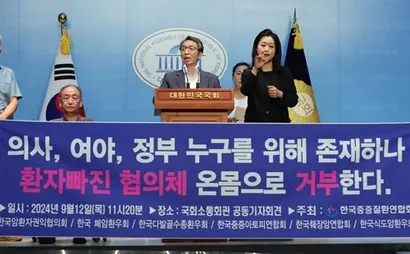
Amid this, the patient community is also being excluded from discussions on the formation of the 'Government-Ruling-Opposition-Medical consultative body,' causing backlash. The Korea Severe Disease Association stated in a press release on the 12th, "We cannot be sure how much time we have left, yet we are unable to spend even that precious time entirely caring for ourselves and our families, instead watching the progress of medical reform with anxiety. It is unacceptable for any part of the political sphere to appear as if they are trying to accommodate the unilateral demands of the medical community without asking for the opinions of patients, regardless of whether they are the ruling or opposition party." They added, "It is our turn to be heard; we must create a 'Government-Ruling-Opposition-Patient-Medical consultative body.' Even though we don't have medical licenses, there are many things invisible to doctors that are visible to patients. We are ready to provide scientific and rational proposals for various aspects of medical reform."
The Korea Cancer Patients Rights Council has also suspended its survey on cancer patient damage cases, which had been conducted twice up until June. They explained that after the survey results were released, neither the government nor the medical community made efforts to reflect them. CEO Kim Sung-joo said, "Even after we surveyed and reported the findings, the government did not try to improve the problems, and the medical community showed no sign of feeling burdened. After August, with the situation regarding when trainees would return remaining uncertain and the blacklist issue emerging, I felt that further surveys were meaningless." Regarding the operation of the Damage Reporting and Support Center, he lamented, "Administrative guidance is given by local governments to hospitals, but there are cases where patients are never informed of the situation after that guidance."