

[비즈한국] As confirmed by Bizhankook, DL E&C375500 recently won a court ruling ordering the payment of approximately 500 billion won in a lawsuit filed against the developer to settle costs incurred for the Unification Park resort condominium project in Paju, Gyeonggi Province. DL E&C signed a construction contract for the project with the developer in November 2007 and commenced work the following year. However, the company halted construction in late 2008 after the developer failed to proceed with the main subscription process following lackluster pre-subscription results. The Unification Park condominium project has remained at a 33% completion rate for 16 years.
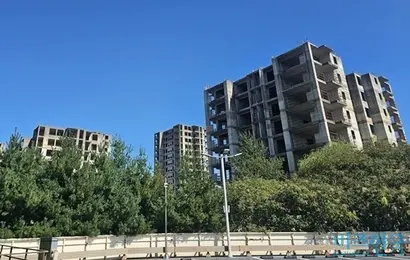
On the 10th, the Seoul Central District Court (Presiding Judge Park Jun-min) ruled that City One, the developer of the Paju Unification Park condominium project, must pay 518.4 billion won to DL E&C in a lawsuit for construction costs and other claims. The awarded claims include 61.1 billion won for completed construction work (excluding defect repairs), 352.4 billion won in subrogation claims, 100 billion won in loans, and 5 billion won in delayed damages (statutory interest). DL E&C had previously filed the lawsuit against City One in August 2020 seeking the settlement of a total of 578.1 billion won invested in the project, effectively resulting in a partial victory recognizing a significant portion of the claims.
The Paju Unification Park condominium project is a development to build new tourist accommodation facilities (1,265 units) spanning 3 basement levels to 15 floors above ground near the Shinsegae Simon Premium Outlet in Tanhyeon-myeon, Paju, Gyeonggi Province. The parties involved, City One and DL E&C, signed a construction contract in December 2006 for a 28-month construction period, a construction cost of 412.5 billion won, and liquidated damages set at 0.1% of the construction cost per day (up to 5%). It was agreed that construction costs would be paid in installments according to the progress of condo pre-sales.
However, the project has been stalled at a 33% completion rate for 16 years. DL E&C submitted the commencement notice and started construction in November 2007. In August of the following year, City One received approval from Paju City for the condo pre-sale plan and conducted pre-subscriptions in September. The pre-subscription rate reached only 9% (118 units). Pre-subscribers began cancelling, and City One did not proceed with the main contracts. DL E&C ceased construction at the end of December 2008, when the completion rate was at 33%.
Twelve years after the suspension, in August 2020, DL E&C filed a lawsuit against City One to settle the project costs. The claim sought a total of 578.1 billion won, consisting of 120.7 billion won in construction costs invested until the suspension, 352.4 billion won for debts of City One paid by DL E&C as a joint guarantor, and 100 billion won in direct loans to City One, excluding offsetting claims. As the contractor, DL E&C not only invested construction costs directly but also lent money to City One and repaid, as a joint guarantor, the principal and interest on project financing that City One failed to pay.
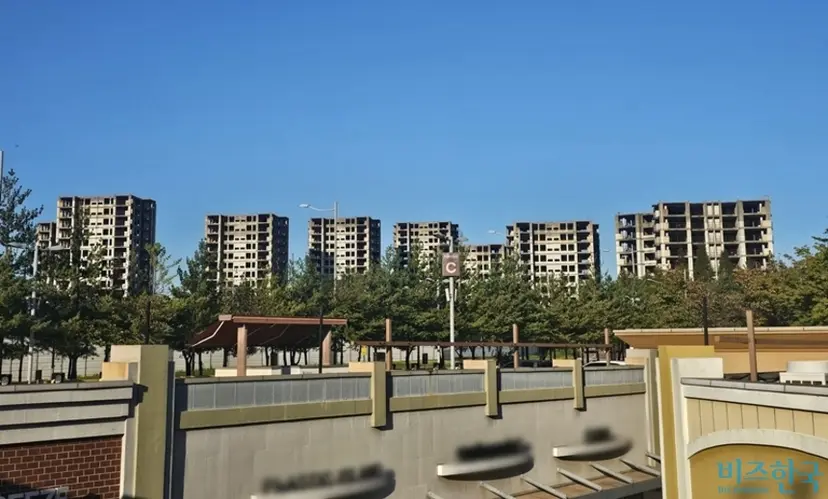
In April 2022, City One filed a counterclaim, arguing that DL E&C should restore the site to its original state and pay for liquidated damages and business losses. City One claimed that under the contract, DL E&C was obligated to complete construction within 28 months but stopped without a valid reason. They argued the site had become an eyesore after 13 years of neglect and that restarting the project would require 269.1 billion won, offering no benefit to the company. They demanded that DL E&C clear the site and pay 18.7 billion won in liquidated damages (5% of the construction cost) and 514 billion won in business losses, including future sales profits.
The core issue of the lawsuit was who was responsible for the construction stoppage. DL E&C argued that City One had effectively abandoned the condo sales, a contractual obligation, and that it was unavoidable to stop construction as there was no expectation of compensation. Conversely, City One argued that DL E&C bore the obligation of "responsible completion," regardless of sales rates or construction payments, and that the stoppage constituted a breach of contract by DL E&C. They also claimed that the construction cost debt was a conditional claim that only arises when sales proceeds are collected, and since no sales occurred, no debt was created.
The court ruled, “It is difficult to view the plaintiff as holding a position equivalent to or beyond that of a contractor, such as a co-developer, or as bearing an unconditional obligation for responsible completion toward the defendant, who is not the lender for the project financing. It is reasonable to conclude that the plaintiff inevitably stopped construction because a significant situation arose where they might not receive the construction payment, which is the consideration for the contract, even if they completed the work. Thus, it is difficult to see this as a violation of the responsible completion obligation or a breach of contract due to the plaintiff’s fault. Therefore, the defendant’s claims based on different premises are without merit.”
However, DL E&C is expected to face difficulties in recovering the debt related to the Paju Unification Park project. According to the audit report, City One's liabilities at the end of last year stood at 620.1 billion won, exceeding its assets (133.5 billion won) by 486.6 billion won. Due to accumulated losses, the initial capital has been completely wiped out, and the total equity has turned negative. City One received a disclaimer of opinion from its auditor last year due to uncertainties regarding its status as a going concern and limitations in the scope of the audit. Furthermore, since City One appealed the ruling on the 20th, a continued legal battle is expected.
Regarding this, a DL E&C official stated, "We have not yet recovered any debt related to the Unification Park site. As an appeal has been filed following the first-instance victory, we expect to be able to concretize our recovery plan only after the ruling is finalized."
Bizhankook requested a statement from City One’s legal representative regarding this lawsuit, but no response was provided.