

[비즈한국] As patients in emergencies face increasing difficulty in hospital selection and transfer, there are growing calls to restore "1339" (Emergency Medical Information Center), which was previously operated mainly by emergency medicine specialists and public health doctors. Critics argue that since the functions were integrated into the fire department, paramedics have been sending all emergency patients—regardless of severity—to emergency rooms, exacerbating the "ER merry-go-round" phenomenon. We examined whether these claims hold true based on emergency medical statistics from before and after the integration.
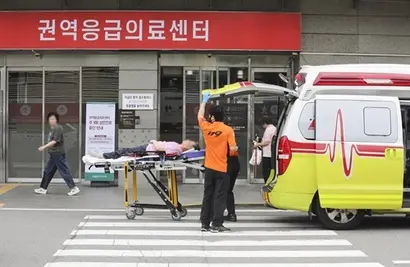
"Direct Communication with Hospitals Became Difficult After Integration"
With more patients failing to receive timely treatment due to the "ER merry-go-round," voices within and outside the medical community are calling for the revival of 1339, which once handled medical guidance and inter-hospital transfers. 1339, which operated across 12 regions with staff including emergency medicine specialists, public health doctors, and emergency medical technicians, had its functions transferred to 119 in 2012, citing public confusion caused by dual emergency numbers and low public awareness. At the time, the fire department stated, "By building a single system that handles everything from ambulance calls to medical guidance, hospital bed confirmation, and transfer, we can provide a one-stop service."
However, inter-hospital transfers have not been smooth since. While centers such as the Central Emergency Medical Center’s Transfer Coordination Center and regional emergency medical situation rooms have taken over these functions, they are widely considered inferior to 1339. The argument is that 1339 used local networks to communicate directly with medical staff during emergencies, whereas the current system does not, leading to longer transfer delays. An emergency medicine specialist, referred to as A, said, "1339 used to contact the specific medical staff performing surgeries directly to arrange the patient. Currently, while a lack of backup medical staff is an issue, it has also become much harder to contact emergency rooms at other hospitals."
The Regional Emergency Medical Situation Room, opened in March, connects patients to hospitals within their region based on severity, the final treatment capacity of the hospital, and overall hospital capabilities when a transfer is necessary. Recently, it has also taken on the task of hospital selection. The government is deploying public health doctors and military medical officers to these regional situation rooms due to staffing shortages. However, the situation regarding transfers has not improved. According to data received from the Ministry of Health and Welfare by Rep. Park Hee-seung of the Democratic Party of Korea (member of the National Assembly Health and Welfare Committee), there were 475 cases where a hospital could not be found for transfer even through the Regional Emergency Medical Situation Room as of July. This accounts for 9% of the 5,306 total cases referred to the regional situation rooms, which is twice as high as the 4.2% (112 cases) recorded the previous year.
Has the Number of Non-Urgent Patients Using 119 Ambulances Increased? 'Not True'
The medical community argues, "After integration with 119, paramedics have been sending patients to ERs regardless of whether they are mild or severe cases, leading to ER overload and a vicious cycle where arrival times for critical emergency patients increase." Is this logic true? We fact-checked this based on the "Emergency Medical Statistics Yearbook" from the Central Emergency Medical Center. Comparing data from 2011 (pre-integration) and 2013 (immediately post-integration), we looked at the ratio of non-urgent patients arriving by 119 ambulance and the time taken for the "three major emergency patients" (acute myocardial infarction, stroke, severe trauma) to arrive at the ER.
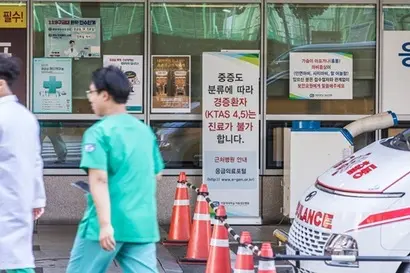
First, the ratio of non-urgent patients who used 119 ambulances decreased. Conversely, the 119 ambulance usage rate for emergency patients increased. Specifically, the ratio of non-urgent patients using 119 ambulances was 9.01% in 2011 (118,004 out of 1,308,893 total non-urgent patients), but it dropped to 8.61% in 2013 (104,474 out of 1,213,043). This contradicts the medical community's claim that the number of non-urgent patients using 119 ambulances has increased. The proportion of emergency patients using 119 ambulances rose from 14.93% in 2011 (457,674 out of 3,064,316) to 16.45% in 2013 (608,769 out of 3,700,316).
What about the time it took for the three major emergency patients to arrive at the ER after the onset of symptoms? These patients include those with acute myocardial infarction, stroke, or severe trauma. Their "golden times" are generally known to be 2 hours, 3 hours, and 1 hour, respectively. We calculated based on the shortest benchmark of "1 hour." As of 2011, the percentage of these patients arriving at the ER within one hour was 17.35%, 17.05%, and 33.85%, respectively. In 2013, these figures were 18.86%, 18.77%, 62.95% (based on SRR—Survival Risk Ratio), and 38.81% (based on ICISS—ICD-based Injury Severity Score). This pattern differs from the claim that ER overload has negatively impacted arrival times for major emergency patients.
Some argue that it is difficult to revive 1339 because the trend is moving away from "direct consultation" by doctors via telephone. A medical industry figure noted, "In advanced countries like the UK and the US, consultation tasks are shifting toward methods where nurses, paramedics, or laypeople respond based on manuals, with doctors acting only as the last resort or supervisors." They added, "Especially in Korea, clinic-level care is available without appointments, so it can be considered a type of emergency medical institution. In other words, our emergency medical resources for minor patients are already abundant compared to other countries."