

[비즈한국] Recently, "meme coins," created from popular online content, have become a major trend in the virtual asset market. Domestic exchanges have also jumped on the bandwagon, listing these meme coins to capitalize on their popularity. However, as trading for meme coins—originally created for "fun"—becomes increasingly active, concerns are being raised that investors could suffer losses due to extreme price volatility.
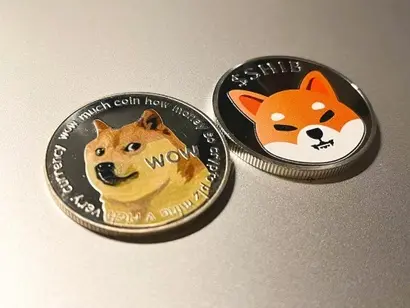
A meme coin is a virtual asset themed after animals like dogs and cats, popular characters, or internet content. They are not created with specific technological goals or utility; most are issued simply for fun. Since they lack inherent use cases or clear issuance objectives, their trading activity is fueled primarily by buzz within online communities or mentions by celebrities. While meme coins inherently carry risks, "Dogecoin (DOGE)," the pioneer of the category, continues to attract significant market attention, with a market capitalization currently exceeding 20 trillion won.
Consequently, domestic virtual asset exchanges have competed to list meme coins. On September 19, Upbit (Dunamu) newly listed "cat in a dogs world (MEW)" on its BTC and USDT markets. Cat in a dogs world is a new meme coin issued this March, based on the story of "a cat saving everyone in a world dominated by dogs." As of September 24, according to CoinMarketCap, the market capitalization of cat in a dogs world is approximately 647 billion won.
Upbit also listed the meme coins "Pepe (PEPE)" and "Brett (BRETT)" simultaneously on its USDT market back on August 20. Pepe and Brett are coins themed after famous characters in the English-speaking world. Pepe is a widely popular frog character, and Brett is a companion of Pepe. Issued in April 2023, the Pepe coin grew rapidly thanks to the popularity of the character. Cat in a dogs world, Pepe, and Brett are all coins whose ecosystems grow centered around their communities without specific use cases.
An interesting point is that although Upbit is the No. 1 exchange in Korea and No. 8 globally (as of Q3), it had previously limited its meme coin listings to the "leading" coins: Dogecoin (listed in February 2021) and Shiba Inu (SHIB, listed in January 2023). Even though Shiba Inu is a core asset—with about 20% of its total global trading volume occurring on Upbit—the exchange had not added any new meme coins for over a year. However, the recent listing of three different meme coins in the last two months has drawn attention. Notably, except for Dogecoin and Shiba Inu, none of these support KRW trading.
While Upbit has joined the fray relatively late, Bithumb and Coinone have been actively supporting meme coins among domestic KRW exchanges. Bithumb has listed seven meme coins on its KRW market: Dogecoin, Shiba Inu, Floki (FLOKI), Pepe, Bonk (BONK), cat in a dogs world, and Brett.
Coinone supports the largest number of meme coins for KRW trading among the five major KRW exchanges. To date, Coinone has listed a whopping 10 types of meme coins on its KRW market, including Dogecoin, Pepe, Shiba Inu, Volt Inu, Meme (MEME), Bonk, Book of Meme (BOME), Brett, Wen (WEN), and Sundog (SUNDOG). It is particularly noteworthy that they listed nine of these, including some exclusive listings, within about a year—from the Pepe coin in July 2023 to the Sundog coin on September 10. Among other KRW exchanges, Korbit supports 4 types (Dogecoin, Shiba Inu, Pepe, and Bonk), while Gopax only supports one (Dogecoin).

The main reason virtual asset exchanges are competitively vying to list meme coins is to increase trading volume by piggybacking on their popularity. Hong Ki-hoon, a professor at Hongik University Business School and a virtual asset expert, said, "Meme coins have recently become a major trend in the virtual asset market. They are being listed because they generate high trading volume, despite having no technological value or business viability." He added, "Increased trading naturally leads to commission revenue. Conversely, for investors, it means investing in assets with no intrinsic value."
In fact, according to CoinMarketCap (as of 3 PM on the 24th), Bithumb recorded the highest 24-hour trading volume for cat in a dogs world among global exchanges. The coin is trading at around 7 won on Bithumb, with a daily volume of approximately 30.9 billion won. During the same period, Upbit ranked 6th globally (approximately 23.9 billion won) in Shiba Inu trading volume.
With meme coins being listed in rapid succession on domestic KRW exchanges, concerns are mounting that the nature of meme coins—which are prone to price manipulation—could lead to significant investor harm. Furthermore, since they are issued based on the buzz and entertainment value of a meme, the constant threat of a "rug pull" (where virtual asset developers abandon a project and disappear with the funds) is also cited as a major problem.
Korbit Research also pointed out the issue of vulnerability to price manipulation in its "Meme Coin Growth Speed" report published in January. The report analyzed, "This sector often suffers from 'pump and dump' schemes (a method of intentionally inflating asset prices before selling them off as new investors enter) and fraud (scams involving gathering investors through false information)," adding that "one must realize that there is no uniform pattern in the meme coin sphere."
Because of this, there are calls for domestic exchanges to take ethical responsibility when listing meme coins. Professor Hong emphasized, "Exchanges that list many meme coins need to have a sense of responsibility. Meme coins are ultimately assets that rely on the losses of investors." He added, "Although the Digital Asset eXchange Association (DAXA) has created common guidelines for listing reviews, it is questionable whether meme coins, which often have obscure issuers and no technological substance, meet these criteria. In effect, the self-regulation led by DAXA is not functioning properly."