

[비즈한국] In the recent South Korean real estate market, news that an apartment of standard national housing size (85㎡ or less in exclusive area) has traded for 6 billion won marks the arrival of the "6 billion won era for standard housing." This is a shocking yet symbolic event. It is not merely a price increase for a specific property, but a significant indicator that reflects the overall structural changes and status of South Korea's real estate market. In this column, we will examine the significance of a 6-billion-won transaction for a standard-sized apartment, the current flow of the South Korean real estate market, and future prospects.
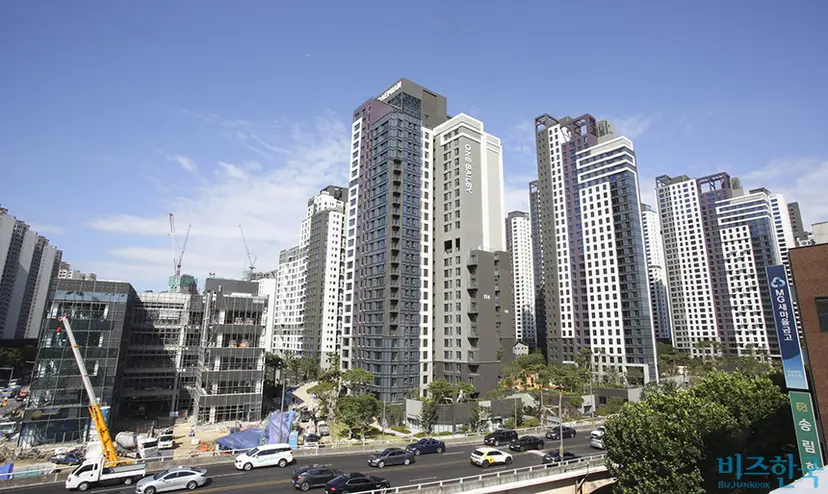
First, let’s summarize the symbolism and significance of the standard national housing size.
Standard national housing size apartments, specifically those with an exclusive area of 85㎡ or less, have long been considered the representative residential form for the middle and working classes. Because their size is moderate, these apartments have been popular for both residential living and investment, and are recognized by actual residents as economical homes. However, the fact that such an apartment has traded for 6 billion won signifies that the disparity and status of the South Korean real estate market have widened to an extreme degree.
First, this phenomenon indicates an intensification of polarization in the real estate market. Traditionally, standard-sized apartments were the housing form primarily sought by actual residents, but they are now establishing themselves as symbols of high-end housing. This is particularly noticeable in Seoul’s "Gangnam 3-gu" (Gangnam, Seocho, Songpa) and popular areas along the Han River. As a result, these properties have entered a price range inaccessible to the working or middle class, serving as a clear example of the widening gap between the upper class and the middle class in the real estate market.
Second, the price rise of standard-sized apartments signifies that the value of housing has moved beyond being just a "home" to becoming an asset. It is no longer the size or convenience of the living space, but the location and scarcity that have become the critical factors determining housing prices. Specifically, standard-sized apartments in key locations such as the Gangnam area and the Han River waterfront are skyrocketing in price due to their scarcity and locational advantages, regardless of their size.
Next, let's look at the current status of the South Korean real estate market and its stature as an asset market.
The South Korean real estate market has now moved beyond the simple concept of residence to establish itself as a significant investment destination in the global asset market. Particularly since 2020, amidst the pandemic, the asset market expanded rapidly due to a combination of low-interest rates and massive liquidity supply. Among these, the real estate market showed the most prominent growth. This is because real estate emerged as a core element of asset appreciation, moving beyond a means of residential stability, leading many to jump into the market.
Furthermore, the domestic real estate market is becoming increasingly globalized due to the influx of foreign capital. Especially in the luxury housing market, the participation of foreign investors or wealthy individuals with foreign nationalities is driving price levels even higher. South Korea's stable economic growth and relatively safe real estate market are seen as attractive investment destinations by global investors, a trend expected to continue into the future.
The rise in real estate prices is a complex issue that goes beyond the simple principles of supply and demand. Various factors such as government regulatory policies, tax policies, and loan restrictions influence the real estate market. While these regulations might suppress price increases in the short term, they often end up fueling them in the long term. Strengthening taxation on multi-home owners reduces their supply of properties for sale, which ultimately leads to a shortage of listings and causes a vicious cycle that drives prices even higher.
Let's forecast the direction of the future real estate market in the era of 6 billion won for standard housing.
The fact that a standard-sized apartment exceeds 6 billion won does not simply mean a price increase; it is an event that sets a new benchmark for the South Korean real estate market. It confirms that housing is no longer just a means of living but is changing in economic stature as a high-value asset. So, what kind of future will this change bring?
First, the concentration of real estate among the wealthy will intensify. Those with significant assets will use real estate to grow their wealth, further reinforcing the concentration of assets in prime locations. Prime areas like Gangnam, Seocho, and the Han River waterfront will become filled with increasingly expensive homes, and standard-sized apartments in these areas are highly likely to trade at high prices as well. This, coupled with the increasing scarcity of housing in prime locations, will act as a factor that further drives up prices.
Second, the polarization of the real estate market will deepen. The price increase of standard-sized apartments creates an environment where only the top 1% of the wealthy can access this market. This means that homeownership opportunities for the middle and working classes will continue to shrink. This polarization will further widen the price gap between key areas centered on Seoul and provincial or non-core areas. It is highly likely that a phenomenon will persist where high-priced housing centers on major areas of Seoul, while relatively lower-priced housing is pushed to the outskirts.
Third, there will be a shift in the perception of real estate investment. The high-priced transaction of a standard-sized apartment is seen as an asset with high investment value, moving away from simple residential use. Real estate is establishing itself as a means of wealth accumulation and asset protection beyond the meaning of residence. This flow is expected to continue in the future real estate market, and demand for luxury housing or apartments in prime locations is expected to increase even further.
Finally, let's look at the possibility of the South Korean real estate market taking a leap toward becoming a global asset market.
The 6-billion-won transaction for a standard-sized apartment is an event that symbolically shows that the South Korean real estate market is establishing itself as a global asset market. In the future, the South Korean real estate market is highly likely to become even more globalized. The influx of foreign investors and foreign capital will create new demand in the domestic real estate market, which will serve as another factor for price increases.
Alongside structural changes in the real estate market, technological advancements will also lead to significant market changes. In particular, we cannot rule out the possibility that blockchain technology will be introduced to real estate transactions or that real estate transactions in virtual worlds like the metaverse will become active. These changes will reshape the existing real estate market and create new forms of investment and trading methods.
The 6-billion-won transaction for a standard-sized apartment symbolizes a new inflection point for the South Korean real estate market. It is an important turning point that reconfirms that real estate has value as an asset beyond being a simple means of residence. Future real estate markets will become more globalized and polarized, but new opportunities and challenges will be waiting within them. The South Korean real estate market is now facing greater changes as part of the global asset market, and we will need new strategies and responses amidst these changes.
Kim Hak-ryul, head of the Smart Tube Real Estate Research Institute, well-known by the pen name Pasion, served as a team leader at the Real Estate Research Division of Gallup Korea. He operates and hosts the Naver blog "Pasion's World Exploration" and the YouTube channel "Stue TV." He is the author of books including "Absolute Principles of Seoul Real Estate (2023)," "The Future of Incheon Real Estate (2022)," "Kim Hak-ryul's Absolute Principles of Real Estate Investment (2022)," "Future Map of South Korean Real Estate (2021)," "From Now On, Only Places That Rise Will Rise (2020)," and "South Korea Real Estate User Manual (2020)."