

[비즈한국] The “emergency room carousel”—where patients are repeatedly transferred between hospitals—persisted even during the Chuseok holiday. Amid this, a professor of emergency medicine at Chonnam National University Hospital, one of the medical institutions that declined to admit a patient with a severed finger, stirred controversy by claiming it was a “benevolent carousel.” He explained, “If spending time to find a hospital capable of performing surgery constitutes an ‘emergency room carousel,’ then it is a benevolent one and an act of goodwill for the patient.” Meanwhile, as cases of patients being bounced between hospitals increase, some in the medical community are calling for the revival of the ‘1339’ Emergency Medical Information Center.
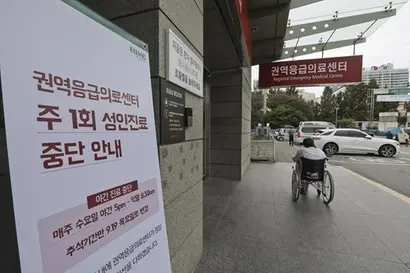
Argument: “It saved more time than waiting indefinitely in the emergency room”
The claim that it was a “benevolent carousel” arose regarding the case of a patient with a severed finger in Gwangju who, after being turned away by four nearby medical institutions, underwent surgery in Jeonju. Cho Yong-soo, a professor of emergency medicine at Chonnam National University, wrote on Facebook on the 16th, “We must not brand all situations indiscriminately as an ‘emergency room carousel.’” At the time, the patient was unable to receive treatment from Chonnam National University Hospital, Chosun University Hospital, another general hospital in the Seo-gu district, and an orthopedic hospital specializing in finger replantation in the Dong-gu district; the patient eventually received replantation surgery at a hospital in Jeonju, Jeonbuk, about 100 km away, two hours after the initial call.
Professor Cho explained the situation at the time, stating, “It was not that we couldn't take the patient due to a lack of specialized medical staff.” Professor Cho said, “It was reported that there were no doctors in Gwangju capable of performing replantation surgery, but this is different from the truth. At Chonnam National University Hospital, replantation surgery is primarily handled by the plastic surgery department, and the two plastic surgeons on duty at the time were already performing surgery on another patient and facial suturing, respectively. There were also five laceration patients waiting. It wasn't that there were no doctors capable of surgery, but that those doctors were too busy to accommodate the patient.” According to him, the medical staff had been increased by one for the holiday, with three emergency medicine staff and two plastic surgeons on duty.
Professor Cho pointed out that unconditionally accepting a patient may not always be in the patient’s best interest. He said, “We could have easily accepted the severed finger patient into our emergency room. If we had made them wait for about six hours until the surgery for the previous patient was finished, they could have received surgery. If we had done that, the incident would have ended without anyone complaining. Is that just? By moving to Jeonbuk, the patient actually saved hours before the surgery. What is truly in the patient’s best interest?” He added that the reason they could not treat this patient first was that surgical resources such as operating rooms, support staff, and equipment were already in use, and it is difficult to accept new patients when the number of waiting patients is increasing in real-time.
Professor Cho argued that spending time to find the hospital where surgery can be performed fastest is a “benevolent carousel,” and that such a carousel should be encouraged. He said, “If it were in the old days when the 119 ambulance service would leave all patients at the emergency room without prior contact, the patient would have inevitably wasted six hours at Chonnam National University Hospital. Emergency rooms cannot accept patients for various reasons. Yet, this society indiscriminately labels every situation as an ‘emergency room carousel.’ If spending time to find a hospital capable of surgery is an ‘emergency room carousel,’ then it is a benevolent one and an act of goodwill for the patient.”
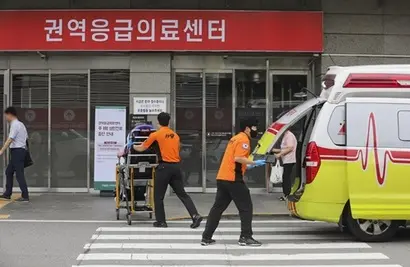
He said, “I know what the ‘emergency room carousel’ refers to. I agree that it is a problem that must be solved. However, not every refusal of admission by an emergency room is an ‘emergency room carousel,’ and it is not easy to clearly distinguish it in a complex reality, so it must be examined from various angles.” He asked rhetorically, “Is it right to blame those who were struggling at their posts while the majority of the public were enjoying the holiday for ‘rejecting patients’?” Referring to the case of a college student found in cardiac arrest who was transported to Chonnam National University Hospital, Professor Cho also mentioned, “Although Chosun University Hospital was criticized for not accepting the cardiac arrest patient, the time difference when skipping Chosun University Hospital and transporting the patient to Chonnam National University Hospital would have been only 1 to 2 minutes.”
Opinions calling for the “revival of the Emergency Medical Information Center ‘1339’”
Since the collective resignation of medical residents, the number of patient re-transfers by 119 ambulance crews has increased significantly. According to data submitted by the National Fire Agency to Rep. Yoon Kun-young of the Democratic Party of Korea on the National Assembly’s Public Administration and Security Committee, there were 3,071 instances of re-transfers between February 19 and the 25th of last month—a 190-day period—where 119 crews had to take a patient to a different hospital after being turned away at least once. This is an increase of approximately 46.3% compared to the 190-day period from August 11 of last year to February 17 of this year, before the collective resignations. Cases of re-transferring two or more times also doubled from 61 to 114.
“Lack of specialists” was the most common reason for hospitals refusing admission. This accounted for 1,216 cases, or 40% of all re-transfers, an increase of 37.7% compared to the period before the collective resignations. Re-transfers due to “lack of beds” accounted for 14%, or 452 cases. By region, the increases were: Seoul (250 → 455), Incheon (85 → 212), Daejeon (13 → 57), Gangwon (156 → 308), and Jeju (80 → 186). As the “emergency room carousel” surges, some in the medical field are calling for the revival of the Emergency Medical Information Center “1339,” which used to handle hospital selection and transfers for emergency patients, while also pointing out the shortage of personnel and resources.
Currently, the government operates six “Regional Emergency Medical Situation Rooms” that support the transfer of emergency patients by region. However, Cho Seok-joo, a professor of emergency medicine at Pusan National University Hospital, argues that they are failing to perform their roles properly. Citing the recent case in Cheongju, North Chungcheong Province, where a woman 25 weeks pregnant was turned away by 75 medical institutions, Professor Cho explained, “The fire department failed to secure a spot after calling emergency rooms nationwide, but the provincial emergency medical management team was able to arrange the transfer by directly calling the director of a local obstetric specialty hospital. This ultimately means that consultation with the back-end medical department, not just the emergency room doctor, is necessary, and that the ability to communicate directly with those departments is key.” He added, “This was how the old 1339 worked. The recent case of the pregnant woman revealed that the role of the regional emergency medical situation rooms is negligible.”
Meanwhile, the government stated that there was no “emergency room crisis” as feared during the Choseok holiday. Jung Yoon-soon, head of the Health and Medical Policy Office at the Ministry of Health and Welfare, held a briefing on emergency medical response at the Seoul Government Complex that day and said, “While there were cases of inconvenience in medical access when looking at individual instances during the Chuseok holiday, overall, there appeared to be no major chaos.” He stated that they would review whether to extend the fee supplements for specialist consultations at regional and local emergency medical centers and for major emergency surgeries performed through emergency rooms while monitoring the overall emergency medical situation.