

[비즈한국] OB Brewery, which has focused exclusively on beer, has acquired Jeju Soju. This acquisition is reported to have been led by AB InBev, the parent company of OB Brewery. As the growth of the global beer market has recently slowed, AB InBev, the world's largest brewing company, has responded by expanding its non-alcoholic product offerings, primarily in the U.S. and European markets. In the domestic market, it has pulled out a new card: entering the soju business.
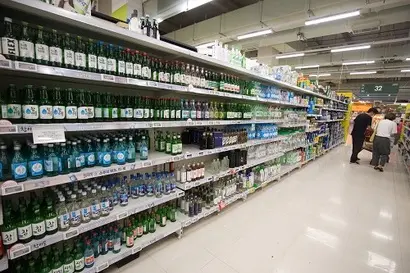
Acquisition of Jeju Soju, Focusing on ‘Glocal’ Strategy?
On the 11th, OB Brewery decided to acquire Jeju Soju from Shinsegae004170 L&B. This marks the first time that OB Brewery, which has concentrated on the beer business, has entered the soju market. OB Brewery announced a strategy to utilize the acquisition of Jeju Soju to promote Cass and Jeju Soju in the global market, thereby sustaining the K-Wave momentum. An OB Brewery official explained, "The main contract for the acquisition of Jeju Soju is nearly finalized. The intention behind acquiring Jeju Soju is to expand exports by leveraging the network that K-Soju possesses."
Jeju Soju was acquired by E-mart139480 in 2016 for 19 billion won. At the time, it was known that Chairman Chung Yong-jin put significant effort into the acquisition, and in 2017, the company launched the "Pureunbam" brand, often called "Chung Yong-jin's soju," to target the soju market. However, as HiteJinro000080 (Chamisul) and Lotte Chilsung (Chum-Churum) already held significant market share, it was not easy for a latecomer to establish a foothold in the market.
Due to mounting losses, E-mart eventually merged Jeju Soju into Shinsegae L&B in 2021 and halted the production of Pureunbam. Since then, Shinsegae L&B shifted its business direction toward soju contract manufacturing (ODM) and the export of fruit-flavored soju, effectively abandoning the domestic soju market. In June, as Shinsegae L&B decided on the physical division of Jeju Soju, rumors of an imminent sale began to circulate, and just two months after the division, OB Brewery was decided as the new owner of Jeju Soju.
It is not easy for new companies to enter the domestic soju market. To operate a soju business, one must obtain a liquor manufacturing license from the National Tax Service, which restricts the issuance of new licenses to prevent cutthroat competition. Since obtaining a new license is practically impossible, entering the market is only possible by acquiring an existing company. OB Brewery is now able to engage in the soju business using Jeju Soju's license and has also acquired the development and utilization rights for groundwater held by the company.
OB Brewery's acquisition of Jeju Soju is known to have been led by the Asia-Pacific (APAC) division of AB InBev. AB InBev is the parent company of OB Brewery and the world's largest brewer. An official from OB Brewery explained, "I understand that corporate acquisitions or divestitures are carried out through discussions between the global parent company and the APAC division."
Seo Yong-gu, a professor of business administration at Sookmyung Women's University, analyzed, "Beer is a 'global' drink, while soju is a 'local' one. It seems AB InBev acquired Jeju Soju in line with its 'glocal' orientation. For a company that operates based on a global network, Jeju Soju—with the symbolism of Jeju Island—likely stood out as attractive among many local liqueurs. From the current perspective of the soju market, Jeju Soju is not an attractive company to acquire. Rather than immediate value, they seem to have judged it with a future-oriented perspective, believing it will gain long-term popularity in the global market."
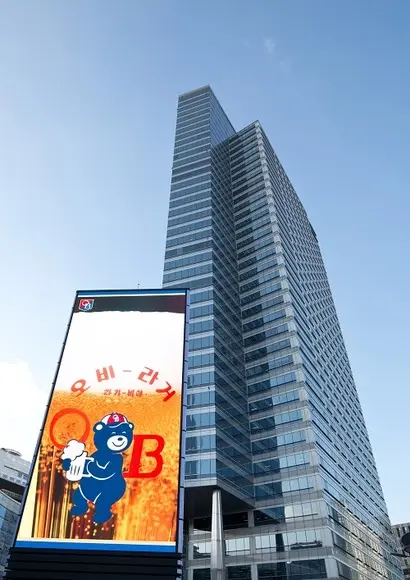
As Beer Consumption Declines, Strategies Shift: 'Non-Alcoholic' for U.S./Europe, 'Soju' for Korea
The fact that AB InBev has set its sights on the domestic soju market is noteworthy. Until now, more than 90% of AB InBev's global revenue has come from its beer business. With the exception of some wine and beverage operations in regions like the U.S. and South America, the company has focused almost exclusively on beer.
However, AB InBev's portfolio has changed over the last few years. It has significantly expanded its non-alcoholic product line. As beer consumption among young consumers in the U.S. and Europe has declined, the company has focused on expanding its non-alcoholic range. AB InBev has set a goal to increase the share of non-alcoholic and low-alcohol beer production to 20% of its total volume by 2025, and has built non-alcoholic beer production lines in Belgium and the UK to target the European market.
The decline in beer consumption is the same in the domestic market. According to National Tax Service statistics, domestic beer shipments fell from 1,715,995 kl (kiloliters) in 2019 to 1,687,101 kl last year. The performance of OB Brewery, which focuses solely on beer, has inevitably suffered. Last year, OB Brewery's revenue fell to 1.5458 trillion won from the previous year (1.5601 trillion won), and its operating profit also decreased by 35% to 236.5 billion won (from 361.8 billion won the year before).
Lee Eun-hee, a professor of consumer science at Inha University, explained, "There is a global trend of decreasing alcohol consumption due to growing health consciousness. In the past, people would often gather to drink when they had free time, but now many people work out or watch OTT services alone. In the domestic market, the spread of 'hon-sul' (drinking alone) culture has changed the style of drinking, and the volume consumed has also decreased."
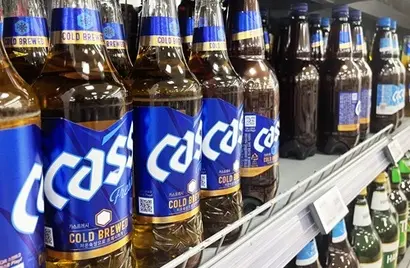
While AB InBev is implementing a non-alcoholic product expansion strategy in the U.S. and European markets, it chose portfolio diversification through the acquisition of Jeju Soju for the domestic market. Experts analyze that the lower preference for non-alcoholic products among Korean consumers likely influenced the business direction. Professor Lee Eun-hee noted, "Because there is a culture of drinking high-proof liquor like soju, there is bound to be some resistance from domestic consumers toward non-alcoholic products. They cannot accept non-alcoholic products as easily as foreigners do. It will take more time for non-alcoholic consumption to grow."
OB Brewery shows a determination to focus on exports after the acquisition of Jeju Soju. As the popularity of K-Food and K-Soju rises on the back of the Korean Wave, the company expects to see an increase in overseas sales of its flagship product, Cass, by utilizing Jeju Soju's network.
However, it is uncertain how much competitiveness Jeju Soju will have in the global market. Jeju Soju currently exports products primarily to Southeast Asia, including Vietnam, Singapore, and Thailand, where the K-Soju wave is strong. However, competition is intensifying as famous liquor companies are racing to introduce soju products in the Southeast Asian market. Heineken attracted attention by launching a "somaek" product mixing soju with Tiger beer, and the vodka brand Smirnoff and the representative Philippine liquor company Emperador have also introduced soju products.
An OB Brewery official stated, "As no decision has been made regarding entry into the domestic market, we plan to focus on exports," adding, "We plan to expand our export regions in the long term, based on the Southeast Asian network held by Jeju Soju. Just as soju is becoming widely known globally, we hope that domestic beer will also become better known and see increased sales."