

[비즈한국] As cases of the so-called "ER merry-go-round"—where patients cannot find a hospital due to medical gaps—increase significantly, 119 paramedics are voicing their psychological distress, forced to provide care while making countless calls until they receive a "treatment possible" response. They shared, "Even though patients and their guardians recognize the shortage of medical personnel at these institutions, paramedics are the ones who must repeatedly explain the situation," adding, "We feel a deep sense of psychological burden because there is nothing more our ambulance teams can do to help."
"Helplessness grows over time... Psychological strain accumulates"
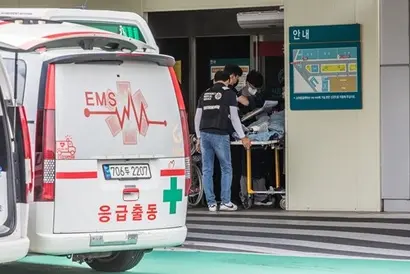
With an increasing number of cases where transfers take over an hour because hospitals refuse patients due to staffing shortages, some paramedics are speaking out about their psychological struggles. They express feelings of helplessness, noting that they remain by the patient's side even when there is nothing left they can do. A paramedic named Mr. A began, "The people our teams meet are in unwanted situations and are not mentally at ease. Because we have to stabilize and manage them, there is usually a lot of stress, but lately, the increased transport times themselves are causing significant psychological difficulties."
Mr. A says the current "ER merry-go-round" has pushed ambulance teams beyond what they can handle, with the resulting emotional toll mounting. Mr. A pointed out, "The role of ambulance teams on the scene is limited. After a certain level of first aid, the patient needs treatment at a proper medical facility, but as time passes, there is nothing more that can be done with first aid alone. We are being pushed beyond our capabilities." He added, "Spending 30 minutes treating a severe patient in an ambulance while making calls is completely different from spending two hours doing it. It’s not just a matter of spending an extra hour and a half with the patient."
Mr. A said, "Two emergency calls taking one hour each are different from one call taking two hours. The latter carries a much heavier psychological burden. Patients and their guardians want to get to the hospital quickly, and we as paramedics believe it should be resolved without delay. Because the situation is what it is, these issues aren't resolved immediately, leading to an accumulation of stress. While patients and their guardians recognize that the ERs are not operating smoothly, the burden falls on the paramedics because we are the ones who must constantly explain the situation—that the hospital refuses to accept them—and ask for their understanding."
Over 13,940 cases with transfer times exceeding 60 minutes… Transfer distances in Seoul increase 2.2 times
Mr. A explains that rather than understanding or accepting the situation, patients and guardians are more likely to feel that they have "no other choice." Mr. A said, "The ones suffering the most are the patients and their guardians. They are aware of the situation, but because they are in an urgent state and the transfer isn't happening, they sometimes vent their frustration on us. The paramedics are also making countless calls, so the 'call merry-go-round' is just as painful for us. Because of this, in some cases, patients or their contacts ask for the hospital's phone number to call the ER directly."
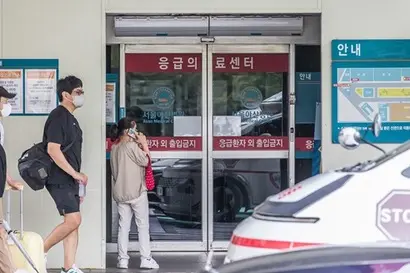
Statistics collected since the medical gap began clearly illustrate the difficulties faced by these paramedics. According to data received by Representative Chae Hyun-il of the Democratic Party of Korea from the National Fire Agency, the number of cases where emergency patient transport from the scene to a hospital exceeded 60 minutes between March and August reached 13,940 nationwide. This is a 22% increase compared to the same period last year. By region, transfer delays increased in all metropolitan local governments except Gwangju and South Jeolla Province. Transport distances have also increased. Looking at cases where the distance between the scene and the hospital exceeded 30 km, Daejeon saw a 2.6-fold increase (170 to 449 cases), Seoul a 2.2-fold increase (161 to 362 cases), and Daegu a 1.75-fold increase (451 to 788 cases).
Cases of patient re-transfer have also already exceeded 85% of last year's total. According to "119 Ambulance Re-transfer Status" data received by Representative Jung Choun-sook of the Rebuilding Korea Party from the National Fire Agency, there were 3,597 re-transfer cases from January to August 20th, which is 85.1% of the 4,227 total cases recorded in all of last year. Instances of being refused treatment at an ER two or more times have already surpassed last year’s records. Cases of two re-transfers were 121, three re-transfers were 17, and four re-transfers were 23. Last year, the figures were 84 for two re-transfers, 14 for three, and 16 for four.
"Limited number of counseling personnel... Changing counselors after contracts end causes difficulties"
Due to the nature of firefighting, the National Fire Agency operates programs such as mental health surveys, "visiting counseling rooms," and stress resilience enhancement programs to help fire officials prone to PTSD and other issues. However, voices on the ground suggest that limited budgets prevent many from receiving help. A representative from the Korean Government Employees' Union said, "While the National Fire Agency issues directives, the operations are funded by local government budgets, so projects aren't implemented uniformly across all cities and provinces." They added, "The 'visiting counseling room' only manages high-risk groups to a limited extent. The stress resilience program notice even includes a statement saying, 'those who have participated in the last few years are excluded.'"
Counseling is contracted out to external agencies, which is another point of frustration for paramedics because the counselor often changes when a contract ends. The representative stated, "Because it’s outsourced, the counselor often changes. Paramedics open up to a counselor they've chosen and spoken with, but when a new counselor is assigned because the company changed, they have to tell their history all over again. Sustained counseling and treatment are difficult. While the programs are definitely helpful, more delicate support is needed."
Regarding the ER merry-go-round, they added, "Cooperation between hospitals and relevant ministries needs to be improved." They said, "The current system, where ER information is shared in real-time, is not perfect. Paramedics are aware that hospitals can't accept patients because of staffing shortages. However, hospitals must also actively share information related to the ER in real-time," adding, "The reason paramedics keep calling is often that the real-world situation differs from what is recorded."
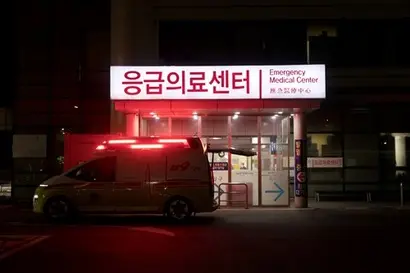
Regarding the government's announcement on the 13th of "Guidelines for Legitimate Reasons for Treatment Refusal under the Emergency Medical Services Act," concerns were raised that "the practice of 'passing the buck' by some hospitals could intensify." The guidelines state that being unable to provide appropriate emergency medical care to an emergency patient based on the availability of medical resources, such as personnel, facilities, and equipment, constitutes a legitimate reason for refusal. The aforementioned union official said, "I don't know if the guidelines will actually improve the situation. It is better for those with minor conditions not to come to the ER, but on the other hand, those with minor conditions can be treated quickly and sent home. If a critical patient arrives, as before, they should be seen regardless of the reception order," adding, "While I understand the difficult situation of hospitals, from the perspective of transporting patients, there is a concern that hospitals may increase their refusal to accept patients."
Even during the Chuseok holiday, the "ER merry-go-round" persisted. On the 16th, a man in his 60s in Dong-gu, Daejeon, who suffered a 30cm-long, 1cm-deep stab wound to the abdomen, was transferred to a hospital after 4 hours and 10 minutes. The 119 ambulance team contacted medical institutions in the Daejeon area, but none could accept the patient; it was only after receiving "treatment impossible" replies from 10 medical institutions in nearby areas that he was finally able to receive treatment at a hospital in Cheonan. On the 15th, a 25-week pregnant woman in Cheongju, North Chungcheong Province, faced a potential amniotic fluid rupture; it took eight and a half hours and 75 calls to find a hospital that would accept her. On the same day, a man in his 50s in Gwangsan-gu, Gwangju, had a finger severed, but it took two hours after the accident before he could receive replantation surgery in Jeonju, 94km away.