

[비즈한국] There is a term called "deskterior." A portmanteau of "desk" and "interior," it refers to the act of decorating one's desk to reflect personal taste, much like decorating various corners of a home. The culture of posting desk setups tailored to specific concepts and sharing information about related products spread even more widely following the COVID-19 pandemic, a period when remote work became the norm.
The keyboard, essential for computer-based work, is an item that occupies a significant portion of deskterior. More and more users are entering the world of mechanical keyboards after growing tired of cheap membrane keyboards and searching for something new. Simply put, a mechanical keyboard is a product that uses separate mechanical switches for each individual key, offering greater durability than standard membrane keyboards. Most keyboards in the early days of PCs were mechanical. However, after taking a direct hit from cost-cutting measures in the mid-to-late 1990s, they barely maintained their existence before receiving renewed attention recently.
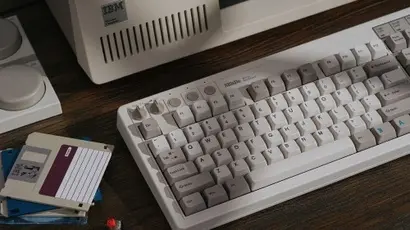
The core elements that determine the design of a mechanical keyboard are the switches, keycaps, and the housing, which refers to the overall frame. While switches are rarely visible as they are hidden by the keycaps covering them, they are important because they determine the types of compatible keycaps and can be linked with lighting if the body is transparent. The keycaps, which come into direct contact with the fingers, are parts that define the overall impression of the keyboard. Since mechanical keyboard keycaps are interchangeable, their colors, materials, and legends vary widely. You can purchase a diverse array of options, including ceramic keycaps that provide a unique tactile sensation, circular keycaps that recreate the design of old manual typewriters, completely transparent keycaps that reveal the internal switches, and even "blank" keycaps with no legends. Finding the perfect combination to match your taste requires some study.
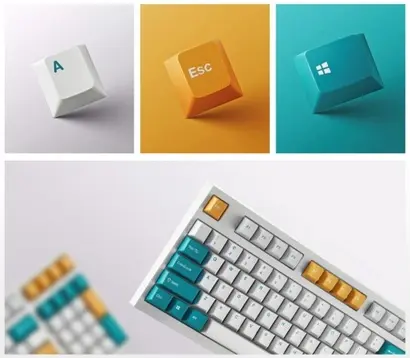
There is no single correct answer for mechanical keyboard design, as standard layouts are becoming increasingly meaningless and manufacturers are asserting more individuality. However, there are a few points I would like to address. Some products fill the housing completely with keycaps without leaving any margins, which gives a stifling feeling, much like looking at an X-ray image of teeth packed tightly together. Just like the inner pages of a book, I believe it is better for keyboard housing to leave appropriate margins to provide visual breathing room.
Keycap legends are also important. Fonts with an overly "cyber" design that look like they were forced into a mold tend to look cheap. In the case of foreign products, some have awkward Korean fonts, and these details combine to lower the overall design completion of the keyboard. For the lighting under the keycaps, a single color or a restrained color combination looks better than something flashy and multicolored. If there are many lighting patterns, they may seem fascinating at first, but interest inevitably fades over time. I also do not recommend niche switches or layouts that deviate too far from standard specifications due to maintenance and accessory-related issues.
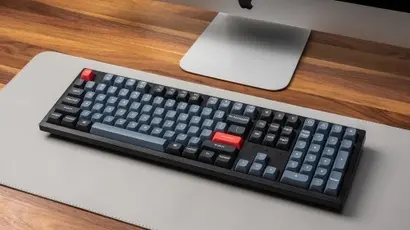
The biggest drawback of mechanical keyboards, which allow you to show off your personality through various combinations, is that the high typing noise makes them difficult to use in an office where many people gather. The sound of typing on a mechanical keyboard is undeniably loud, even in a moderately noisy office. However, it is an attractive item for personal spaces where you can fully express your taste. As the number of custom keyboard component makers grows and the related market gradually becomes more active, overall demand is unlikely to decline for the time being. If your daily routine at your desk feels boring, why not try to slightly increase your job satisfaction by switching your keyboard?
Who is the author Han Dong-hoon?
A typeface designer. He is interested in all fields related to letters, including writing, calligraphy, and designing and teaching typography. Currently, he designs various corporate-exclusive fonts and retail fonts at the typeface studio AlignType. He has contributed to "Monthly Design," the quarterly "Design Review," and other publications, and conducts typography design lectures on both online and offline platforms. In 2021, he published the essay collection "The Universe in Letters."