

[비즈한국] Although it has been two years since the issue of illegal paybacks by nursing hospitals and traditional Korean medicine hospitals surfaced, the government has yet to conduct even a fact-finding survey, let alone establish countermeasures. As paybacks have become an open secret, cases have recently emerged where hospitals operating normally without paybacks are actually struggling to stay afloat. Experts point out that the number of beds in nursing and traditional medicine hospitals must be reduced to eliminate excessive competition between medical institutions.
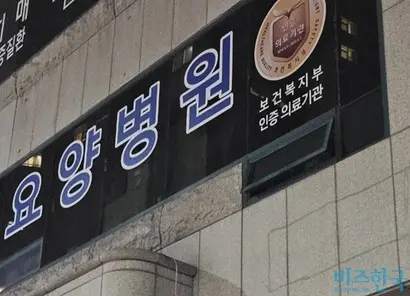
You Can Find It Just by Searching... Normal Hospitals Are the Ones Suffering
Recently, the Korean Association of Geriatric Hospitals announced that it would self-regulate against illegal activities, such as paying back a portion of medical fees in cash to attract patients. The association stated, "Under the Medical Service Act, it is illegal for medical institutions to waive or discount patient copayments to solicit patients," adding, "We plan to take all possible measures, including filing criminal complaints against nursing hospitals engaged in such illegal activities." Immediately after the announcement, the association produced posters prohibiting the "discounting or waiving of patient copayments," displayed them at nursing hospitals nationwide, and opened a reporting center for illegal activities.
This is not the first time that illegal paybacks by medical institutions have become a problem. During last year's parliamentary audit, Minister of Health and Welfare Cho Kyoo-hong was questioned about illegal activities where some nursing and traditional Korean medicine hospitals provide paybacks to cancer patients. According to data submitted by the Ministry of Health and Welfare on violations of Article 27, Paragraph 3 of the Medical Service Act (prohibition of soliciting or inducing patients) over the past five years, there were 42 total cases involving hospitals and clinics, with only 2 cases involving nursing or traditional medicine hospitals. Despite media reports, there have been no detected cases of cancer patient paybacks. Minister Cho stated, "There are about 10 cases a year, but since it is done clandestinely, there appear to be more than that."
Former Justice Party lawmaker Kang Eun-mi criticized the situation, saying, "If you just search for 'cancer patient payback,' tons of related articles pop up, yet the Ministry of Health and Welfare hasn't even conducted a fact-finding survey. If it were a secretive act, it wouldn't be searchable on web portals." She added, "Hospitals that operate conscientiously are even closing down because of these medical fee paybacks. Due to the ministry's poor management and lack of enforcement, the damage is being passed entirely onto the public." In fact, a traditional Korean medicine hospital that closed last year due to financial difficulties was hit with a class-action lawsuit from 119 patients seeking 3 billion won in damages.
The reason hospitals resort to paybacks is that competition has become overheated, creating a need for patient-attraction schemes. For cancer patients in particular, there are many non-reimbursable items associated with their treatment that are covered by private indemnity insurance. Hospitals exploit this by inflating medical records to trigger excessive insurance claims, then returning a portion of the profits to the patient in cash. While you cannot find this information on hospital websites, when patients call or visit for a consultation, a manager will ask about their type of private insurance and say, "You can get everything reimbursed, so don't worry about the cost." They then design a treatment plan consisting of non-reimbursable items and propose a payback percentage. For the patient, there is no reason to refuse, as they receive the treatment and get a cash refund.
As a result, normal hospitals complain that it is difficult to inform patients that they do not offer paybacks. In fact, insurance claims are such a critical issue that there are separate insurance-related bulletin boards in online communities for cancer patients. There, users actively exchange information on topics like, "Can I get insurance coverage for such-and-such treatment?", "I'm looking to buy this insurance, any advice?", or "Are there any additional policies I should buy?"
Surge in Traditional Korean Medicine Hospital Auto Insurance Claims
To curb excessive competition among medical institutions like paybacks, a fundamental adjustment of the number of hospital beds is necessary. According to OECD Health Data, compared to the OECD average, South Korea has 2.1 times more general hospital beds and 8.8 times more nursing hospital beds. Looking at the trend in the number of beds, traditional Korean medicine hospitals are increasing at a higher rate than nursing hospitals. According to the "Status of Hospitalization Wards by Type of Medical Institution" from the Korean Statistical Information Service, while both increased their bed counts in 2020 compared to the previous year, nursing hospitals have been on a decline since, while traditional medicine hospitals have been on an upward trajectory. Comparing the second quarter of this year to 2020, nursing hospital beds decreased by 14.88%, while traditional medicine hospital beds increased by 34.46%.
Meanwhile, auto insurance claims from traditional Korean medicine hospitals are increasing every year. According to the Health Insurance Review and Assessment Service's "2023 Automobile Insurance Medical Expense Statistics," traditional medicine treatment claims for auto insurance have surpassed those of Western medicine. While Western medicine claims had been decreasing over the last five years, they increased by 2.08% in 2023 to 1.0656 trillion won. Traditional medicine has broken records every year during the same period. Specifically, in 2019, Western medicine claims were higher than those for traditional medicine, but the trend reversed in 2021—just two years later—and has continued to this day. As of 2023, Western medicine claims stood at 106.56 billion won, while traditional medicine claims reached 148.88 billion won.
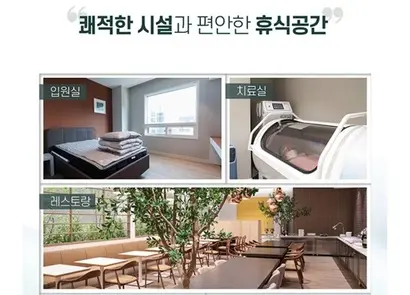
Last year, the concept of "hospital vacations" (hokance) at some traditional Korean medicine hospitals also became a controversy. Given that reducing financial burdens through insurance claims is an open practice, one clinic even used the word "hokance" to publicly promote how to file these claims. The hospital sent text messages to patients saying, "You can now use our high-grade rooms, which consist only of 1 or 2-bed units, at the price of a standard room. It costs 60,000 won to be hospitalized for a day of treatment, but it can all be reimbursed through your insurance," adding, "How about a traditional medicine hospital vacation during your holiday or break?"
The Automobile Insurance Committee of the Korean Medical Association issued a press release last June, criticizing the trend: "Unlike Western medicine, where most medical actions related to traffic accidents are included in health insurance benefits, the treatment fees and recognition standards for non-reimbursable items in traditional medicine are unclear, making it easier to provide excessive treatment to minor injury patients." They further stated, "Most traditional medicine clinics only operate 1-person rooms, and their distorted practice of billing excessive medical fees through luxurious high-grade hospital rooms is the primary cause of the surge in auto insurance treatment costs."
Meanwhile, the government has begun managing the number of hospital beds. The "3rd Basic Plan for Bed Supply and Demand (2023-2027)" announced last year includes a provision requiring hospitals with 300 or more beds and branch hospitals of tertiary hospitals in the metropolitan area to obtain prior approval from the Minister of Health and Welfare. If a hospital with 100 or more beds is to be newly built or expanded, it must undergo prior deliberation and approval by the municipal or provincial medical institution establishment committee. The plan is to divide regions into excessive, observation, and shortage areas based on bed supply and demand, limiting supply in surplus areas and inducing a gradual reduction in the number of beds.