

[비즈한국] Public anger over illegal slush funds has not faded, even with the passage of time. The legal community states, "Illegal slush funds must be confiscated and returned to the national treasury unconditionally, regardless of the statute of limitations," adding, "It is the public sentiment that these cases should be investigated thoroughly—going beyond simple confiscation to include charges of concealing criminal proceeds—and that those involved must be strictly punished. Therefore, the Supreme Court, which oversees these trials, bears a tremendous responsibility."
The public does not view the current property division trial between Chey Tae-won and Roh So-young as a mere dispute between a conglomerate chairman and his wife. An official from a civic group argued, "Following the disclosure of Director Roh So-young’s hidden slush fund, the state must fulfill its calling to protect constitutional values and demonstrate to the world that South Korea is a normal, functioning state by ensuring the full amount is confiscated and returned to the national treasury."
Political circles, both ruling and opposition, have already shown busy movement, speaking with a rare, unified voice to announce legislative revisions aimed at the confiscation and recovery of illegal and hidden slush funds.
During the confirmation hearing for the new Prosecutor General, Rep. Jung Chung-rae, chairman of the Legislation and Judiciary Committee, emphasized the necessity of confiscation, stating, "Ultimately, this means that slush funds concealed through criminal acts have continued to exist, and the prosecution failed to confiscate them. It is correct to set a course toward recovering these illegally created slush funds."
The Kim Young-sam administration staked its reputation on recovering illegal funds from former presidents Roh Tae-woo and Chun Doo-hwan, even launching special investigations to rectify the past, and successfully recovered a significant portion for the national treasury. Nevertheless, nearly 90 billion won in slush funds—including the 30 billion won disclosed by Director Roh So-young during her divorce proceedings, as well as approximately 70 billion won in loans and tens of billions in cash documented in her mother Kim Ok-sook’s memo—has yet to be recovered.
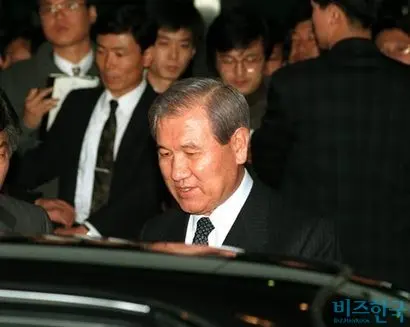
The gravity of the situation is heightened by the fact that the person who disclosed these hidden funds is not an investigative agency or a financial institution, but Director Roh So-young, the daughter of former President Roh Tae-woo, who was the beneficiary of the extorted funds. If Director Roh was aware of the nature of these funds and either turned a blind eye or assisted in concealing them, she could potentially be linked to criminal activity.
South Korean criminal law punishes the act of shielding or aiding a criminal as strictly as the crime itself. A lawyer in Seocho-dong said, "Given that the slush funds concealed by Director Roh So-young and her family were illegal funds that should have been returned to the national treasury, they should be punished just as severely as her father, who extorted these funds."
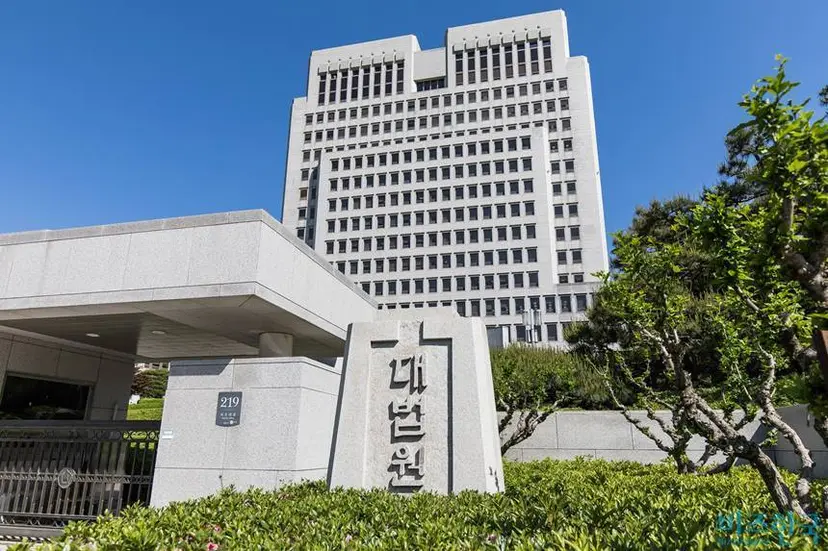
Consequently, public attention is focused on the Supreme Court, which will make the final ruling in this divorce case. A civic group representative emphasized, "The Supreme Court must thoroughly uncover the truth behind the Roh So-young family's hidden slush fund and reach a decision that all stakeholders can accept."
The Supreme Court will likely need to clearly define the nature of these funds, as the arguments from Director Roh So-young, based on the so-called 'Kim Ok-sook memo,' and those from Roh Tae-woo and SK 003600 are diametrically opposed.
Director Roh’s side claims that the 30 billion won was a loan made to the company formerly known as Sunkyung (now SK) at the time. However, associates of former President Roh Tae-woo and Honorary Chairman Son Gil-seung, long considered the eternal 'number two' of SK Group, state, "Former President Roh Tae-woo demanded this as ruling funds after his retirement, and it was delivered in the form of a promissory note." In other words, they explain that it was not a loan, but money extracted from SK.
These conflicting claims align with objective observations as well. A political insider remarked, "If it were a loan, it would be standard to receive a loan certificate, not a promissory note. At the time, former President Roh extorted slush funds from all major companies, such as 25 billion won from Samsung and 25 billion won from Hyundai; it makes no sense that he would have only provided a 'loan' to SK, which was the fifth-largest conglomerate at the time."
An official in the business world analyzed, "It is highly probable that when former President Roh demanded the money from Sunkyung before his retirement, they handed over a promissory note as a promise to pay after his retirement." In fact, the promissory note was issued in December 1992, just before the presidential election won by Kim Young-sam, which does not align with the 1991 timeline claimed by Director Roh So-young for the 'loan' delivery.
Now, the public's eyes are turned toward the Supreme Court. A representative from a civic group stated, "The Supreme Court should not view this solely as a property division case due to divorce, but rather, as the final bastion of judicial justice in South Korea, show that illegally accumulated slush funds must be recovered to the very end." Another source in the legal community added, "There must be appropriate punishment for the criminals who concealed the proceeds of their crimes. This must prove the natural logic of a rule-of-law state: that crime can never find a place to take root under any circumstances."