

[비즈한국] The fate of SK034730 Group appears to hang in the balance of the Supreme Court's upcoming decision. In the appellate trial, the court ruled that Chairman Chey Tae-won must pay approximately 1.4 trillion won in property division to Roh Soh-yeong, director of Art Center Nabi. This amount is substantial enough to threaten the management control of SK Group.
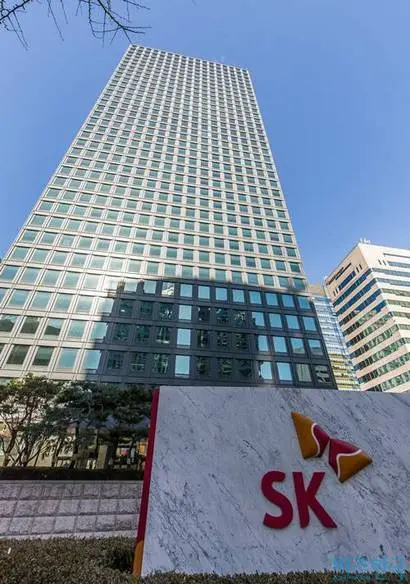
The company through which Chairman Chey Tae-won controls SK Group is SK Inc., of which he is the largest shareholder with a 17.9% stake, amounting to approximately 13 million shares. With SK's current stock price in the 140,000 won range, Chairman Chey would have to sell his entire stake to raise 1.4 trillion won, as majority shareholders are subject to a 25% capital gains tax. Ultimately, if this ruling is upheld by the Supreme Court, the chairman would lose his management control because the verdict mandates payment in cash.
The violent, illegal slush funds of former President Roh Tae-woo have now come to threaten the management control of SK Group, casting a shadow over the future of the nation's second-largest conglomerate, which plays a major role in the national economy.
In the business community, there is talk that "the ghost of Roh Tae-woo is obsessed with destroying SK even from beyond the grave." While some suggest that the former President's influence helped the group grow given the in-law relationship between the two, in reality, there are precedents of Roh obstructing SK’s business.
A business source remarked, "Though the general public may not be aware, former President Roh favored competing companies during SK’s acquisition of Yukong, and when selecting telecommunications operators, he personally ordered the return of the business license, making him an in-law who was less helpful than a stranger to SK."
Business insiders collectively agree that during his lifetime, the former President was the one who blocked SK’s entry into the oil and telecommunications sectors. In other words, rather than helping, he was the primary obstacle to the businesses that serve as SK's current pillars.
Roh Tae-woo, a business obstacle to SK during his lifetime, including hindering the Yukong acquisition
The late Chairman Chey Jong-hyon of SK Group was famous for preparing for the oil business for a long time to secure energy, a vulnerable sector for the Korean economy.
SK’s preparation for the oil business began in 1972 and took off with the establishment of Sunkyong Oil in 1974. The project was derailed by the first oil shock, but the company challenged it again in 1978. When Gulf Oil, which held a 50% stake in Korea Oil Corporation (Yukong), decided to withdraw from Korea due to the second oil shock, the government decided to sell the corporation, including those shares. The conditions set by the government included raising 100 million dollars in cash and demonstrating oil procurement capabilities.
Having built close ties with Saudi Arabia through the first and second oil shocks, Chairman Chey Jong-hyon was the most qualified to meet the government's acquisition requirements. At the time, all of Korea's major conglomerates focused on the acquisition bid. Besides SK, Samsung and Nambang Development were also active, but they fell far short of the government's conditions. For example, SK proposed importing 50,000 barrels per day from Saudi Arabia, whereas Samsung proposed importing only a few thousand barrels from Mexico. It was clear to anyone that SK held the advantage.
Yet, a surprise almost occurred due to former President Roh Tae-woo. It is known that the "New Military" faction, which held power at the time, and Roh, the second-in-command of that faction, obstructed SK’s entry into the oil business. In fact, circumstances have emerged suggesting that Roh, lobbied by Samsung, stood on their side and hindered SK’s dream of entering the oil industry.
However, the reason SK was eventually chosen for the Yukong acquisition was not only due to its superior quality and quantity but also because of the misjudgment by Roh and the New Military, who were influenced by lobbying. They had overlooked the risk that Mexico, a leftist regime, could use oil as a weapon against South Korea at any time if it were to nationalize its oil industry.
Roh also personally ordered the 'return of business license' for the selected telecommunications operator
Roh’s obstruction of SK’s telecommunications business was even more blatant. Former President Roh, often mocked as "Mul-tae-woo" (soft/weak), personally demanded the return of the telecommunications license that had been won through a fair, competitive bidding process, citing political pressure. Ultimately, SK had to return the license "with tears in its eyes."
SK decided on telecommunications as a future growth engine in 1982, two years after acquiring Yukong. This was part of Chairman Chey Jong-hyon’s management strategy, which looked 10 years into the future. After establishing SK USA in 1984 to concretize the business, SK began full-scale training by investing in a small U.S. telecommunications firm in 1988. In 1989, they created a corporation named EuCronics in the U.S. for practical training, leading to the establishment of Sunkyong Telecom in 1991.
This thorough preparation led to the company receiving the highest score in the 1992 selection for the second mobile telecommunications operator.
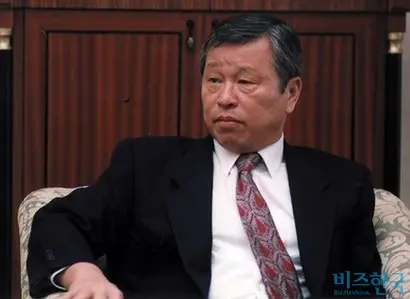
SK’s selection was the result of long-term preparation to achieve its goals. Nevertheless, competitors who lost the bid joined forces with political circles to frame the outcome as a "special favor" due to the in-law relationship with the former President. Consequently, Roh demanded that SK "return the telecommunications license," citing political pressure. A letter of demand for the return, issued under the name of the Office of President Roh Tae-woo, surfaced during the divorce proceedings with Director Roh Soh-yeong as key evidence.
In the end, Chairman Chey Jong-hyon made a grand decision, declaring the return of the license just one week after the selection, stating that he could not run a business while dividing the nation. In effect, the former President had overturned a government selection process that had been conducted legally and without favoritism. This caused South Korea’s international credibility to plummet, with the former President leading the way.
Despite this, SK successfully entered the telecommunications business by acquiring Korea Mobile Telecom through an open bid under the Kim Young-sam administration.
Threatening the management of the 2nd largest conglomerate even after death
The former President is once again pushing SK into a crisis with the illegal slush funds he extorted through violence during his tenure. Some of these unrecovered funds were hidden and managed by his family. His daughter, Director Roh Soh-yeong, cited a memo from her mother, Kim Ok-sook, during the divorce proceedings to claim that "30 billion won was lent to SK at the time, and SK grew using that money." The court accepted this, even though it was well aware that these were illegal slush funds.
The amount the court ordered to be divided reaches approximately 1.4 trillion won. This is money that Chairman Chey Tae-won must pay out of his own pocket. Chairman Chey inherited a fragile management foundation from the previous generation and has already endured imprisonment twice to protect the group’s management. With no cash on hand, his only option is to sell his shares to raise the necessary funds.
As the second-largest conglomerate, SK accounts for over 10% of the national economy. The damage resulting from this threat to management will be borne entirely by the public. That is where the gravity of the situation lies. For this reason, the business community interprets Director Roh Soh-yeong’s actions as using the violent, illegal slush funds extorted by her father to threaten the public.
A business source commented, "Our people were already disgusted by Roh Tae-woo’s illegal slush funds, and the fact that this nightmare has returned—and is now being used to threaten the public—is fueling even greater public outrage."