

[비즈한국] "During my five years in office, approximately 500 billion won in governance funds was created. It was primarily raised in cash from corporations... I bear full responsibility for all of this." (October 1995, President Roh Tae-woo's public statement)
"The decisive reason Roh So-young was awarded over 1.3 trillion won in property division is the claim that those 30 billion won were provided to Sunkyong from Roh Tae-woo's slush fund. This ultimately implies that a slush fund hidden through criminal activity continued to exist, and the prosecution failed to collect it. I believe it is appropriate to take a direction that leads to the recovery of these illegally raised funds." (September 3, 2024, Jung Chung-rae, Chair of the Legislation and Judiciary Committee, during the confirmation hearing for the new Prosecutor General)
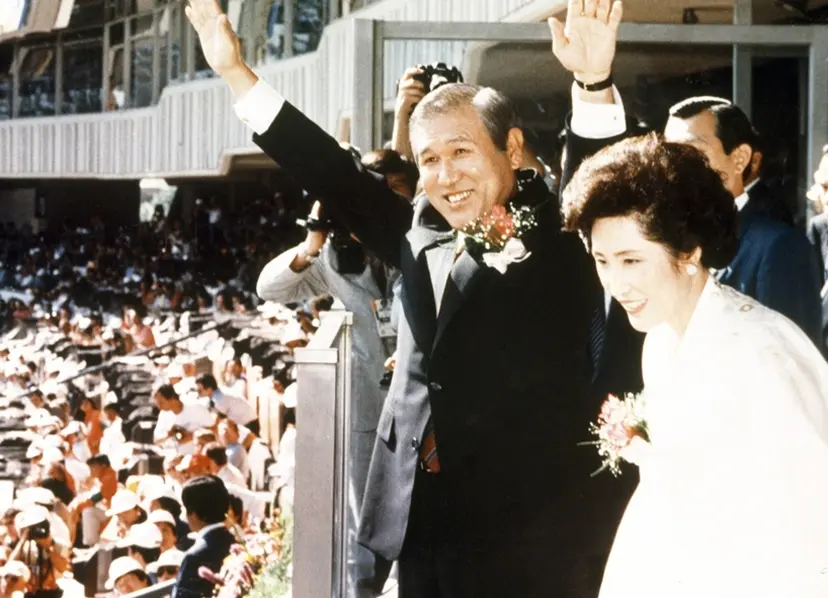
In October 1995, former President Roh Tae-woo personally revealed that he had used the presidential power entrusted to him by the people to forcefully extort funds, creating a slush fund of 500 billion won for his own private greed. At the time, the announcement shocked the world, and public outrage reached a breaking point.
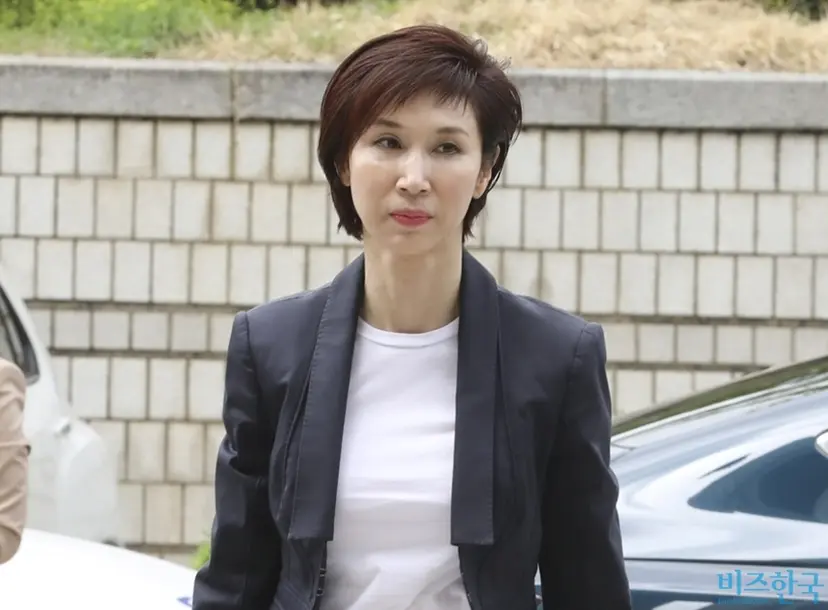
The nightmare of the 'Roh Tae-woo slush fund,' which had been forgotten after his death, is once again driving the nation's anger to its peak. This is because, after 30 years, the slush fund has resurfaced at the center of attention. It was triggered by the very person who revealed it: his daughter, Roh So-young, Director of Art Center Nabi. Some in the public have even mocked her, suggesting she is metaphorically desecrating her father's legacy.
Director Roh So-young disclosed this information to gain an advantage in her divorce litigation, fully aware that the money was illicit loot extorted through the violent exercise of presidential power. She revealed it through a slush fund memo managed by her mother, Kim Ok-sook, who was the former President’s wife.
The total scale of the slush fund managed by Kim Ok-sook in the form of a memo reaches approximately 90 billion won. It is widely believed that this may be a portion of the 500 billion won slush fund that the former President himself admitted to in 1995. In the past, the Kim Young-sam administration, while attempting to purge the previous regime, thoroughly investigated the Roh Tae-woo and Chun Doo-hwan slush funds, but this money was not uncovered at the time. It remained hidden because it was managed privately by family members like Kim Ok-sook. In other words, it had been concealed and managed in secret.
When the former President admitted to creating a 500-billion-won slush fund, the public was angry for two main reasons. First, the people were furious that the presidential authority entrusted to him for the benefit of the nation and the people was used to forcefully extort money for his own personal greed.
The second reason is the astronomical scale of the 500 billion won. At the time, the annual salary for a new employee at Samsung Electronics005930, considered one of the best workplaces in the country, was less than 15 million won. With a major conglomerate like Samsung Electronics at that level, salaries for new employees at small and medium-sized firms were under 10 million won. Converted, this means he extorted the equivalent of 50,000 people's annual salaries in just five years of his presidency. Since a unit in the Gaepo District 1 apartment complex—now considered a top-tier residence—cost about 100 million won back then, that amount would be equivalent to 5,000 apartments.
By claiming to be an "ordinary person, Roh Tae-woo" to position himself as a president for the common people, while stabbing those same people in the back, the former President’s extortion of such an astronomical slush fund was a betrayal. It is staggering to the public that this nightmare has reappeared just as it was fading into history after 30 years.
Public anger today is driven by two factors. First, that an astronomical slush fund still existed and, instead of being returned to the state treasury, served as the bedrock for the Roh Tae-woo family's luxurious lifestyle. The public is incensed that the former President and his family not only deceived the people but have been living in luxury funded by money that rightfully belonged in the national treasury.
Another factor fueling the anger is the scale of the hidden slush fund. People are shocked by the massive figure of nearly 90 billion won. Given that this 90 billion won represents the face value at the time of its creation, its current value is beyond calculation. The trigger for this revelation was the 30 billion won in slush funds disclosed by his daughter, Director Roh So-young.
According to Director Roh, these 30 billion won were lent to Sunkyong and have grown into assets now valued at approximately 1.4 trillion won. The issue is that the court accepted this evidence without questioning the fact that it originated from illicit funds. A simple calculation suggests that if 30 billion won is now estimated at 1.4 trillion won, then 90 billion won could be worth over 4 trillion won.
This logic is concerning, as the reality of the hidden portion of the former President's illicit funds continues to mire the common people in frustration and despair. It is also the fundamental reason for the public's distrust of the judiciary and the political establishment, leading to growing calls for a thorough investigation and the implementation of institutional safeguards.