

[비즈한국] Apple held its September event. The autumn event, held annually ahead of the Chuseok holiday, is the stage where Apple's most important mobile products, centered on the iPhone and Apple Watch, are unveiled. This year, Apple Watch, AirPods, and iPhones reflecting the latest mobile computing trends were introduced.
'10th Anniversary' Apple Watch: Largest and thinnest ever
The Apple Watch has increased in size. The 10th-generation Apple Watch Series 10 comes in two models: 42mm and 46mm. These numbers refer to the height of the case. Looking back at the first generation 10 years ago, which came in 38mm and 42mm, the smaller model is now the same size as the initial larger one. Compared to last year's Apple Watch Series 9, which was 41mm and 45mm, it has grown by 1mm each—a size so large that it can be considered near the limit for a watch.
Furthermore, by drastically reducing the bezels, the display has become much larger. The screen area is about 30% wider than the previous generation, and Apple stated that it can display about one more line of text compared to before.
The display change is more interesting than the size. Named "wide-angle OLED," this screen allows each pixel to emit light at a wider angle. Displays are typically designed to be viewed from the front. While OLED is less affected, it certainly has viewing angles, and it can look darker or have different colors depending on the viewing angle. The new Apple Watch widens the viewing angle of the light, making it 40% brighter even when viewed from an angle. This seems to reflect the reality that people often glance at their watches rather than always lifting their wrists to look at them directly.
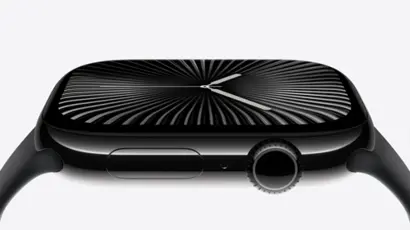
Power efficiency has also improved, and the Always-On display now updates information once per second in standby mode, up from once per minute previously. There have also been changes to the case, with a polished aluminum finish. They polished the aluminum until it shone and used a special oxidation process to create a shimmering case. It remains to be seen how it will compare to the now-discontinued stainless steel case.
Apple Watch introduces functional health updates every year, and this time, it adds the ability to diagnose sleep apnea. With approval from agencies including the FDA, it will diagnose sleep apnea in over 150 countries starting this month, providing symptom reports and data that can be evaluated by doctors.
What's welcome is that this feature applies not only to the Apple Watch Series 10 but also to the Series 9 and Apple Watch Ultra 2. It seems that if the device has a Neural Engine, analysis is possible. This year, the Apple Watch Ultra will carry over the 2 for another year instead of releasing a 3. It appears to be taking a breather by introducing a new case, and since the device's performance is still ample, they seem to be focusing on the design of the standard model while giving the Ultra a rest.
AirPods Pro 2: Updated with hearing support features
AirPods 4 are also being released. They come in an open-ear form factor that resembles the AirPods 3. Equipped with the H2 chip that controls sound, operation, and sensors, they support Adaptive Audio, Transparency mode, gesture recognition, and Spatial Audio. Additionally, there is an option to purchase a version with Active Noise Cancellation separately. In effect, it has absorbed the features of the AirPods Pro 2.
So, will the AirPods Pro be updated? There is no hardware change, and they continue as the AirPods Pro 2. Instead, the difference is made through software. The role is to protect hearing, identify problematic areas, and provide compensation. Protecting hearing by listening to music at lower volumes through noise cancellation was the starting point of the AirPods Pro. To this, a medically recognized hearing test has been added, which compensates for frequencies that individuals have difficulty hearing.
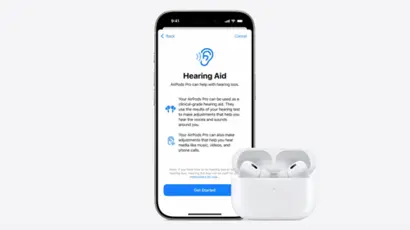
This hearing compensation information is reflected across all Apple devices, creating personalized sound for content like music and movies. It also amplifies everyday sounds. While not a replacement for a medical hearing aid, it plays a role in filling in areas where one might not hear well. One might think it's better to use AirPods Pro than uncomfortable and unattractive hearing aids, but more importantly, formalizing hearing loss that is hard to notice as one ages and compensating for it in daily life seems likely to improve quality of life.
As per rumors, the AirPods Max receive new colors and a minor update changing the charging port to USB-C. It is a pity that an update based on the H2 processor was not implemented for the AirPods Max, which aim for Hi-Fi audio. Thinking differently, however, it might be good that the AirPods Pro 2 and AirPods Max can be used for longer.
Looking at the Apple Watch or AirPods Pro, providing new experiences and raising expectations through software even when there isn't a brand-new device is part of what boosts affection for devices and brand loyalty. And that is possible because, fundamentally, there is room in the semiconductor performance, and there is software that fills that space with new technology. This is the strength Apple always talks about—handling hardware, software, and operating systems all together—which, in the end, keeps the devices shining.
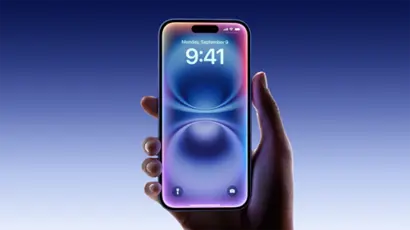
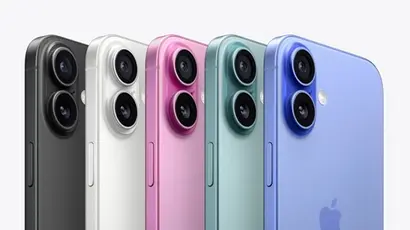
iPhone 16: Embraces AI and adds Camera Control to the bottom side
The star of the September event, the iPhone, comes with the name 16. There are four models as before: iPhone 16, 16 Plus, iPhone 16 Pro, and 16 Pro Max.
Highlighting a few hardware changes: first, the iPhone 16 Pro models have slightly larger screens at 6.3 inches and 6.9 inches. This is essentially putting the largest possible screen within the 7-inch limit, which is the constraint for single-screen smartphones. They created space by further reducing the bezels, and it makes one wonder, "Is there anything left behind this?"
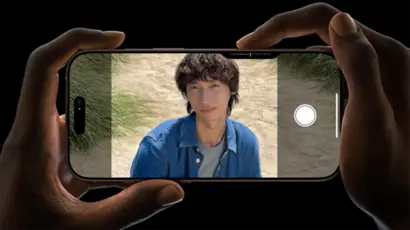
Also, the iPhone 16 replaces the mute switch with the Action Button introduced on last year's iPhone 15 Pro. You can press and hold it to trigger various functions, including silent mode. Furthermore, both products add a "Camera Control" button on the bottom right side. This wide button, which operates with a Taptic Engine, can be pressed to take photos, and you can slide your finger across it to adjust modes or shooting parameters. It seems to be a UX designed to be more intuitive and less obstructive to the screen.
The two products are equipped with the A18 and A18 Pro processors, respectively. Last year, Apple created a performance gap by putting the A17 Pro chip in the iPhone 15 Pro and the previous-generation A16 in the iPhone 15, but this year, they matched them in the same generation. It was an attempt to put a high-performance chip from a previous generation into a standard model because the processor's performance was still ample. The experience and reviews weren't bad since the performance was still excellent, but the problem was Apple Intelligence.
Apple Intelligence and the new Siri require significant computing resources. Due to the nature of smartphones, they must respond to commands immediately without waiting, which requires not only Neural Engine and GPU performance but also significant memory. Since the A16 was insufficient, the iPhone 15 faced a situation where it could not fully utilize Apple Intelligence. I suspect even Apple did not foresee this situation.
However, since Apple Intelligence is highly likely to become the center of the iPhone experience in the future, it appears Apple is not treating it as a point of differentiation for the devices. Above all, they reinforced the memory that directly impacts Apple Intelligence, increasing not just capacity but also memory bandwidth by about 17%.
Power efficiency has also improved, allowing it to perform the same tasks as the previous generation with lower power. This can be read as a move to reserve system resources for generative AI. This is also related to thermal design; the aluminum-based heat dissipation system applied to the iPhone 15 Pro is now applied to the standard iPhone 16 model. In the case of the iPhone 16 Pro, the heat treatment capacity has increased, allowing it to maintain performance for about 20% longer.
This heat dissipation system is advantageous when using high performance consistently, like in high-end gaming, but it can also be expected to reduce the phenomenon where one side of the device gets hot whenever generative AI draws on high performance momentarily. Because Apple Intelligence continues to work even while you are using the device and while you are not, if heat is not properly dissipated, it can cause a subtle discomfort. The role of resolving this cannot be ignored.
The iPhone 16 and iPhone 16 Pro also feature better cameras and shooting functions, and their base performance has improved noticeably. However, one might feel that the scope of hardware changes is a bit plain. The reason is Apple Intelligence. Most of the core functions of the new iPhone and iOS are linked to Apple Intelligence. The hardware role of the iPhone 16 series is to operate this Apple Intelligence comfortably.
In a way, Apple has been unveiling the iPhone 16 since the WWDC last June. Because the main issues were fragmented, the intensity of the excitement was reduced, but if this announcement had been made simultaneously with the Apple Intelligence announcement at WWDC, it would have been more surprising than ever. Perhaps that is why Apple tightly controls rumors about its products.
However, Apple Intelligence is, on the other hand, not just a feature of the iPhone 16 but something that affects the entire Apple ecosystem, and since it expands the realm to the app ecosystem, there is no need to limit its features and concepts by announcing it solely with the new device. The WWDC announcement likely placed heavy weight on the changes Apple Intelligence will create, going beyond just this year's iPhone.
It is a welcome development that all products, including the iPhone 16, Apple Watch, and AirPods, can be purchased in Korea starting September 20. Korea has joined the ranks of "first-wave launch countries." In terms of time, it is faster than the US and one hour later than Australia. It can be seen that there is that much more room in Apple's production and inventory management, and that the role of the iPhone in the domestic market has grown.