

[비즈한국] The Ministry of Land, Infrastructure and Transport (MOLIT) has recently expressed opposition to a proposal to mandate the installation of flood prevention facilities in semi-basement and multi-unit housing vulnerable to flooding, a Bizhankook investigation has confirmed. The Ministry of the Interior and Safety (MOIS), which oversees disaster safety, has been pushing for the installation of these facilities to prevent flood damage, but faced limitations due to resistance from building owners and sought to improve the relevant regulations.
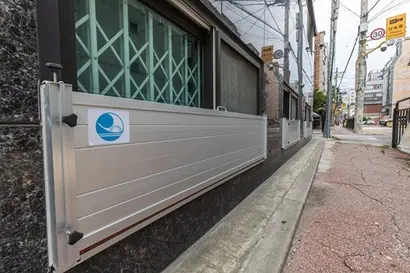
According to documents including a "request for institutional improvement regarding the installation of flood prevention facilities in semi-basement and multi-unit housing" and related replies obtained by Bizhankook through information disclosure requests to MOIS and MOLIT, MOLIT issued a "non-acceptance" stance on the ministry's request last month on the 6th. The reasons cited for the rejection included concerns over retroactive legislation, a lack of policy research, and other policy-related grounds.
Previously, in July, MOIS requested that MOLIT improve the system to facilitate the installation of flood prevention facilities. While relevant ministries had already prepared and implemented countermeasures to prevent flood damage in such homes, the judgment was made that the current system—where installation is effectively impossible if the building owner objects—has limitations in addressing flood risks for existing buildings.
In principle, the installation of flood prevention facilities requires the consent of the landlord. While the Natural Disaster Countermeasures Act and the National Land Planning Act allow the government to mandate the installation of flood barriers in semi-basement homes in areas prone to flooding or where disaster prevention is necessary, the government and local authorities have been hesitant to designate such areas or pursue such requests, fearing backlash from residents concerned about property value depreciation. (Related article: 'Flood Risk' - The absurd reason why 7,632 semi-basement households in Seoul haven't installed flood barriers)
The improvement proposal by MOIS included: 1) amending the Building Management Act to inspect the flood-prevention performance of buildings and make the installation of barriers mandatory for those at risk of flooding, and 2) revising the enforcement decree of the Certified Public Realtors Act to institutionalize the requirement for realtors to inform buyers of a property's flood history and the presence of flood prevention facilities during real estate transactions.
However, MOLIT rejected both requests. It argued that imposing performance inspections, mandatory installation of barriers, or fines on buildings that have already received legal occupancy permits would constitute retroactive legislation and potentially infringe upon basic rights. The ministry also took the position that requiring certified realtors to explain a property's flood status or the presence of flood prevention facilities constitutes excessive regulation.
On the 22nd of last month, MOIS requested that MOLIT reconsider the improvements. Based on a legal review, MOIS argued that MOLIT’s refusal was unfounded. It stated that the proposal aligns with the purpose of the Building Management Act, which aims to ensure the management and performance of existing buildings, and that preventing flood damage could be considered a "grave public interest," which the Constitutional Court recognizes as an exception to the prohibition on retroactive legislation. MOIS also concluded that the mandatory explanation by realtors is a matter of policy judgment and is legally permissible.
MOIS reiterated its request for cooperation to MOLIT, stating, "We ask that you review substantive legal amendments and pursue research projects to allow for the direct or indirect installation of flood prevention facilities in existing buildings."