

[비즈한국] Although the government is in its sixth year of supporting research activities to foster physician-scientists, the number of graduates has not improved. Only about 1% of medical school graduates pursue the path of a physician-scientist each year. The government plans to gradually increase this to 3%, which is the level seen in developed countries. However, experts in the field point out that closer support is needed, as personnel are leaving due to reasons such as job instability and a lack of financial compensation.

Physician-Scientists: Most Research Conducted in 'Ophthalmology'
Since 2019, the government has been operating various programs to foster physician-scientists. A pilot project for residents began in 2019, followed by the establishment of full-time doctoral programs (2020), undergraduate programs (2021), and postdoctoral/early-career physician-scientist training (2022). These were introduced in response to calls for a comprehensive, full-cycle support system. Currently, 27 medical schools and graduate schools in Korea are participating in physician-scientist training programs. According to the Ministry of Health and Welfare, since the program's inception in 2019, 233 residents and 113 doctoral researchers have received support, resulting in the graduation of 39 physician-scientists.
A physician-scientist is a doctor who treats patients and studies diseases while also maintaining an interest in science and technology in related fields to perform translational research. Translational research is, quite literally, research that acts as a "bridge" to commercialize knowledge gained through studies into forms such as diagnosis, prevention, and treatment. The government expects a virtuous cycle where their clinical ideas lead to technological commercialization and are applied to medical fields, thereby improving the quality of healthcare. They are currently active in all areas of bio-health, including pharmaceuticals (such as therapeutics and vaccine development), medical devices, cosmetics, and digital healthcare.
In which specific fields are these physician-scientists active? According to the "Bio-health Talent Development Program Guide" published by the government, among 29 studies by Korean physician-scientists introduced in international journals like Nature and Nature Immunology in 2023, the ophthalmology field had the highest number with 5 studies. Genetics, immunology, oncology, and vaccines followed as tied for second with 3 studies each, and cardiology ranked third with 2. Other fields included neurology and dermatology. In the case of ophthalmology, most of the research was related to amblyopia treatment.
Support at 1% Level... Wages Lower Than Specialists and General Practitioners
The number of doctors in Korea intending to become physician-scientists remains minimal. According to "Health Industry Brief No. 334" published by the Korea Health Industry Development Institute, there are approximately 3,300 medical school and graduate medical school graduates in Korea annually, but fewer than 30—less than 1%—choose basic medicine as their career path. Consequently, there are almost no medical doctor (MD) applicants for doctoral programs in medical science, which are instead being filled by graduates from colleges of natural sciences and engineering.
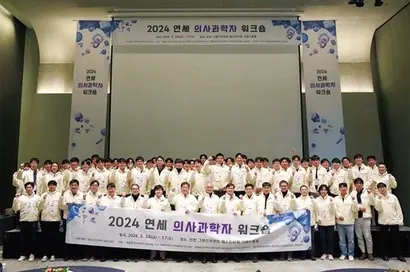
According to the report, the Department of Medical Sciences at Seoul National University College of Medicine had a total of 26 new doctor-students between 2014 and 2018 (spring semesters), averaging only 5 per year. Yonsei University recorded 1 to 3 students per year. While KAIST School of Medical Science has over 100 graduates, only about 10% successfully settle as physician-scientists. Even though the basic medical courses within the graduate school are run as full-time programs, the enrollment rate of doctors remains very low. This is not a problem unique to Korea. The report notes, "Major countries are facing similar problems, such as a decline in the number of physician-scientists. In the US and elsewhere, while the scale of NIH (National Institutes of Health) funding has expanded and research grant recipients among physician-scientists have increased, the actual number of physician-scientists has not grown."
A lack of economic incentives to bridge the wage gap with clinical specialists is cited as a cause. The argument is that since they face difficulties in research due to burdens like clinical care, commensurate compensation is necessary. Shin Chan-soo, former chairman of the Korean Association of Medical Colleges, who attended the forum on "Why and How Much Are Physician-Scientists Needed?" held last year, mentioned the difficulty of securing research funds. Shin stated, "For physician-scientists to persist, job security, stable annual salaries, and research funding are most important. The Ministry of Education must strive to train talent, and the Ministry of Science and ICT must establish a system to support basic research funding."
In reality, the difference in annual salary between doctors and scientists is not insignificant. According to a report on "Physician-Scientist Training Tasks for Fostering the Bio-health Industry" published by the National Assembly Research Service last May, the average annual salary of employees at 25 government-funded research institutes under the Ministry of Science and ICT was 93.7 million won in 2022. In contrast, the average annual wage for employed doctors in medical institutions in 2020 was 191.15 million won for specialists and 100.86 million won for general practitioners. Kim Eun-jung, a legislative researcher for the Health, Welfare, and Women's Team at the Social and Cultural Research Office, explained, "Unless there is continuous support for physician-scientists to settle as independent researchers, it will be difficult for the system to take root. This support could be for continuing research, but it could also include job stability through a certain level of salary."
The government expects that the increase in medical school admissions will help boost the number of physician-scientists. In March, Seoul National University applied to the Ministry of Education to increase its medical school admissions quota by 15 next year and to establish a "Department of Medical Science" to foster physician-scientists with a quota of 50 students. However, the increase has not yet been approved. Seoul National University currently operates a Department of Medical Science at the graduate level. KAIST is also pushing for the establishment of a Science and Technology Medical School to foster physician-scientists and physician-engineers.