

[비즈한국] It has been confirmed that Baedal Minjok (Baemin), the No. 1 delivery platform in the industry, is preparing an educational program for foreign riders. While Baemin explains that they are simply following the trend of an increasing number of foreign riders, some in the industry suspect that the platform is actively supporting the market entry of foreigners to improve its profitability.
Delivery Riders Oppose Baemin's New Foreign Rider Training Program
It has been confirmed that Baedal Minjok is preparing to open a new training course for foreign riders at "Baemin Rider School." Baemin Rider School is a facility specializing in two-wheeled vehicle training operated by Baedal Minjok. Although Baemin initially planned to open the training course in the second half of this year, the scheduled launch date appears to have been slightly delayed.
An official from Woowa Brothers, the company in charge of Baedal Minjok's logistics services, explained, "We are approaching this from the perspective of providing education in line with the trend of increasing foreign riders. It is currently in the planning and conceptual stage. A specific opening date has not been decided," adding, "However, the foreign rider training course will be limited to holders of F-2, F-5, and F-6 visas."
The influx of foreigners into the delivery market has become significant enough that Baemin is preparing a specialized training program. Just a few years ago, foreign riders were only occasionally spotted in areas like Gangnam in Seoul or industrial complexes in Gyeonggi-do, but now they can be found easily across the country.
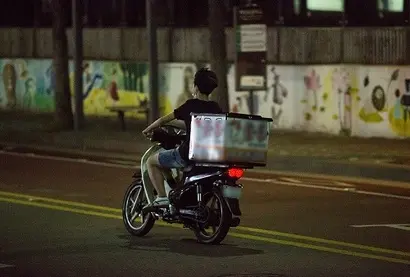
When visiting a university area in Suwon, Gyeonggi-do, on the 3rd, foreign riders were frequently seen. One foreigner entered a restaurant, picked up food as if familiar with the process, and rode off on a motorcycle; another used an electric bicycle for deliveries. Among the motorcycles on the road, there were often drivers who appeared to be foreigners.
Delivery rider 'A' said, "I heard from a chef at a restaurant I'm close with that there are over 20 Uzbek riders he knows just in this neighborhood. There are quite a few visible foreigners, and if you consider those who are indistinguishable from locals by appearance, such as Chinese riders who don't speak, the number of foreign riders is likely much higher than we think."
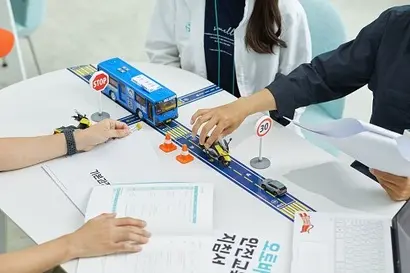
Baemin stated that the establishment of the training program is not intended to encourage or support the market entry of foreign riders. However, among delivery riders, there is suspicion that Baemin is fully opening the delivery market to foreigners. Delivery rider 'B' expressed frustration, saying, "It seems like Baemin welcomes foreigners entering the delivery market. It's a ploy to lower market unit prices."
Delivery riders are wary of foreigners entering the delivery market. As the economic downturn persists and delivery demand decreases, competing with foreign riders in an already small market is a burden. Rider 'B' claimed, "Foreigners take calls regardless of the price. They perform all the so-called 'trash calls' (deliveries with low pay and long distances)," adding, "By accepting these absurdly low-priced calls, they are disrupting the market."
Concerns About Illegal Employment… "Baemin Connect Is Strictly Managed"
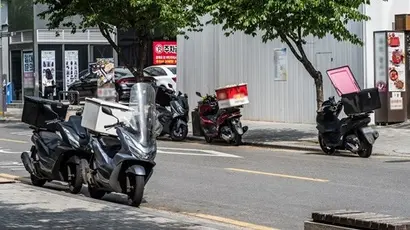
As the number of foreign riders in the delivery market grows, the issue of illegal employment is rising. To work as a delivery rider in the domestic market, one must hold a residence visa (F-2), permanent residency visa (F-5), or marriage immigrant visa (F-6) under the Immigration Act. However, it is estimated that few foreigners actually hold these visas. According to statistics on the visa status of foreigners residing in Korea released by the Korea Immigration Service of the Ministry of Justice, as of the end of July, only 399,012 out of the total 2,616,007 foreign residents held F-2, F-5, or F-6 visas, which is only 15% of the total.
The number of cases involving the detection of illegal riders is also on the rise. According to the Ministry of Justice, 171 cases of illegal employment of foreigners in the delivery and logistics sectors were detected from January to July this year. This has already exceeded the 117 cases detected in the entirety of 2023.
Delivery riders explain that they encounter illegal foreign riders several times a day. One rider said, "I was waiting for food at a restaurant when I encountered a foreign rider. He spoke broken Korean, so I asked, 'Which country are you from?' and he said 'Vietnam.' When I asked, 'Do you have a visa?' and 'Do you have insurance?', he suddenly pretended not to understand and said he didn't know Korean. Even when I asked in English, he said he didn't know what I was talking about and left the scene in a hurry."
This rider emphasized, "Many foreigners are working in delivery illegally by borrowing others' names. Domestic riders carry commercial delivery insurance, but foreigners often operate without insurance, making it difficult for victims to receive compensation if an accident occurs." He added, "Even if we encounter a foreigner suspected of illegal employment, they leave on their motorcycles immediately, making it hard to report them. There needs to be strong legal sanctions."
Another delivery rider pointed out, "If even the delivery platforms are actively utilizing foreign riders, wouldn't the agencies that act as subcontractors for the platforms also increase their foreign hiring? There must be many agencies hiring illegal foreigners, and it's doubtful whether the platforms will actively manage and crack down on these agencies."
In response, Baemin explained, "We cannot be involved in how delivery agencies manage their foreign riders. However, regarding foreigners working through 'Baemin Connect,' we strictly manage them by verifying their visas and alien registration cards. Baedal Minjok will do its best to help establish a sound delivery culture in the domestic delivery industry."