

[비즈한국] K-Bank has moved one step closer to entering the KOSPI market after passing the preliminary review for its initial public offering (IPO). With record-breaking earnings in the first half of this year, K-Bank is accelerating its plans to list within the year. The K-Bank IPO is also drawing attention as it marks the first listing of a KT030200 subsidiary in a year, following Millie's Library397880. KT has been striving to transition into a "holding-style company" while pushing for the IPOs of its subsidiaries, making the progress of these initiatives a point of interest.
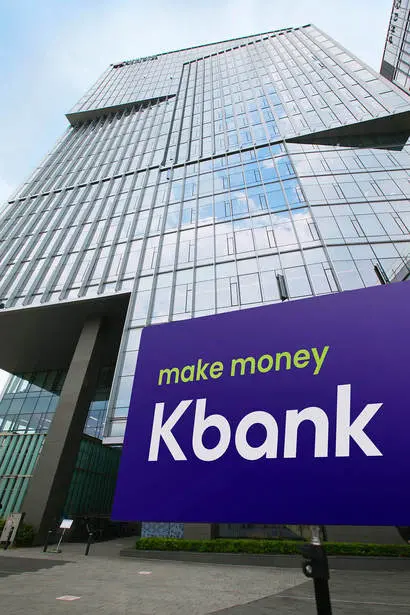
After a second attempt, K-Bank has finally crossed the first hurdle for its listing. On August 30, the Korea Exchange announced that it had approved K-Bank's preliminary review for a KOSPI listing. K-Bank previously applied for a KOSPI preliminary review in June 2022 and received approval that September, but withdrew the IPO in February 2023, determining that the market downturn made it difficult to secure a fair valuation. K-Bank re-applied for the preliminary review on June 28 of this year and received approval in just two months.
The company also grew in size before its second attempt at an IPO. K-Bank's net profit, which stood at just 12.8 billion won in 2023, jumped to 85.4 billion won in the first half of 2024. This figure is higher than its total net profit for all of 2022 (83.6 billion won). As of the first half, the bank reached 11.47 million customers, with deposit and loan balances reaching 21.85 trillion won and 15.67 trillion won, respectively. K-Bank intends to leverage this momentum to go public before the end of the year.
K-Bank's IPO push brings attention to parent company KT’s long-standing ambition of transitioning into a "holding-style company." Under the leadership of former CEO Ku Hyeon-mo, KT pursued this transition. At the regular shareholders' meeting in March 2022, the former CEO personally mentioned his interest in shifting to a holding-style structure.
KT, which owns financial firms like BC Card and K-Bank, cannot legally become a holding company under the Fair Trade Act due to the principle of separation of banking and commerce (which prohibits financial capital and industrial capital from owning or controlling each other's sectors). This is why the term "holding-style" company is used. The idea involves restructuring the business to separate subsidiaries by division, with KT overseeing them. Indeed, during the former CEO's tenure, processes were carried out to split or group subsidiaries related to media/content (Studio Genie), finance (BC Card), and internet data centers (IDC)/cloud (KT Cloud) based on business sectors.
KT's goal in transitioning to a holding-style company is to increase its corporate value. KT's stock price has been criticized for being undervalued due to a governance structure described as a "company without an owner" (a company with dispersed ownership). The IPOs of K-Bank and Millie's Library were also pushed to obtain proper valuations for these subsidiaries. Furthermore, it aims to effectively manage subsidiaries to cultivate new businesses.
As of the first half, KT has 49 subsidiaries, nine of which (KT, Skylife058850, KTcs058850, KTis, KT Alpha, Nasmedia, PlayD, Genie Music, and Initech) are listed companies. Millie's Library, which is majority-owned by KT's sub-subsidiary Genie Music, also entered the KOSDAQ market. Other subsidiaries such as BC Card and KT Studio Genie are also considered potential IPO candidates.
However, since the former CEO failed to secure a second term, discussions regarding the holding-style company structure have largely faded. After a five-month management vacuum, Kim Young-shub was appointed as the new CEO on August 30, 2023. Since then, aside from efforts to erase traces of his predecessor, there have been no visible movements toward spinning off subsidiaries or reorganizing new business sectors.
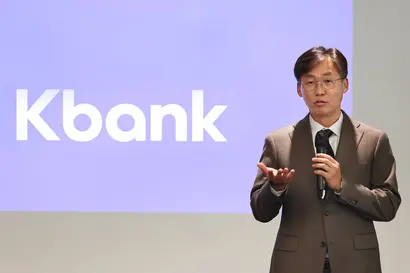
Although K-Bank is poised to go public after many twists and turns, concerns about its stock price remain in the changed market environment. Millie's Library, the KT subsidiary that listed earlier, has been struggling with its stock price despite going public after scaling down its offering.
Millie's Library lowered its desired offering price from 21,500–25,000 won in 2022 to 20,000–23,000 won in 2023. It also reduced the number of shares offered from 2 million to 1.5 million, eventually listing on the KOSDAQ on September 27, 2023, and recording a "double-initial-price-limit" (an opening price at double the offering price followed by hitting the upper limit). However, the stock price has been on a downward trend since then. As of the 4th, the stock price was 15,120 won, a decrease of more than 34% compared to the offering price (23,000 won). Beyond Millie's Library, the stock prices of all KT subsidiaries are on a downward trajectory.
The sluggish stock performance of its peer, KakaoBank323410, is also an issue. Even though KakaoBank is the largest of the three internet banks and has seen its net profit increase every year, its stock price has fallen to the 20,000 won range—about half of its offering price (39,000 won). Even accounting for parent company and owner risks, the decline is severe.
This contrasts with the significant rise in stock prices of financial holding companies and banks this year due to the Corporate Value-up Program. Jung Joon-seop, an analyst at NH Investment & Securities, analyzed, "In the stock market, the preference for platform companies is weakening, while traditional bank stocks continue to show strength."
Criticism regarding the "blood alliance" with the virtual asset exchange Upbit also persists. According to the office of Representative Min Byeong-duck of the Democratic Party of Korea, as of 2023, nearly half (49.8%) of K-Bank's customers held Upbit accounts, indicating a significant influence on customer acquisition. Deposits from Upbit account for 20% of K-Bank's total deposits. A financial industry official noted, "K-Bank grew thanks to its partnership with Upbit, but heavy reliance becomes a long-term risk," adding, "K-Bank's stock price could be influenced by future conditions in the virtual asset market."