

[비즈한국] Park Jeong-won, Chairman of Doosan000150 Group, has ultimately withdrawn the merger plan between Doosan Bobcat241560 and Doosan Robotics454910 following fierce backlash from shareholders. Faced with regulatory pressure amid controversy over unfairness, the group abandoned its plan to make Doosan Bobcat a wholly-owned subsidiary via share swaps. While Doosan Group had previously insisted there would be "no withdrawal of the merger," it appears to be taking a step back after failing to overcome public criticism. However, the group will continue with its broader corporate restructuring, which involves splitting off Doosan Bobcat—a cash cow—from Doosan Enerbility034020 and transferring it to the loss-making Doosan Robotics. This is interpreted as a sign that the group does not want to miss out on the high dividends from Doosan Bobcat and growth opportunities in the robotics sector. The group plans to revisit the withdrawn proposal after monitoring future market conditions, and all eyes are on how Chairman Park will navigate this situation.
Character
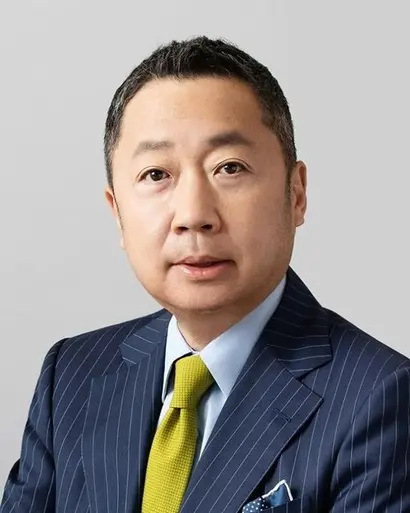
Born in 1962, Doosan Group Chairman Park Jeong-won is the eldest son of the late Park Yong-kon, Honorary Chairman of Doosan Group. In 2016, with the inauguration of Chairman Park—the eldest of the fourth generation of the Doosan family—the group became the first in South Korea to usher in a fourth-generation management era.
Chairman Park graduated from Daeil High School and Korea University with a degree in Business Administration, and later earned an MBA from Boston University in the United States. He is married to Kim So-young, the daughter of former Air Force Chief of Staff Kim In-ki, and they have two children: a daughter, Park Sang-min (born 1990), and a son, Park Sang-soo (born 1994). In 2017, his daughter Sang-min married Koo Dong-hwi, the eldest son of the LS family and current Vice Chairman of LS Electric010120, making Chairman Park an in-law of LS Board Chairman Koo Ja-yeol.
Chairman Park is also well-known for his love of baseball. He was active in a baseball club while attending Korea University, and as the owner of the Doosan Bears, he is known to have a unique affection for the team.
Career
Chairman Park joined Doosan Industrial as a new employee in 1985. After returning from his studies abroad, he rejoined Doosan Group in 1992 as a manager at Oriental Brewery (the predecessor to OB Beer). He held various positions, including Managing Director of the beverage division, Managing Director and Executive Vice President of the Doosan Corporate Management Headquarters, CEO and President of Doosan Trading BG, and Vice Chairman of Doosan Industrial Development (now Doosan E&C). Having served in various key roles across the group, Chairman Park ascended to the position of Doosan Group Chairman in March 2016, succeeding his uncle, Park Yong-man.
Chairman Park has held the chairmanship longer than any of his predecessors since the start of the group’s "brotherhood management" system. Re-elected at the shareholders' meeting this past March, his 10-year term is secured until 2027. Effectively, he appears to be entering a long-term reign under a one-man leadership system. Since Honorary Chairman Park Yong-kon became the head of the group in 1993, the brothers Park Yong-oh, Park Yong-sung, Park Yong-hyun, and Park Yong-man had taken turns leading the group in 3-to-4-year cycles.
Capability
Chairman Park's management capabilities were highlighted during the group's early exit from creditor-led management. After over 20 years of management training, he inherited the responsibility of steering the group through a difficult period. At the time, major affiliates were suffering from chronic cash shortages due to liquidity crises, triggered by a slump in the Chinese construction machinery market and other factors. Compounding this, excessive financial support for Doosan E&C caused the group's financial structure to deteriorate rapidly. Ultimately, under Chairman Park's leadership, the group signed a financial structure improvement agreement with a creditor group led by the Korea Development Bank and the Export-Import Bank of Korea in early 2020, and entered into harsh restructuring.
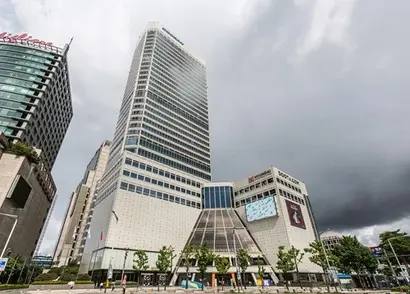
At the time, Chairman Park promised, "We will push for asset sales in line with management normalization and business restructuring," adding, "In this process, Doosan Corp. and its major shareholders will participate in the capital increase of the heavy industry division and fulfill our responsibilities as major shareholders." Doosan Group quickly implemented its self-rescue plan. It sold assets worth roughly 3 trillion won, including Doosan Infracore (850 billion won), Doosan Solus (698.6 billion won), the Dongdaemun Doosan Tower (800 billion won), and Doosan Corp.'s Motrol Business Group (453 billion won). The owner family also contributed their own private assets. Thanks to significant financial improvements and the performance recovery of key affiliates, the group managed to normalize its management within just two years.
Critical
Chairman Park envisioned a grand scheme to voluntarily delist Doosan Bobcat, a subsidiary of Doosan Enerbility, and transfer it to Doosan Robotics, but the plan met with immediate market criticism upon its disclosure. The core of Doosan Group's restructuring was to strengthen the control of the holding company, Doosan, and Chairman Park's family over Doosan Bobcat, the group's cash cow. The plan involved a "split-off merger" and a "share swap" process.
Doosan Group believed the reorganization did not violate relevant laws, such as the Capital Markets Act. However, the scenario of transferring Doosan Bobcat—a profitable company with 184 times the revenue—to the chronically loss-making Doosan Robotics was likened to a "shrimp swallowing a whale," drawing backlash from retail investors. A business insider noted, "There has been a long-standing desire to tap into the dividends of the cash cow Bobcat, and Doosan Robotics' listing provided a pretext. While moral questions remain, the merger plan was technically legal." The Financial Supervisory Service (FSS) and politicians also intervened. FSS Governor Lee Bok-hyun repeatedly rejected Doosan’s securities registration statement, maintaining a firm stance that "if the registration statement remains deficient, we will demand corrections without limit." In the National Assembly, the so-called "Doosan Bobcat Prevention Act" was proposed, which would require the calculation of merger ratios to take into account stock prices, asset value, and earnings value from multiple perspectives.
Challenges
On the 29th of last month, both Doosan Bobcat and Doosan Robotics held board meetings and decided to cancel their comprehensive share swap agreement. This partial withdrawal came 49 days after the restructuring plan was announced. Both companies issued shareholder letters under their respective CEOs, stating, "Even if the direction of the business restructuring is expected to be positive, it is difficult to proceed without sufficient support from shareholders and the market." They appear to be stepping back under pressure from financial authorities and shareholder opposition.
However, the fire has not been completely extinguished. While Doosan Bobcat will remain listed, the framework of changing its parent company to Doosan Robotics remains. The merger between the new entity formed from Doosan Enerbility (which includes Doosan Bobcat) and Doosan Robotics is still proceeding. The problem is that there is also strong opposition from Doosan Enerbility shareholders regarding the split-off merger. The FSS has demanded that Doosan disclose the specific decision-making process and internal discussions regarding the split-off merger, and that it recalculate the value per share of the company being absorbed by Doosan Robotics to present it to shareholders.
While some point out that this withdrawal only serves to calm the backlash from Doosan Bobcat shareholders for now, all attention is on Chairman Park's next move. Doosan Group, which expected synergies through the full integration of Doosan Bobcat and Doosan Robotics, is likely to monitor the situation before considering a re-attempt. Since Doosan must submit a corrected securities registration statement, the extraordinary shareholders' meeting scheduled for the 25th is expected to be postponed.