

[비즈한국] On August 29, the Ministry of Land, Infrastructure and Transport finalized and announced the 3rd Long-term Comprehensive Housing Plan following deliberations by the Housing Policy Deliberation Committee. The Housing Policy Deliberation Committee is a body responsible for establishing and amending housing plans, as well as designating or lifting speculative zones and adjustment target areas; it consists of 29 members, including the Minister of Land, Infrastructure and Transport as the chairperson, vice-minister-level officials from relevant ministries, and appointed private experts. The Long-term Comprehensive Housing Plan is a long-term statutory plan for the housing sector established under Article 5 of the Framework Act on Residence, setting the basic goals and directions for housing policy based on future changes such as low birth rates, an aging population, the rise of single-person households, and the crisis of local extinction.
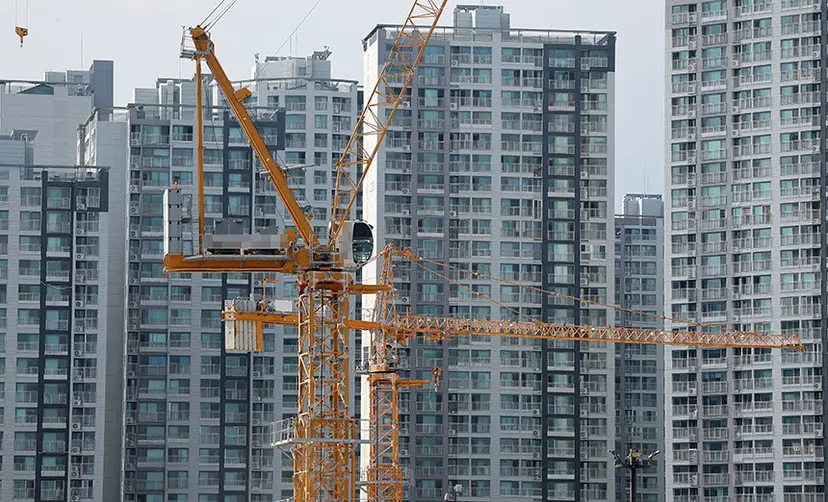
Under the vision of "Realizing housing stability for the people that boosts hope and reduces burdens," the 3rd Long-term Comprehensive Housing Plan aims to restore market functions, secure housing living rights for the public, provide dense housing welfare support so no one is left behind, and create living environments that meet public expectations. It presents four major policy directions to achieve these goals.
First is the stable supply of housing through the normalization of the housing market. The plan aims to foster fundamental stability in the housing market by ensuring an ample supply that meets new demand driven by factors such as population growth, income increases, and housing demolitions.
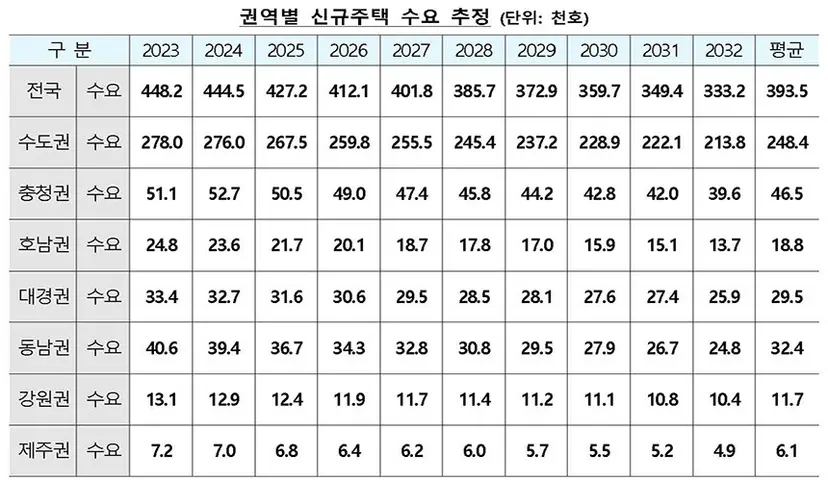
The demand for new housing nationwide between 2023 and 2032 is estimated at an annual average of 393,500 units. To expand the supply in city centers—where people prefer to live—redevelopment and reconstruction projects will be shifted from being subjects of regulation to being subjects of support, and complex procedures will be integrated and executed in parallel to increase speed.
Additionally, the plan intends to supply high-quality housing by utilizing optimal project types suited to regional characteristics, such as reconstruction of first-generation new towns through the Special Act on Improvement of Aging Planned Cities, "New:Village" projects for low-rise residential areas, and railway undergrounding. It also plans to supply housing rapidly within existing land while identifying new land sites at the right time and in the right places.
In particular, the Ministry is focusing on drastically improving conditions for aging planned city improvement projects. By allowing changes in land use zones and increases in floor area ratios (an increase of about 100%p in average floor area ratio for residential areas; up to 500% when changing from Type 3 General Residential to Semi-Residential) during integrated redevelopment, the plan aims to improve project viability while shortening schedules through safety inspection exemptions and integrated deliberations. It also includes a system to calculate public contributions in cash and use them to expand urban functions, allowing for the liquidation of contributions to timely fund infrastructure installation costs.
A plan to lead and implement systematic relocation measures is also included to preemptively block real estate market chaos caused by large-scale relocation demand.
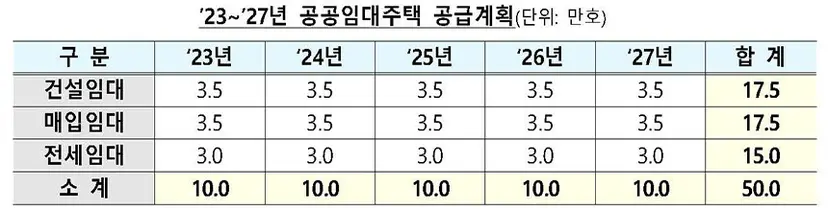
Second, the government will strengthen the housing safety net to ensure there are no blind spots. The plan aims to build a foundation for social integration by strengthening housing welfare for vulnerable groups, homeless households, and tenants, while encouraging the revitalization of sustainable residential communities. It intends to supply sufficient high-quality public rental housing through various methods and, to reinforce support for the vulnerable, expand housing benefits and assistance for relocation from substandard housing, while innovating delivery systems to be user-centered.
To reduce the housing cost burden on homeless households, the government will continuously strengthen support in guarantees, finance, and taxation, and support smooth transitions to better housing through the steady supply of affordable public housing for sale. To create a rental market where people can live with peace of mind, the government will enhance tenants' access to information and support the swift daily recovery of victims of jeonse (lump-sum deposit rental) fraud, such as through recovery support and free temporary residency in alternative public rental housing.
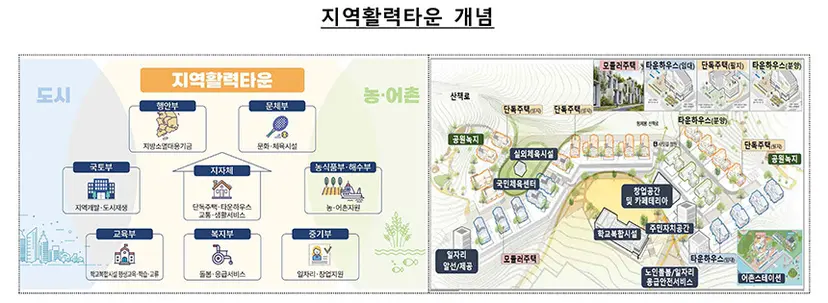
Third, the plan aims to shift the paradigm of housing support to respond to low birth rates, an aging population, and regional extinction. It will promote customized housing support for the younger generation, newlyweds, and the elderly, and boost local vitality to bridge the housing gap between the capital region and other provinces.
For youth and newlyweds, the plan provides life-cycle housing support—from asset formation to home ownership, marriage, and childbirth—along with expanded benefits for marriage and childbirth. To respond to the accelerating aging population, the government will build a system that guarantees a dignified retirement by expanding high-quality elderly-tailored residential spaces, such as "Silver Stays" that leverage private sector capabilities in city centers. Metropolitan cities will establish region-specific improvement systems to support the smooth renewal of aging downtowns and recover vitality through "Urban Convergence Special Zones" and "Corporate Innovation Parks." Meanwhile, for provincial areas, the plan supports the creation of living bases to counter population decline and encourages the relocation of retirees and young people to these regions through tax benefits and deregulation.
Fourth, the government will create future-oriented green residential environments befitting an era of $40,000 per capita income. It will secure comfortable and convenient living environments that meet public expectations and induce the supply of future-type housing to respond to climate change and achieve carbon neutrality.
The plan will expand the supply of eco-friendly, energy-saving housing in line with the Zero Energy Building (ZEB) roadmap established in April 2023. It will also promote the diffusion of modular housing (Off-Site Construction method), long-lasting housing, and smart housing for wellbeing by having the public sector take the lead in their adoption. To build a living environment free from floor noise, the government will establish a post-construction verification system to check soundproofing performance on-site, apply new construction methods, and develop technologies related to floor noise. It will also establish a preemptive management system so that new housing supplied in the future can maintain quality over a long period.
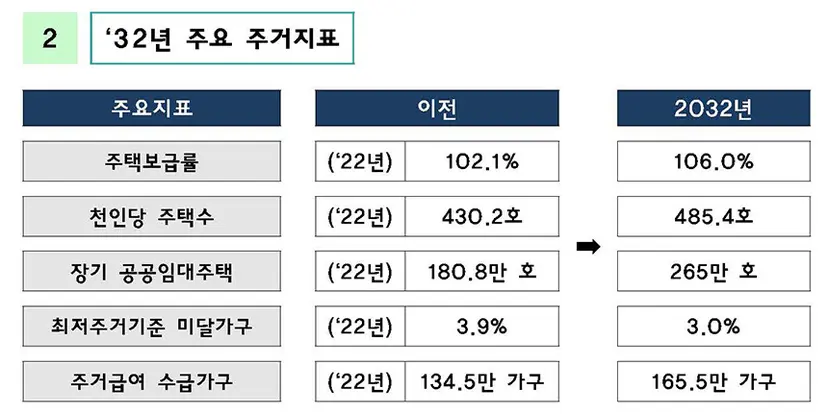
If the 3rd Long-term Comprehensive Housing Plan announced this time is implemented without a hitch, it could lead to a housing supply rate of 106.0%, 485.4 housing units per 1,000 people, and the supply of 2.65 million long-term public rental housing units by 2032. Perhaps the numbers are not what matters. There have been almost no cases where target numbers were actually met in the past. I sincerely hope this becomes a model government that does not just scramble to fill out boxes like elementary school students doing homework, but does the homework to genuinely develop real learning ability.
Kim Hak-ryul, head of the Smart Tube Real Estate Research Institute and known by the pen name "Pashong," previously served as a team leader at the Real Estate Research Division of Gallup Korea. He manages and hosts the Naver blog "Pashong’s World Exploration" and the YouTube channel "Stue TV." He is the author of books including "Absolute Principles of Seoul Real Estate (2023)," "The Future of Incheon Real Estate (2022)," "Kim Hak-ryul’s Absolute Principles of Real Estate Investment (2022)," "The Future Map of South Korean Real Estate (2021)," "From Now On, Only Places That Will Rise, Rise (2020)," and "South Korean Real Estate User Guide (2020)."