

[비즈한국] Major conglomerates, including Hyundai Motor005380 and LG003550, have joined the 'Value-Up Program' aimed at resolving the undervaluation of the domestic stock market—the so-called "Korea Discount"—drawing increased market attention. Hyundai Motor announced its value-up plan during its '2024 CEO Investor Day' on the 28th of last month. The core of the plan is to increase dividends by 25% over the next three years and purchase approximately 4 trillion won worth of treasury shares, with plans to cancel a portion of them. Hyundai Motor also shifted its existing dividend payout target (25%) to a Total Shareholder Return (TSR) target of 35%. Additionally, it set goals to raise its Return on Equity (ROE), currently at a 3-year average of 9–10%, to an average of 11–12% between 2025 and 2027, and to achieve an operating profit margin of over 10% by 2030.
The market is evaluating Hyundai Motor's plan as exceeding expectations. Lee Jae-il, an analyst at Eugene Investment & Securities, stated, "There were concerns in the market that future investments or anticipated shareholder return policies might be scaled back due to short-term external uncertainties, but a catalyst for a full-scale rebound in Hyundai Motor's stock price has been established." Lee Hyun-soo, an analyst at Yuanta Securities, also commented, "Regarding the Value-Up Program, which has received the most market attention, they announced policies at a higher level than expected," adding, "It is likely to elicit a positive response from investors."
LG Corp, the holding company of LG Group, has also recently completed a 500 billion won acquisition of treasury shares and plans to disclose a plan to enhance corporate value, including this action, during the fourth quarter of this year. Furthermore, it has decided to purchase 500 billion won worth of shares in LG Electronics066570 and LG Chem051910 through open market transactions starting November 1. When a holding company acquires shares of its affiliates, it reduces the number of circulating shares, which has the effect of increasing the value per share.
Consequently, the securities industry is advising that this is the time to pay attention to companies related to the Value-Up Program. The Korea Exchange is scheduled to announce a Value-Up Index this month, and ETFs tracking this index are expected to be launched within this year.
Indicators expected to be considered for selecting stocks for the Value-Up Index include Return on Equity (ROE), Price-to-Book Ratio (PBR), and shareholder returns (cash dividends and treasury shares). Lee Seung-woong, an analyst at Yuanta Securities, said, "Given that the Value-Up Program is benchmarking Japan, it is highly likely that it will refer to the JPX Prime 150 Index." This index selects constituent stocks based on financial performance and market evaluation (PBR) among the top 500 companies by market capitalization. Analyst Lee predicted, "If the Value-Up Index is launched in two versions, it will likely consist of 'excellent companies' that satisfy all conditions and 'promising companies' that satisfy some of them."
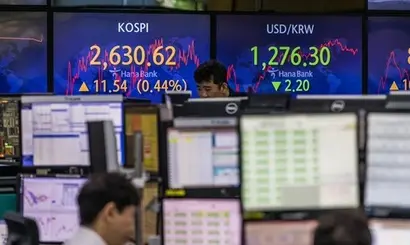
Although the stock market has recovered from the sharp decline seen on the 5th of last month, it is still showing limited momentum. Cho Chang-min, an analyst at Yuanta Securities, noted, "Despite Federal Reserve Chair Jerome Powell strongly signaling interest rate cuts at the Jackson Hole meeting, the market is failing to gain traction," citing concerns over NVIDIA's earnings as a primary reason. The analysis suggests that the domestic stock market, which has a high weight in semiconductors, is particularly sensitive to these concerns.
While one might expect market interest to shift toward corporate fundamentals as uncertainty regarding interest rate cuts decreases, this appears difficult in the current situation. This is because doubts about corporate earnings for the second half of this year persist. Analyst Cho explained, "While the third-quarter outlook is being continuously revised upward due to two consecutive quarters of earnings surprises, the number of sectors receiving upward adjustments is gradually shrinking, showing that upward revisions in a small number of sectors are driving the outlook for the entire stock market."
Ultimately, as the limited movement of the domestic stock market is expected to continue for the time being, advice is emerging that investments related to the Value-Up Program could serve as an alternative at this point. Noh Dong-kil, an analyst at Shinhan Securities, said, "Sectors that already have relatively large capacity for shareholder returns and are making efforts include banking, securities, hotels/leisure, media, telecommunications, non-ferrous metals, and consumer staples, while sectors with large shareholder return capacity and room for further improvement include automobiles and cosmetics/apparel."