

[비즈한국] The recent entry of commercial banks into the competition for local government treasuries has deepened the sense of crisis among regional banks. While regional banks received high ratings in the recently released regional reinvestment evaluation by financial authorities, critics point out that this has minimal impact on safeguarding their positions as municipal treasury managers.

On August 28, the Financial Services Commission announced the results of the 2024 regional reinvestment evaluation for financial companies. This evaluation was introduced in 2020 to encourage financial institutions to support regional economies. It targets 15 domestic banks and 12 mutual savings banks with assets of at least 1 trillion won, assessing factors such as local capital supply, support for small and medium-sized enterprises (SMEs), loans for low-income households, and the establishment of financial infrastructure in non-metropolitan areas.
This year, among commercial and special-purpose banks, △Hana Bank, △iM Bank, △IBK Industrial Bank of Korea024110, and △NH NongHyup Bank received top ratings. Among regional banks, Busan Bank, Kyongnam Bank, Kwangju Bank, and Jeonbuk Bank received top ratings, while JT Savings Bank was the only mutual savings bank to do so. Compared to last year, the number of top-rated banks has increased, and overall ratings have risen, indicating more active regional investment.
The regional reinvestment evaluation is attracting attention because it is used as a selection criterion for municipal and regional education office treasuries. With commercial banks recently entering the competition for these treasuries, local banks, which have long held these accounts, are feeling increasingly threatened. The treasury contracts for the main offices of local governments expiring this year (December 31, 2024) include Busan Metropolitan City, Gwangju Metropolitan City, and Jeju Special Self-Governing Province.
However, even with high evaluation ratings, local banks find it difficult to breathe easy. They risk losing municipal treasuries to commercial banks, which possess superior capital power. Although regional banks have maintained 'excellent' or 'top' ratings in regional reinvestment evaluations for the past three years, they are inherently at a disadvantage compared to commercial banks in categories with high weightings, such as major management indicators and cooperative project funding, where asset scale is critical.
Following Busan City’s treasury application period, which ended on August 14, a stir was created when KB Kookmin Bank and Industrial Bank of Korea (IBK) challenged Busan Bank for the primary treasury position. Busan City's 2024 budget stands at 15.6998 trillion won; the primary treasury manages 70% of the budget including general accounts, while the secondary treasury manages 30% including special accounts and funds.
Busan Bank has held the primary treasury position for 24 years, but its status is now threatened by competition from Kookmin Bank and IBK. In May 2020, Busan City amended its ordinance to allow simultaneous applications for both primary and secondary treasuries; however, no commercial banks applied that year, leaving Busan Bank as the sole applicant. Kim Dae-sung, head of the Busan Bank branch of the Korean Financial Industry Union, expressed concern, stating, "The entry of state-run and commercial banks into Busan's treasury selection could signal an overheated competition for other local government treasuries as well."
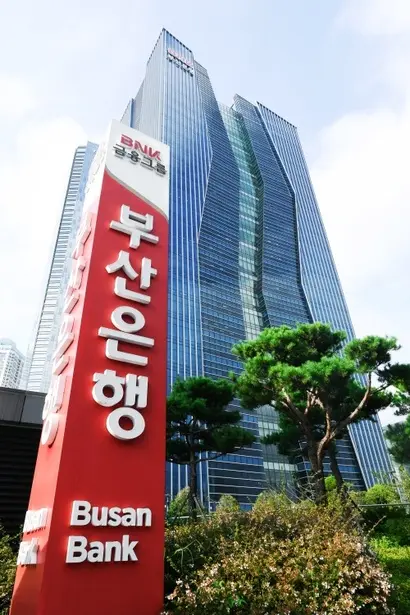
Amid the instability caused by regional economic downturns, the prospect of losing municipal treasuries to commercial banks has triggered a fierce backlash from regional banks. On August 19, the Regional Bank Union Council of the Korean Financial Industry Union issued a statement criticizing the move: "The offensive by commercial banks to win local treasuries will accelerate the outflow of regional capital. IBK's bid for Busan’s primary treasury is an act that hinders national economic development by inducing regional capital flight and fueling regional extinction."
Gwangju City issued a public notice for treasury applications on August 26 and began its selection process. Applications will be accepted on September 23–24. Gwangju City's 2024 budget totals 8.21 trillion won, with the primary treasury managing general and special accounts (10 total) and one fund, while the secondary treasury manages special accounts (4) and funds (18).
Gwangju City has included regional reinvestment in its selection criteria for this round. After amending its "Treasury Designation and Operation Ordinance" last April, it added "Regional Reinvestment Performance and Plan (6 points)" to the "Citizen Convenience (24 points)" evaluation category. This category includes the financial institution’s regional capital supply over the past three years, loan support for regional SMEs and small business owners, and Financial Services Commission evaluation results.
Like Busan, Gwangju City is splitting recruitment for the primary and secondary treasuries, allowing commercial banks to apply for both. Currently, Kwangju Bank holds the primary treasury and Kookmin Bank holds the secondary; projections suggest Kookmin Bank will challenge for the primary spot. Notably, Kwangju Bank lost its position as the main transaction bank for Chosun University to Shinhan Bank in July 2023, ending a 50-year relationship.
A regional bank official lamented, "Municipal treasuries are one of the main 'lifelines' for regional banks. Local banks cannot compete for treasuries in the metropolitan area, yet commercial banks are trying to secure even local ones. Metropolitan budgets might look large in the trillions, but some municipal budgets in Gyeonggi-do are similar in scale. Must commercial banks, which already dominate the Seoul and Gyeonggi regions, take over local treasuries as well?"
In fact, Seongnam City in Gyeonggi-do, where the treasury agreement with NongHyup Bank expires this year, has a budget reaching 4.6 trillion won. It was confirmed that only NongHyup Bank applied for the next term (2025–2028) during the two application windows held between July and August, suggesting NongHyup will likely retain the treasury.
There is also ongoing criticism that the evaluation criteria for municipal treasury selection are unfair. The category for "Financial Institution Creditworthiness and Financial Structure Stability" includes major management indicators like the total capital ratio. Both Busan (25 points) and Gwangju (27 points) allocate the highest weight to this category. Additionally, categories like "Loan and Deposit Interest Rates" and "Treasury Management Capability," each weighted at over 20 points, are considered disadvantageous to regional banks that operate with smaller asset bases and within limited geographic areas.
At a press conference on August 26, the Busan Citizens' Coalition for Economic Justice stated, "The Financial Services Commission’s evaluation on regional reinvestment status lacks sufficient discernment to favor regional banks," adding, "Evaluations must be conducted in a way that accounts for the contributions regional banks make to the local economy."