

[비즈한국] There is a phrase, "The value of together." It appeared in a corporate image advertisement about ten years ago. It is a wonderful tagline that carries the meaning that the power of being together can change the world. Being together signifies empathy or communication, and this power can create a new paradigm. Art also holds value when it gains empathy from people. Empathy comes from the zeitgeist and a universal artistic language. The 'Korea Art Support Project' also aims to present the thoughts of various people through an accessible artistic language. As we reach Season 10, we support artists who strive to practice the philosophy that Confucius once said: "Good art must be easy to understand."
The theme of the first paintings in human history was animals. The subjects of the cave paintings confirmed to have been drawn in prehistoric times were animals such as bison, deer, or whales. This was a natural result because, for early humans, these animals were issues directly linked to survival. Since the animals drawn on the murals were targets for hunting, the humans of that time held a shamanistic intuition that identified the paintings with the actual animals.
Animals have continued to be a subject of painting throughout a long history. From the meaning of shamanistic worship as identified by prehistoric people to being used as backgrounds, props, or symbolic substitutes in paintings, they have consistently been chosen by artists.
In the West, which viewed the world with humans at the center, animals remained mere minor elements in works for a very long time. In contrast, in the East, which placed nature at the center of the world, animals were treated as major subjects of works. This genre of painting is called 'Yeongmo-hwa' (animal painting).

In music, there are many cases where the characteristics of animals have been successfully described. Such music is often remembered in music history because it is loved by people. A prime example is 'The Carnival of the Animals' by the 19th-century French composer Camille Saint-Saëns (1835-1921). This piece features animals from lions, chickens, donkeys, turtles, elephants, and kangaroos to birds, fish, and the most famous swan, all represented through music.
There are also works that personify animals to dress them in the clothes of satire. The 20th-century British novelist George Orwell's (1903-1950) 'Animal Farm' is one such case. It criticizes the corrupted dictatorial power and decayed revolution of Stalin's Soviet Union, bitingly mocking politics by portraying the dictator as a pig. As a novel that also overlaps with the current Kim family hereditary dynasty regime in North Korea, George Orwell's message is, unfortunately, still valid.
Personification of animals is common in fairy tales, comics, and animation, but it is not as common as one might think in fine art. This seems to be due to a narrow-minded perception that it diminishes the weight of art.
Recently, in contemporary art, various attempts have been made with animal-themed works. In our own art scene, such a trend is showing clear achievements. It is an encouraging phenomenon, especially in that it is gaining a positive response from the new generation.
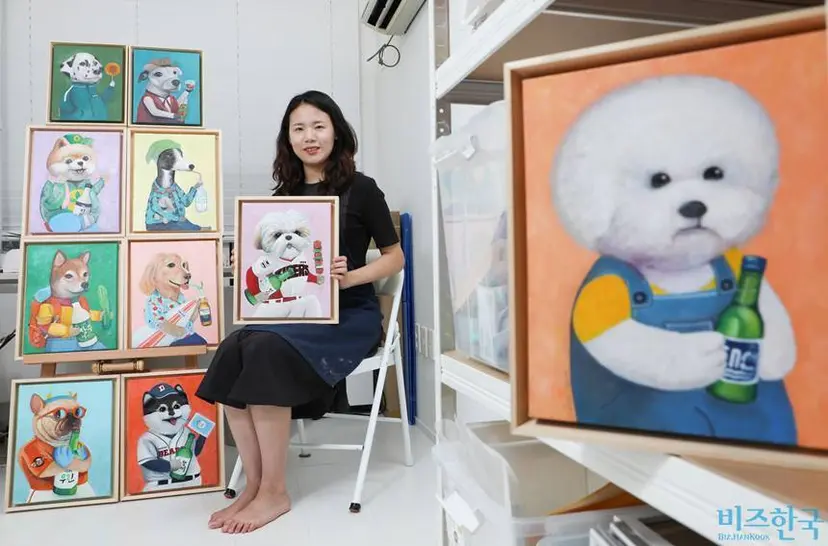
Moreover, as awareness of companion animals has increased, interest in animal-themed works is spreading. Within this trend, Kim Yeon-joo's paintings stand out. The artist has been raising a pet dog for 14 years. Her love for dogs has sublimated into her work.
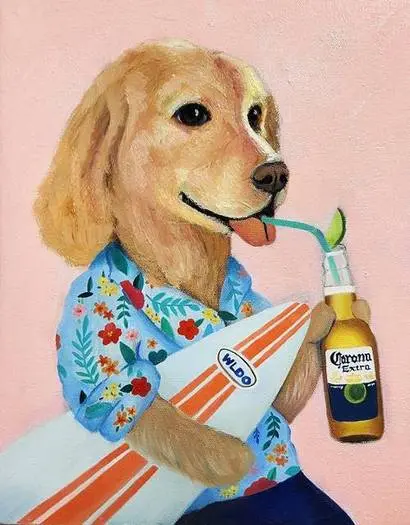
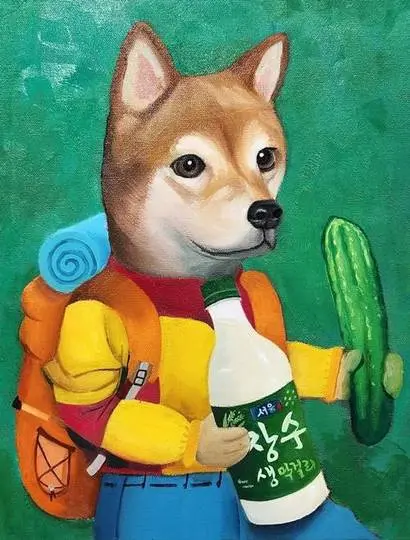
She personifies various types of dogs. As a new-generation artist, rather than satire or criticism, she depicts scenes of her surroundings through comical settings. She dresses the dogs according to their appearance or characteristics and creates persuasive paintings through situational staging. In the paintings of Kim Yeon-joo, born through this process, we can find the daily lives of ordinary young people today. That is why her paintings are fun.