

[비즈한국] The world today is driven by the United States and China. While the U.S. faces chaotic times ahead of its presidential election, China’s Xi Jinping regime remains firm. Since the abolition of presidential term limits in 2018, China has effectively entered a one-man dictatorship under Xi. Now, a new book suggests that this very system will ultimately lead to China's "collapse."
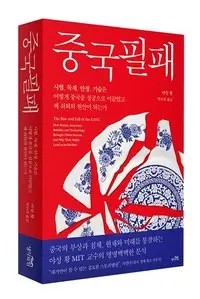
The Fall of China (Original title: The Rise and Fall of the EAST)
: How Examination, Autocracy, Stability, and Technology led to China's success and why they are causing its decline
By Yasheng Huang, Translated by Park Nu-ri, Published by Saenggak-ui-him
624 pages, 32,000 KRW
"The Fall of China" is written by Yasheng Huang, a professor at the MIT Sloan School of Management and director of the MIT China India Lab. As a China expert in the U.S., he predicts China's downfall by examining the rise and fall of dynasties and empires throughout Chinese history.
On October 1, 2023, the People's Republic of China celebrated its 74th anniversary. China has surpassed the Soviet Union to become the longest-standing communist state on the planet. Despite enduring national catastrophes like the Cultural Revolution, China appears robust at first glance, challenging the U.S. and aiming for the G1 position.
Yet, signs of cracks are emerging. During the COVID-19 pandemic, the "Zero-COVID" policy—which locked down entire cities—triggered public backlash and protests. The oppression of minorities and human rights abuses committed in the name of national unity in Tibet and the Xinjiang Uyghur Autonomous Region have drawn global condemnation.
In "The Fall of China," Professor Yasheng Huang reads the present and forecasts the future through China's past. His keyword for understanding China is "EAST." An acronym for Examination, Autocracy, Stability, and Technology, this concept represents the "state expansion formula" that created modern China.
Here, "Examination" refers to the imperial examination system. This state-led civil service recruitment system trained all talent under a single Confucian framework, judged individuals numerically through testing, and assigned them rigid hierarchies. Developed in the Sui Dynasty in 587 and continuing today as the "Gaokao," this "examination mechanism" has dominated Chinese society, enabling "stability" within an "autocratic" system and fostering state-led technological advancement. This links directly to Communist Party dictatorship; by adopting these ancient traditions in its own unique way, the Chinese Communist Party has been able to secure the stability of its authoritarian regime.
The author sets up two opposing axes of power: Scale and Scope, interpreting Chinese history through the balance and tension between them. Scale represents homogeneity, while Scope represents heterogeneity. If a society of scale boasts a unified, massive order, a society of scope respects diverse values and individuality. Through various data experiments based on the entirety of Chinese history—from the dynastic era to the People's Republic—the author reveals that the Chinese Communist Party relies on a long-standing historical context of prioritizing "scale" at the expense of diversity to expand and maintain the state.
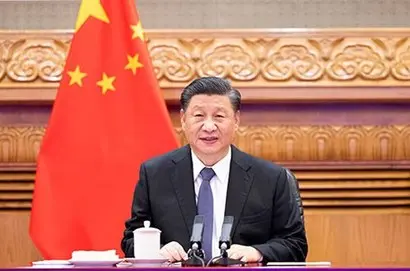
However, such uniformity comes at the cost of creativity. The price Chinese dynasties paid for achieving peak stability was technological stagnation. After the death of Mao Zedong, the father of the People's Republic, reformist leaders opened up the system to encourage innovation, entrepreneurship, and economic growth. The Xi Jinping regime, however, may be putting an end to this dynamism.
The author identifies that Xi Jinping's Chinese Communist Party, by undermining innovation and failing to acknowledge even a minimal level of "scope," will ultimately lead China to ruin. A great power without innovation will collapse, and the grand China that Xi dreams of is destined to fail. The author defines the period after 2018, when term limits were abolished, as the "Era of Xi Jinping," predicting it will be a "time of drama, surprises, and dramatic upheaval." By entirely blocking the path for a succession, he argues, Xi has fueled uncertainty and future conflict.
The author explores East and West in tandem, comparing the Roman Empire with the Han Dynasty, and the scandal of King Henry VIII of England’s Tudor dynasty with the Wanli Emperor’s refusal to designate a crown prince in the Ming Dynasty. He analyzes Chinese society, politics, and economy through both internal and external lenses, crossing time and space. Born in Beijing in 1960, he graduated from Harvard University's Kennedy School of Government in 1985 and received his doctorate in 1991. While showing a deep sense of sorrow for the homeland he left in his youth and respect for the ancient civilization, he offers a cold, analytical, and critical diagnosis of China's current situation, which shows dark signs of impending defeat.
"The author's unique, extensive, and unflinchingly sharp analysis suggests that Xi Jinping's 'China Dream' may literally be nothing more than a fleeting dream." - Andrew Nathan, Professor of Political Science, Columbia University
South Korea, too, remains under the influence of Confucianism and the legacy of the examination system, just like China. We have also experienced authoritarian dictatorship. Why, then, are we walking a different path than China today? Pondering this question while reading the book would be a worthwhile exercise. For us, unable to easily escape the space between China and the U.S., this book serves as a valuable reference.