

[비즈한국] As cracks begin to appear in the closed ecosystem that Apple has long insisted upon, the domestic Korean app market "One Store" is setting out to find new avenues abroad. One Store, which withdrew its IPO last year due to a low offering price, is a painful thorn in the side of its parent company, SK Square402340. When it was launched in 2016 through the joint efforts of Naver035420 and the three major mobile carriers, there were high hopes that it would become a domestic platform capable of competing with overseas giants, but it has struggled to overcome the dominance of Apple and Google. To reverse its perennial losses and restore dampened investor sentiment, One Store has played the card of international expansion by strengthening its gaming sector. Can One Store make a winning move in the global market?

Apple's 'Europe-only' monopoly blocked, doors open for third-party markets
As the European Union (EU) introduces the "Digital Markets Act (DMA)" to prevent the monopolization of the app ecosystem, a shift in the global app market climate is being detected. Recently, iPhone users in Europe have gained the ability to use third-party app markets as alternatives to the Apple App Store. According to foreign media, there are currently five app markets available in Europe alongside the App Store, including the "Epic Games Store" from Fortnite developer Epic Games, "AltStore" which allows direct app downloads from the web, as well as "Aptoide," "Mobivention," and "Setapp Mobile." This is the first time such a thing has happened since the iPhone was released in 2007 and the App Store launched the following year. Until now, iPhone users could only download apps from Apple's App Store.
On the 16th, Epic Games launched the Epic Games Store in Europe, allowing iPhone users to download its apps on iOS devices. The launch of a proprietary app market by Epic Games, which has a long-standing hostile relationship with Apple, is symbolic. For years, Apple has mandated the use of its own payment system within the App Store and taken a 30% commission on transaction amounts. Epic Games was expelled from the App Store for resisting this, and the two companies are currently locked in a legal battle over Apple's anti-competitive practices. Spotify, which only allowed subscriptions through the App Store, has also announced a subscription service based on its own website.
The domestic app market One Store, now also within the scope of these changes, has entered the final stages of its global push. It begins with Taiwan, which has emerged as a target for Korean game companies. Taiwan is one of the key markets that has continued to grow even after the endemic. Partnering with HappyTuk, the largest game publishing company in Taiwan, One Store is preparing a locally optimized app market service. It began the app registration process for developers hoping to enter the Taiwanese market through its developer center this past April and is currently operating a pilot service. It appears that the official launch is imminent. A One Store official stated, "We plan to conclude the pilot project and launch officially within the year."

One Store CEO Jeon Dong-jin has designated this year as the first year of One Store's global expansion. Singapore, where One Store established its first overseas subsidiary last year, is being discussed as the next target. The possibility of extending beyond Asia into Europe and North America is also growing. Amidst the regulatory trends targeting Google and Apple, the company appears to be seeking a foothold in overseas markets by leveraging a low-commission policy. Previously, One Store established a subsidiary in the Netherlands last year to target the European app market. It is known that approximately 20 billion KRW invested by Krafton259960 during this period was intended to support One Store's international competitiveness.
One Store struggling at home, can it survive in the big leagues?
Some view the anti-monopoly regulatory trends targeting Alphabet (Google) and Apple as a potential new opportunity for One Store. While related regulations are currently limited to iOS devices within the European region, if Apple's fortress continues to crack due to the full-scale introduction of third-party app markets, One Store could benefit from the spillover effects. Given that Google was ordered by the Korea Fair Trade Commission last April to rectify its behavior after it was revealed that it used its dominant market position in Korea to exclude One Store and induce exclusive releases on the Play Store, One Store has clearly been constrained by the irregular anti-competitive behavior of Big Tech.
The core of the revised policy is that app developers and iPhone users can distribute and download iOS apps via app markets other than Apple's. This is considered one of the most powerful regulations yet to be introduced by the EU, which has emphasized the responsibility of large online platforms and fair competition to control the market influence of Big Tech companies.
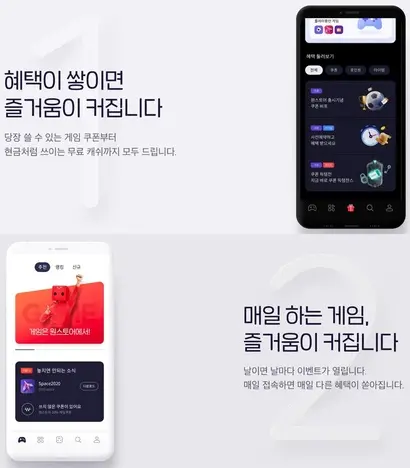
The app market is considered a field where the "first-mover advantage" is particularly significant. This has been a limitation for One Store from the start, as it entered the competition against Big Tech late. An industry expert explained, "To upload apps to multiple markets, developers have to manage different versions and handle separate administrative tasks. Conversely, because One Store's market share is low at 5-10%, download counts are minimal, meaning even lower commissions don't offer much merit. Primarily, there is a lack of interest (in One Store) from game companies and app developers."
The industry is watching closely to see if Apple's policy changes will expand beyond the EU to the rest of the world. An industry official remarked, "Although European regulations are limited, the very fact that anti-monopoly sanctions are gaining momentum globally is highly significant for the industry."
One Store is in urgent need of a breakthrough. In the first half of this year, the company generated 74.3 billion KRW in revenue but recorded a net loss of 4.7 billion KRW, failing to break its cycle of deficits. One Store has been in the red for eight consecutive years since its launch. Last year, operating losses reached 11.6 billion KRW, with net losses at 33.3 billion KRW. After its failed IPO in 2022, the company managed to survive a crisis by attracting investment from financial investors (FI), but it must build up its competitiveness before its postponed IPO in 2028.
However, some suggest it is unclear whether international expansion will be the answer. Kim Jung-tae, a professor in the Department of Game Science at Dongyang University, noted, "While the overseas market is large, competition is even more intense. It remains to be seen whether they can stand out in the global market." He added, "It seems that an overseas strategy will only yield competitiveness after a solid domestic foundation is established. They need to consider creating a flexible organization and finding ways to penetrate the domestic gaming app ecosystem more meticulously."