

[비즈한국] Recently, a pregnant woman in North Chungcheong Province went into labor inside an ambulance after wandering from one emergency room to another, a fact that was revealed late and shocked many. According to fire authorities, emergency crews checked with four hospitals in Cheongju and Cheonan, but all refused, claiming they could not accommodate her. There were no hospitals in Eumseong or Jincheon capable of accepting pregnant women, and the emergency room at Chungbuk National University Hospital had suspended operations. The 'emergency room crisis' caused by staff shortages has now become a widely known reality. Concerns are mounting that this Chuseok holiday will be a major breaking point for emergency medical centers.
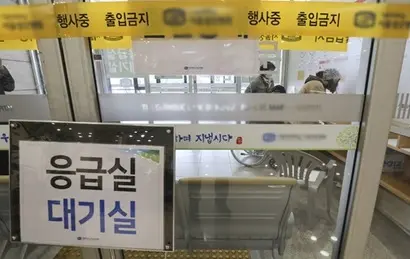
"Already operating on a reduced basis, focusing on severe patients"
The "Big 5" hospitals (Seoul National University Hospital, Asan Medical Center, Severance Hospital, Seoul St. Mary's Hospital, and Samsung Medical Center) and major regional emergency medical centers are preparing to operate their emergency rooms as normal during the Chuseok holiday. Most hospitals stated that there would be "no reductions in hours or staffing." A representative from one Big 5 hospital said, "If tertiary hospitals reduce emergency room operations, problems will arise for critical patients, so we expect to operate without reductions at this time." However, it was found that many have not yet prepared concrete plans. An official from another Big 5 hospital stated, "No official notice has been issued yet. The situation keeps changing, so we expect plans, including duty schedules, to be ready only by the week before Chuseok."
Some regional emergency medical centers have already entered into reduced operations. An official from a tertiary hospital in the Daegu-Gyeongbuk region said, "We are currently operating at a reduced level, not accepting minor cases and only treating severe patients. We plan to continue this during the Chuseok holiday." An official from another tertiary hospital in the region also stated, "As a regional emergency medical center, we plan to focus on severe patients," adding, "Even so, it is difficult to say that the emergency room situation is exactly the same as in normal times, just like at other hospitals. We are in constant communication with medical staff to ensure there are no disruptions during the holiday."
Regarding outpatient services rather than emergency rooms, it appears that fewer hospitals will be operating normally compared to the previous Lunar New Year holiday. Typically, hospitals do not operate outpatient services during the holiday or only open on select days. The hospital's explanation is that because current outpatient professors are being deployed to emergency rooms, it may be difficult for them to provide normal care during the holiday. A representative from a regional emergency medical center said, "The emergency room will remain open 24 hours a day without change during the holiday," but added, "Since emergency room operations are not as smooth as before, we will have to wait until next month for outpatient schedules."
Number of emergency room patients continues to rise… Can raising consultation fees and increasing medical insurance payments really work?
In the past, regional and local emergency medical centers have played a role in filling the medical gaps left by private medical institutions during holidays. According to data from the Ministry of Health and Welfare, during last year's Lunar New Year holiday, there were approximately 90,000 visits to 178 emergency medical centers, averaging about 21,000 per day. Looking at the yearly trend, the numbers are increasing: 71,000 in 2021 (18,000 daily average) and 74,000 in 2022 (19,000 daily average). The Ministry of Health and Welfare explained, "Usage was highest on the day of the holiday and the following day, increasing up to 1.6 times that of weekdays and 1.2 times that of weekends compared to normal days." The number of patients visiting for minor illnesses also increased compared to normal times: 2.9 times for enteritis, 1.7 times for abdominal pain, and 1.5 times for colds.
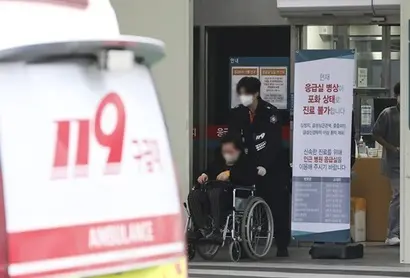
Since the emergency rooms have been suffering from consistent staff shortages since the mass resignation of medical residents, it is difficult to gauge whether hospitals can accommodate the increasing number of patients this Chuseok holiday. According to data submitted to the Ministry of Health and Welfare by the office of Representative Kim Yun of the Democratic Party of Korea on the 19th, the number of emergency medical institutions across the country that have reduced emergency room beds due to staff shortages and other reasons has increased fourfold. Specifically, the number rose from 6 on February 21 of this year to 24 as of July 31. It was calculated that over 20 locations had already reduced their beds starting in May. On the other hand, the number of patients using emergency rooms, which had briefly decreased around March, began to rise again from April, reaching 494,758 in April, 529,130 in May, 528,135 in June, and 550,784 in July.
The government announced on the 22nd that it would support emergency rooms by raising out-of-pocket costs for minor patients visiting regional/local emergency medical centers and increasing emergency room consultation fees. It will also strengthen support for labor costs to maintain full-time personnel at emergency medical centers. Regarding the medical care system during the Chuseok holiday, the government stated, "We will operate more on-duty hospitals and clinics than in an average year in preparation for the possibility of more emergency patients arising if the COVID-19 outbreak continues," and added, "We will expand the temporary increase in emergency medical consultation fees—previously applied to 408 emergency medical institutions—to include all emergency medical facilities, so that we can distribute minor patients as much as possible."