

[비즈한국] Amid a continued slump in the duty-free industry, Lotte Duty Free, the industry leader, has begun restructuring. Lotte Duty Free states that it aims to improve its corporate constitution through cost-cutting measures, as the prospect of an industry recovery remains uncertain. In response, the labor union is protesting, arguing that measures such as voluntary retirement—which passes the burden of management failure onto employees—and forced transfers to call centers are unjust.
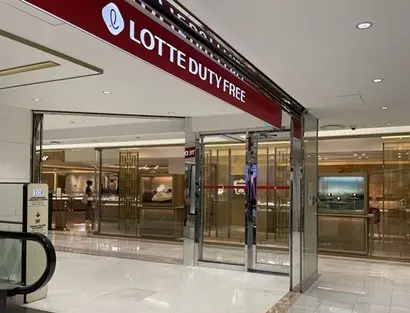
Union Protest: "Shifting the Burden of Management Failure to Employees"
Lotte Duty Free is accepting voluntary retirement applications until the end of this month. Eligible candidates for voluntary retirement are employees aged 43 or older with at least 10 years of service, or those who have been in their current position for an extended period. Applicants for voluntary retirement will receive 32 months of their base salary and a re-employment support fund of 20 million won. The scheduled departure date for those who apply is September 6.
Lotte Duty Free declared an emergency management system last June. The company announced it would work to improve profitability by restructuring business divisions, streamlining the organization, and cutting the salaries of all executives by 20%. This restructuring is also part of that emergency management system. A Lotte Duty Free official stated, "The duty-free industry is facing extreme difficulties even though COVID-19 has ended. As Lotte Duty Free is the industry leader, we have more store maintenance and personnel compared to our competitors. With no signs of a short-term recovery in the industry, we decided to proceed with restructuring in terms of personnel and business sites."
The official explained, "We plan to accept voluntary retirement applications until the end of this month, and the total number of applicants has not yet been tallied. When we implemented voluntary retirement two years ago, there were about 20 applicants." Lotte Duty Free implemented its first voluntary retirement program since its founding in December 2022 during the COVID-19 pandemic.
As the restructuring begins, the conflict between labor and management is deepening. The Lotte Duty Free labor union has held two rallies recently to criticize the company for pushing ahead with the restructuring. Kim Geum-ju, head of the Lotte Duty Free labor union, raised her voice, stating, "While the travel and aviation industries have all struggled since COVID-19, Lotte Duty Free's poor performance is particularly noticeable. This is due not only to the external environment but also to management failure on the company's part." She added, "This is the result of the CEO failing to manage the company properly, and yet they are blaming the employees. What did the employees do to deserve this?"
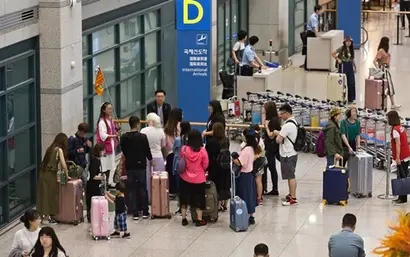
The union argues that the withdrawal from Incheon International Airport played a major role in the worsening performance. A union official pointed out, "After the failed bid for the Incheon International Airport duty-free shop, the company explained to employees that 'it is fortunate that we failed the bid because the commission fees at Incheon International Airport are very high, and it is better for profitability.' However, the fact that no revenue is being generated from Incheon International Airport is a huge problem. It had the biggest impact on our poor performance. There are no sales floors left for employees to work at, and the cause is the CEO's management failure."
Lotte Duty Free withdrew all its shops at Incheon International Airport after failing to secure a contract in the bidding process in July last year. Currently, among the four major domestic duty-free operators (Lotte, Shilla, Shinsegae004170, and Hyundai), Lotte Duty Free is the only one not operating a shop at Incheon International Airport.
Since then, Lotte Duty Free scrambled to aggressively enter the Gimpo Airport bidding race, winning all new duty-free business rights at Gimpo Airport this past March. However, the fallout from missing out on the business rights for Incheon International Airport, which attracts the bulk of overseas travelers, was significant. Lotte Duty Free, which had long maintained the number one spot in sales, was overtaken by Shilla Duty Free—the industry's perennial runner-up—in the third quarter of last year.
The union official added, "Lotte Duty Free has 14 business sites not only in Korea but also overseas. The annual loss from overseas sites exceeds 500 billion won, so isn't it unfair to leave those alone and only lay off employees at domestic sites? That is why we are continuing our protests."
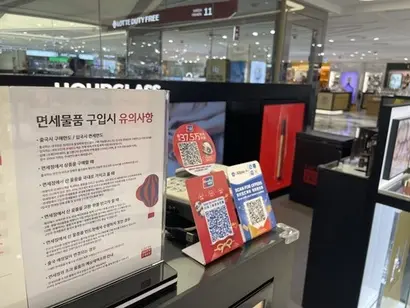
Plans to Transfer Head Office Staff to Call Centers and Logistics Centers… Will Conflict Escalate?
Even after the voluntary retirement process finishes this month, labor-management tensions are expected to persist. The union is also raising issues regarding the company's plans for forced transfers, mentioning "insourcing" as a means to reduce the workforce. Lotte Duty Free is currently reviewing the conversion of tasks previously handled by outsourced personnel to "insourcing" (internal supply) as a method of workforce adjustment.
A union official claimed, "Following the voluntary retirement, the company is internally communicating a policy to replace outsourced personnel with internal staff. They plan to forcibly transfer office personnel who work at the headquarters or handle tasks like online duty-free shops to call centers and logistics centers that have nothing to do with their current roles. Isn't this a strategy to induce voluntary resignation among employees who cannot adapt to new tasks? Because of these measures by the company, many employees are trembling with anxiety."
Lotte Duty Free explains that this is an inevitable choice to utilize surplus personnel. A Lotte Duty Free official said, "It is true that we are planning transfers to resolve the issue of surplus personnel. There is an atmosphere of trying to handle as much work as possible with internal staff among the tasks currently operated by contracted personnel. However, there have been no actual transfers made yet. We have only established the plan."
Since the endemic, the duty-free industry has been struggling to recover its performance. This is due to the decline in Chinese group tourists, or "Youke," who were big spenders, as well as the increasing number of foreign tourists preferring road shops like Olive Young over duty-free shopping. According to the Korea Duty Free Shops Association, total domestic duty-free sales last year amounted to 13.7585 trillion won, which is only half of the 24.8586 trillion won seen in 2019.
The sluggish performance of industry leader Lotte Duty Free continues. Lotte Duty Free's sales in the first half of this year were 1.6484 trillion won, a 9.5% increase from the previous year (1.5042 trillion won). On the other hand, it recorded an operating loss of 46.2 billion won, turning into a deficit. In the first half of last year, Lotte Duty Free had posted an operating profit of 41.6 billion won.
A Lotte Duty Free official mentioned, "It is difficult to expect the elimination of the deficit or a turnaround in performance just through labor cost reduction. The intention is to supplement our strength by reducing costs in advance so that we can drive growth later when China's economic downturn and other issues are resolved. That said, the company will not forcibly transfer employees."