

[비즈한국] DL E&C375500 and Hyundai Engineering recently lost a lawsuit filed against the Cheongju Sajik District 1 Redevelopment Association to confirm their status as contractors. The two companies were selected as the new contractors after the association parted ways with the original contractors, Daewoo E&C047040 and GS E&C006360, but were later notified of contract termination when the association decided to reunite with the original firms one year later. The two companies filed a lawsuit claiming the termination was invalid, but the court ruled that their claims were meritless.
On the 18th of last month, the Seoul Central District Court (Presiding Judge Lee Sang-won) dismissed the lawsuit filed by DL E&C and Hyundai Engineering against the Cheongju Seowon-gu Sajik District 1 Redevelopment Association. Having been selected as contractors for the redevelopment project, the two companies filed the lawsuit in October of the following year after the association notified them of the contract termination in June 2021, seeking confirmation of their status. However, the court deemed all their arguments unfounded. The ruling became final on the 9th as neither party appealed.
DL and Hyundai Fill the Void Left by GS and Daewoo in Sajik District 1
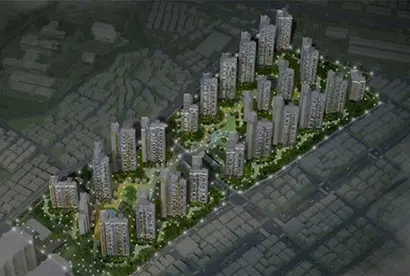
The Sajik District 1 redevelopment project is an urban renewal initiative aimed at improving living conditions in the area around 247-1 Sajik-dong, Seowon-gu, Cheongju. The plan involves demolishing 514 old and substandard buildings on a project site of approximately 100,000 square meters to construct 25 apartment buildings (totaling 2,482 households) up to 29 stories high. The residents of Sajik District 1 formed a redevelopment association in 2008, received approval for the project implementation plan in January 2021, and approval for the management and disposal plan in June of the following year, and are now preparing to break ground.
Currently, the contractors for the Sajik District 1 project are Daewoo E&C and GS E&C. The Sajik District 1 Redevelopment Association originally selected the consortium of Daewoo E&C and GS E&C as contractors at a general meeting in May 2015 and signed a preliminary construction contract in July of the same year. The two companies were unable to act as contractors for a period after the association held a general meeting in October 2019 and resolved to terminate the preliminary contract. However, they filed a lawsuit in November of the same year and had their contractor status confirmed in June 2021 following a court-recommended settlement that declared the "general meeting resolution invalid."
DL E&C and Hyundai Engineering were the second set of contractors to fill the void left by Daewoo E&C and GS E&C. After terminating the preliminary contract with Daewoo and GS, the association held bids for new contractors in December 2019 and January of the following year, respectively. Both bids resulted in no successful tender as only the DL E&C and Hyundai Engineering consortium participated. The two companies were ultimately selected as contractors at a general meeting in March 2020, where the association also selected Korea Real Estate Investment & Trust (KOREIT) as the project agent. In September of that year, the association, KOREIT, and the DL-Hyundai consortium signed a project agreement to act as the project implementer, agent, and contractor, respectively.
DL and Hyundai Protest Association's Reunion with GS and Daewoo
The dispute between the two sides began when the Sajik District 1 Redevelopment Association reunited with the original contractors. In March 2021, the association decided at a general meeting to invalidate the previous resolution to terminate the preliminary contract with Daewoo E&C and GS E&C. In May of the same year, the association held another general meeting and decided to terminate the project agreement with DL E&C, Hyundai Engineering, and KOREIT. Consequently, the second set of contractors, DL E&C and Hyundai Engineering, were notified of the termination of their project agreement just over a year after their selection.
DL E&C and Hyundai Engineering filed a lawsuit to confirm their contractor status in protest of the association's termination. They argued that the termination lacked legal or contractual grounds and was therefore invalid. The two companies claimed they were legally selected as contractors in accordance with the Act on the Improvement of Urban Areas and Residential Environments (Urban Improvement Act) and that they remained contractors as the association had never held a resolution to withdraw their selection.
"Project Agreement Invalid from the Start, Contractor Selection Also Illegal"
However, the court judged that the project agreement the association terminated was invalid from the beginning. This was because the designation of KOREIT as the project agent, who participated in the agreement, had been voided. Previously, Cheongju City had accepted the association's application and announced a decision in July 2020 to designate KOREIT as the project agent, but later canceled it that same month, citing the need to verify whether a majority of the association members had consented. Before signing the agreement with DL E&C and Hyundai Engineering, the association and KOREIT had signed a trust agreement to proceed with the project using a project agency method.
The court ruled, "As the announcement of the project agency commencement decision was canceled, the progression of the project via the agency method and the designation of the project agent were both voided. Consequently, the trust agreement, which assumed these to be true, cannot be seen as valid. Furthermore, the project agreement in this case, which also assumes the validity of the project agency method, the designation of KOREIT, and the trust agreement, cannot be seen as valid." The court added, "The plaintiffs' claim for confirmation of the invalidity of the termination notice—which assumes the validity of the project agreement—is without merit."
The court also determined that the association’s initial selection of DL E&C and Hyundai Engineering as contractors was illegal. At the time of their selection, the Urban Improvement Act required that private contracts with contractors could only be signed after a bid had failed three or more times. However, DL E&C and Hyundai Engineering signed the private contract with the association after only two failed bids in December 2019 and January of the following year. While the Urban Improvement Act was amended in February 2018 to relax the private contract condition to two failed bids, that provision was limited to cases where a contract was signed for the first time after the amendment took effect.
The court stated, "The 'case of signing a contract for the first time after the enforcement of this Act' as stipulated in the amended Urban Improvement Act means when an association selects a contractor for the first time during that project's progression. Therefore, if a contractor had been selected prior to the enforcement date of February 2018, the former Urban Improvement Act must be applied." The court concluded, "Selecting the plaintiffs as contractors for this project via a private contract after only two failed competitive bids is illegal and violates the relevant laws. Therefore, this part of the claim seeking to confirm contractor status on the premise that the selection was legal is without merit."