

[비즈한국] Is Netflix the pinnacle of dopamine after all? Watching ‘The Influencer,’ one can’t help but think that Netflix has precisely pinpointed the needs of the dopamine-addicted era. Guided by the slogan ‘Survive by Attention,’ ‘The Influencer’ is a social survival program where 77 South Korean influencers, whose influence translates directly into their market value, compete to find out who holds the greatest power. It’s essentially a real-life version of the Netflix drama ‘Celebrity.’
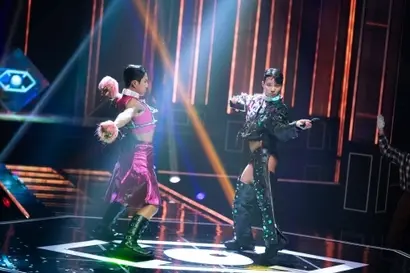
I started watching the first episode of ‘The Influencer’ out of curiosity, but I secretly thought I’d give it up soon. As an ‘extreme introvert’ who dislikes ‘attention seekers’ and leans toward being a ‘Confucian girl’ (traditionalist), I felt dizzy from the moment I saw beauty and fashion YouTuber Qyoung appear in an outfit exposing her underwear. However, once you adjust to the shock, your curiosity skyrockets. I prided myself on being a trendy middle-aged person who knows what content is popular, but I didn't recognize more than half of the 77 influencers. I was truly surprised by the sheer number of influencers active across various platforms like YouTube, Instagram, AfreecaTV, and TikTok. I didn't even know TikTok creator Sia_jiwoo, despite her staggering 27.5 million followers.
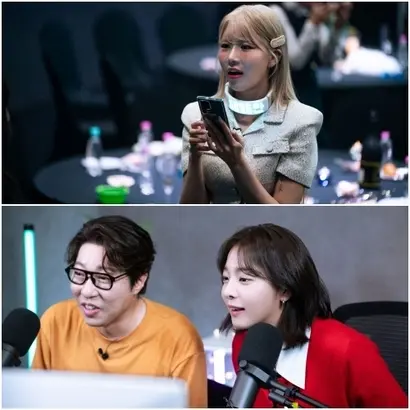
The casting is impressive, gathering star influencers from first-generation creator Daedoseogwan to Risabae, Jin Yong-jin, Pani Bottle, Oking, and Jang Ji-su. Beyond mainstream popularity, influencers with unique niches like cosplay master Myboo, fortune-telling creator Dohwador, and shamanic creator Lotus Geumhwa Seonnyeo also caught the eye. Even celebrities appeared. Jang Keun-suk, the ‘Asia Prince’ who describes himself as the ‘original influencer who rose and fell with Cyworld,’ and actress Ki Eun-se had to prove their presence among the creators.
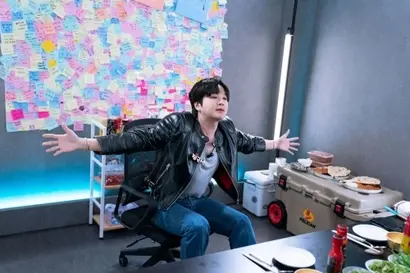
Given the high impact of each individual, I expected it to be eye-catching and dopamine-stimulating no matter what they did, but I didn't expect them to eliminate 47 out of the 77 people in the first round. The influencers' follower counts show a huge gap, ranging from 27.5 million to 17,000. ‘The Influencer’ converts the 300 million won prize pool into a valuation based on their follower ratios, and the value of eliminated contestants is absorbed by the survivors, with the final person standing taking the 300 million won. It's a clever way to intuitively show the reality where follower count equals money.
The round to find the influencer with the greatest influence was also striking. Honestly, while I knew of their influence, I held a secret contempt, thinking most were just ‘attention seekers’ chasing public interest and calling themselves creators while fishing for ‘aggro’ (attention) with provocative content. However, when the first round mission of voting for 15 ‘likes’ and 15 ‘dislikes’ was given, I was floored by Jin Yong-jin, who quickly grasped that the core of the mission was ‘how much attention you draw.’ Usually, one assumes it's a matter of subtracting ‘dislikes’ from ‘likes,’ but Jin Yong-jin, capturing the uniqueness of influencers where attention is power, craved ‘dislikes’ and showed a clever way to survive.
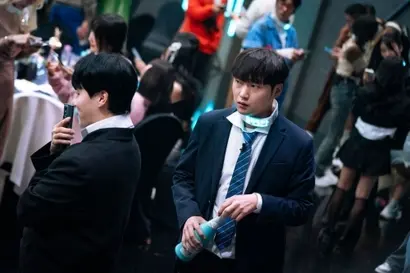
The second round, which tested planning skills and spontaneity through live broadcasting, was also interesting for the different approaches taken. Some attracted attention by bringing in famous celebrities, some focused on their most popular existing content, and others, judging that ‘aggro’ was the best way to drive views, carefully crafted not only their content but even their broadcast titles. You might think those with more followers have an automatic advantage, but because some survived easily while others barely squeaked by depending on their approach, it made for a fun watch.
Other missions, such as seeing who could grab the most attention with a single photo, or testing essential influencer qualities like meta-cognition, ripple effect, persuasiveness, and content analysis, made me realize that these people didn't gain this influence solely through ‘aggro.’ It was also impressive to see these talented creators immediately influencing and inspiring each other. When they chose teammates via auction, their ability to quickly grasp how to survive, or the Jang Keun-suk team's use of text on photos during the eye-tracking photo mission, highlighted the influencers' ability to absorb, communicate, and react to others with an open mindset.
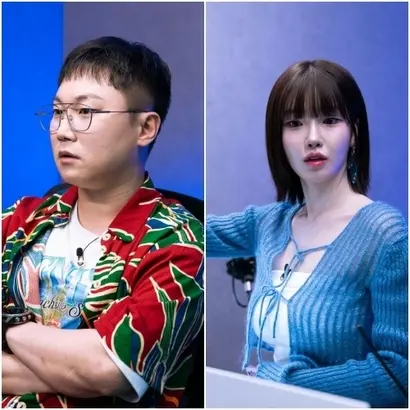
Of course, there are many shortcomings. While it succeeded in creating ‘aggro’ to the point of being a dopamine peak, there was almost nothing that showed the influencers’ deep planning or editing skills. Wouldn't it have been easier to feel their abilities as creators if they had shown it in review videos? It was also disappointing that there was no mission to understand short-form creators—who have over 10 to 20 million in influence globally—especially since the show itself held the prejudice that ‘short-form makes easy money.’ The fact that among the final 8 survivors there were individuals embroiled in social issues, and controversies surrounding the winner’s spoiler, are also negative elements that linger in the public's memory.
That's why the influencer who surprised me was Risabae, famous to the public as a makeup creator. I wondered if she might lack fresh appeal due to her longevity, but her clear content that doesn't rely on ‘aggro,’ her content analysis skills, and her friendly communication with the public impressed me as she survived each round. Her face-off with Afreeca BJ Gwajeup Se-yeon, who has been a recent hot topic, was also a scene that felt quite satisfying.
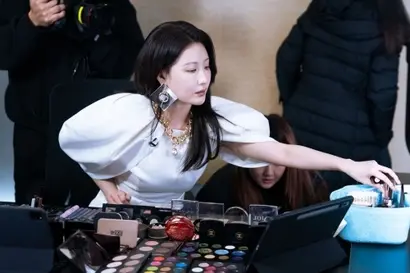
‘The Influencer’ has been a hit, topping the ‘South Korea Top 10 Series’ immediately after its release through August 13th, when all episodes were out, and ranking 4th in the Global Top 10 TV Shows (Non-English) category. If you want to stimulate your dopamine, it will be well-rewarded. Over 7 hours fly by. Of course, considering the current reality of chasing only attention and the actual income of the participants—for whom a 300 million won prize is laughable (Gwajeup Se-yeon, for instance, earned 3.2 billion won last year as the top-ranking AfreecaTV female streamer)—you might experience a delayed sense of ‘reality check.’
About writer Jung Soo-jin?
I have reported and written about film, travel, and popular culture while working for various magazines. I don’t want to fall behind on trends, but I’ve become an old-timer who, while watching the latest dramas, only predicts the obvious cliches in the next scene. I am trying to regain my lost intuition while drifting through the vast OTT world, and my current wish is for an integrated OTT subscription plan.