

[비즈한국] Starting in September, 100 Philippine domestic workers will be deployed to households in Seoul. The government announced the launch of this pilot program for foreign domestic workers with the goal of providing high-quality foreign labor to local households at an affordable cost. However, voices of concern have been rising even before the program's start. Critics argue that with the high wages set for these foreign workers, the policy only benefits the high-income bracket, and some point out that it could inadvertently drive up rates in the domestic helper market.
16,000 won for Koreans vs. 13,700 won for Filipinos… Concerns over the cost burden continue
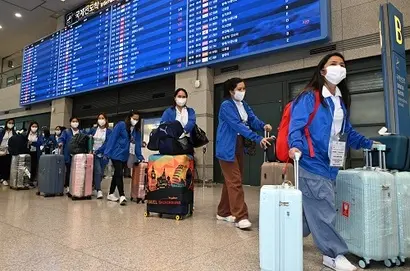
On the 6th, 100 Philippine domestic workers arrived in the country. They are aged 24 to 38, and most are university graduates. They hold childcare certifications recognized by the Philippine government and have passed proficiency tests in both English and Korean. After completing four weeks of domestic training, they are scheduled to begin services on September 3.
Since the Seoul pilot program is aimed at households with children aged 12 or under or those expecting a child, the scope of work for these Philippine workers is focused on childcare. Their role is strictly as dedicated childcare helpers, including dressing babies, bathing them, and changing diapers. While they can perform tasks like laundry, dishwashing, and light cleaning, these are not their primary duties. Tasks such as taking out the trash, cooking for adults, mopping, and organizing storage are excluded from their scope of work.
The limited scope of work for these workers is fueling controversy. A person surnamed A, who runs an employment agency in Gyeonggi-do, said, "These days, even local domestic helpers rarely do any cooking. They only do it if they receive extra pay. But for other general housework, they handle most things, whereas the scope for the Filipino helpers seems quite limited. It’s hard to classify them as true domestic managers."
The Seoul Metropolitan Government explains that by making childcare the primary focus, they have reduced the burden of general housework. An official from the Seoul Women and Family Policy Office explained, "The main duty of foreign domestic workers is childcare. Since caring for children aged 12 and under is the core task, it's not easy for them to manage housework while looking after the child. If a child were to get hurt while the worker was performing household chores, wouldn't the liability fall on the agency and the city? That’s why we kept the primary focus on childcare and limited housework to what is feasible."
The point of contention is the service fee. The government announced that the cost for these Philippine workers is 13,700 won per hour (including minimum wage, the four major social insurance premiums, and holiday pay). This translates to 1.19 million won per month for four hours of daily work, and 2.38 million won per month for eight hours. Currently, the average hourly rate for local domestic helpers and babysitters hired through employment agencies is around 16,000 won.
The government initially promoted the introduction of foreign domestic workers with the intent of easing the childcare burden at a lower price. In 2022, Seoul Mayor Oh Se-hoon pushed for the policy, stating, "It costs 2 to 3 million won a month to hire a nanny in Korea, whereas foreign nannies in Singapore earn about 380,000 to 760,000 won." However, because Korea's minimum wage was applied to them, the hourly rate ended up higher than expected. While the government emphasizes that foreign domestic helpers are 30% cheaper than local workers, users are feeling the financial strain.
A resident of Seongdong-gu, Seoul, surnamed Lee, remarked, "The government said they were bringing in Philippine helpers, but it feels like they’ve been 'welcomed' in at a high price. The cost is burdensome for an average dual-income household."
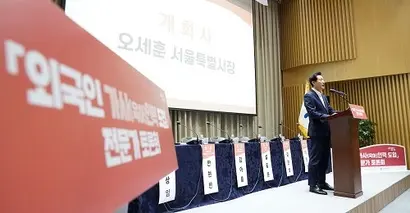
Are foreign helpers a solution to low birth rates? "Cannot be the ultimate answer"
There are also concerns that the introduction of Philippine helpers is unsettling the domestic market and could inadvertently cause market prices to rise, as a trend of demanding wages equal to or higher than those of the Philippine workers is emerging in the domestic labor market.
B, a Seoul resident, said, "After the news about the Philippine helpers came out, the helper who works at my house asked for a raise. She currently makes 13,000 won an hour and wanted an increase because her rate was lower than the Philippine workers'. It’s an awkward situation."
Similar concerns are being shared in online communities for housewives. One member confessed her dilemma, saying, "I feel bad for the Korean 'imo' (a term for a middle-aged female helper) I currently employ. I'm wondering if I need to raise her hourly wage because it feels like I should be paying more than what the Filipino helpers get." Another member pointed out, "It seems like the hourly rate for Korean babysitters will go up because of the Philippine helpers. Isn't the purpose of easing the childcare burden actually causing negative side effects?"
The government is currently considering ways to lower the cost burden. Currently, Philippine domestic workers are issued E-9 (non-professional employment) visas, which mandate the application of the minimum wage. If a new E-7 (specific activity) visa is created, they would not be subject to the minimum wage, and individual contracts via employment agencies could lower the service fees. The Seoul Metropolitan Government is currently negotiating with the Ministry of Justice to introduce a separate visa category to lower the hourly rate for Philippine workers.
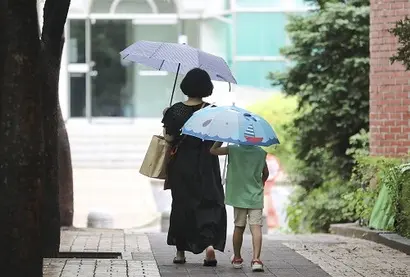
There is also skepticism about whether the deployment of Philippine domestic workers can actually serve as a solution to the low birth rate. The government had expected to reduce the childcare burden and ultimately address the low birth rate by supplying low-cost helpers. However, as the cost burden increases, some are evaluating that these workers might end up being nothing more than auxiliary English tutors for the high-income class. In fact, among the 751 households that applied for the Seoul pilot program, 43% (318 households) were concentrated in Gangnam, Seocho, and Songpa districts.
Jung Ik-joong, a professor of social welfare at Ewha Womans University, advised, "Rather than relying on foreign help to reduce women's childcare burden to boost birth rates, the ultimate direction we should take is to strengthen the roles and responsibilities of men within the home. We need to analyze the effects through the pilot program and consider whether to expand, reduce, or modify the policy based on those results."