

[비즈한국] As deaths of Coupang workers continue to occur, criticism regarding the poor working conditions of Coupang delivery drivers is mounting. Despite the relentless heatwave, delivery camps lack even proper cooling facilities, and drivers complain that they can barely secure a moment of rest because they are pressured by deadlines to process excessive volumes of packages.
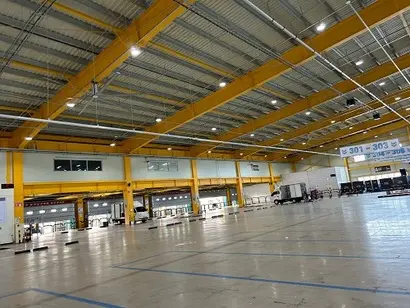
Logistics work in camps without air conditioning: “All Coupang provides is two bottles of water”
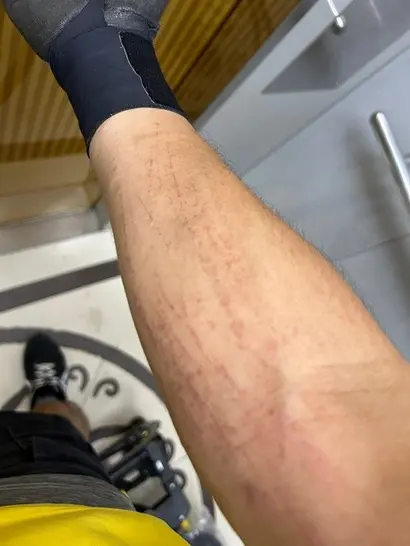
A, who works as a Coupang delivery driver (Quick Flex), searches for "heat rash remedies" on the internet every day. The heat rash he developed due to the ongoing sweltering weather shows no signs of improvement. He said, "There probably isn't a single driver who doesn't have heat rash. The heat is indescribable every morning while we sort and load goods at the camp (logistics center). We are literally drenched in sweat."
As heatwave warnings are issued day after day and patients with heat-related illnesses continue to emerge, Coupang delivery drivers are pouring out their grievances about their working conditions. They argue that the working environment is extremely poor, with camps where drivers load and unload goods being left defenseless against the scorching heat. In the camp where A works, there is not a single air conditioner for cooling. The situation in other camps is the same. All that is available to cool them down are ceiling fans for ventilation. The drivers explain, "There are so few ceiling fans that they are insufficient to mitigate the heat."
One delivery driver lamented, "Since the access roads for logistics vehicles are always left open, it’s essentially the same environment as being outdoors. If they can't install air conditioning because the doors have to be kept open, shouldn't they at least provide electric fans? It's just too hot."
Generally, delivery drivers spend about 5 hours a day at delivery camps for loading and unloading goods. While loading delivery items early in the morning is grueling, the task of loading items for afternoon deliveries is particularly difficult. Unlike other courier companies, Coupang operates a multi-rotation delivery system. For daytime deliveries, they load items twice in the morning and afternoon, and in the case of afternoon deliveries, the loading work takes place between 13:00 and 16:00, the time when the heat is most extreme. A complained, "We have to work for two hours straight in a camp without a single air conditioner. All the company provides is two 350ml bottles of water."
The battle against the heat continues during the delivery process as well. A said, "It happens more than once or twice that I feel dizzy while delivering in the heat. Drivers in apartment complexes have it a bit better because they can use elevators, but those who have to deliver using stairs end up completely covered in sweat."
Another delivery driver explained, "After finishing deliveries, my clothes are so soaked in sweat that I can barely take off my pants. I would like to wear short sleeves and shorts because of the heat, but it’s difficult. Beyond delivering products, Coupang also requires us to collect 'Fresh Bags.' During the process of organizing these bags, we get many scratches from the Velcro. There is also the difficulty of having to work in long sleeves despite the heat."
Cannot even rest due to the 'cleansing' clause
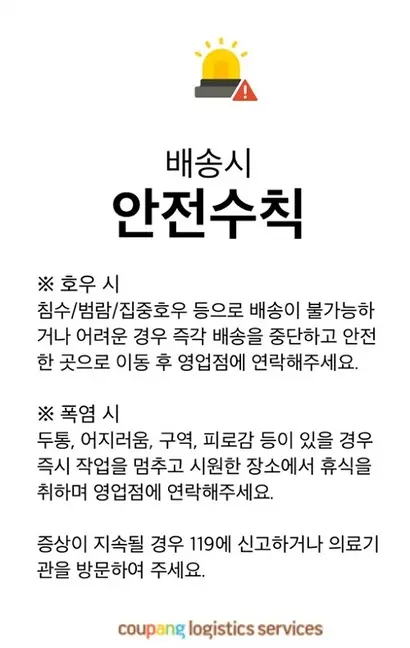
The government recently announced measures to protect worker health from extreme heat, advising that 10 to 15 minutes of rest should be taken every hour during heatwave advisories and warnings. They also urge to avoid outdoor work as much as possible between 14:00 and 17:00, when the heat is most intense. However, for drivers chased by daily delivery deadlines, a midday break is nothing but a pipe dream.
One Coupang delivery driver sighed, "I arrive at the camp at 7:40 AM and the deadline for finishing deliveries is 8:00 PM. Since I'm quite skilled at the job, my finish time is on the earlier side, but if the delivery zone is in the outskirts or in corridor-style apartments, it usually takes 3 to 4 more hours. Many colleagues don't get off work until 10 or 11 PM. How can I take a break just because it's hot?"
Coupang announces that delivery work should be suspended when work is difficult due to weather conditions like heatwaves or heavy rain. While they state that there are no disadvantages for drivers who stop deliveries due to weather issues and that they can autonomously decide on the delivery volume, the drivers' reactions are different. They explain that they cannot take breaks as they please because they might lose their jobs if they stop deliveries due to the weather.
One delivery driver pointed out, "If a local agency's monthly average delivery fulfillment rate falls below 95%, it meets the criteria for 'cleansing' (having the delivery zone withdrawn). This essentially means the area the agency is responsible for is reduced. This causes a decrease in income not only for the delivery drivers but also for backup drivers who fill in when regular drivers take breaks. Therefore, we cannot stop deliveries at will due to the weather. Realistically, it’s a meaningless announcement."
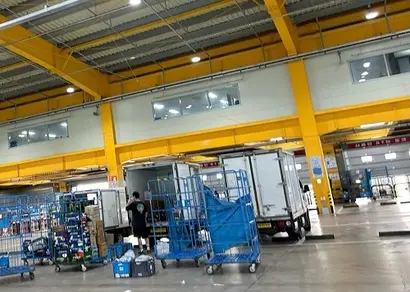
Coupang's delivery driver working environment has been a source of continuous controversy. A delivery driver working at the Namyangju 2 Camp passed away in May, and in July, a driver died while delivering during a heavy rainstorm in Gyeongsan, North Gyeongsang Province. In the same month, a worker who was performing sorting tasks at a Coupang logistics center in Jeju also died, further fueling the controversy.
The labor sector is calling for an inspection of Coupang's working conditions. On July 30, a group of 9 lawmakers from the Democratic Party of Korea's "Committee for Labor Respect" and the Environment and Labor Committee visited the Namyangju 2 Camp to inspect the working environment. However, Coupang blocked their entry, claiming that there had been no prior consultation, and the on-site inspection did not take place.
An official from the Korea Delivery Workers' Union pointed out, "Among the delivery industry, Coupang's labor intensity is quite high. They implement a multi-rotation delivery system, so drivers have long driving and working hours. In the past, Coupang had a good reputation in the industry for directly hiring drivers and providing a 5-day workweek, a 52-hour workweek, and annual/monthly leave allowances. But now, they mostly use subcontracted drivers, and the working environment has become poor, with drivers even handling parts of the sorting process without dedicated personnel."
The official continued, "Because Coupang has a higher labor intensity compared to other companies, the risk of accidents increases when factors like extreme heat are added. It wouldn't be strange if any one of the delivery drivers collapsed at any time. Coupang must abolish the 'cleansing' system that forces workers to work at high intensity and join the social consensus to prevent deaths from overwork among delivery workers."
BizHankook inquired with Coupang about the camp working environment, but did not receive an official response.