

[비즈한국] Despite the government's introduction of the "Medical Dispute Mediation System," a mechanism designed to facilitate settlements, the number of indictments against physicians for professional negligence resulting in death or injury continues to rise, drawing attention to the underlying causes. Regarding the mediation system, the patient community argues, "We are forced to choose litigation because we suffer from information asymmetry." The government, which has been operating the "Medical Dispute System Improvement Consultative Body" since last November, plans to introduce a "Patient Advocate System" and a "National Ombudsman System" to improve patient rights and interests.
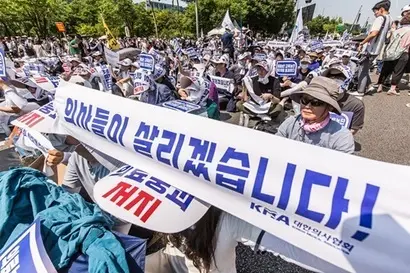
Number of Physician Indictments in Korea is 580 Times Higher than in the UK
The number of medical disputes in Korea is significantly higher compared to other countries. According to the report "Current Status and Implications of the Penalization of Medical Practices (2022)" published by the Korean Medical Association's Medical Policy Research Institute, the number of physicians indicted for professional negligence resulting in death or injury in Korea between 2013 and 2018 averaged 754.8 cases per year. This is 14.7 times and 580.6 times higher than in Japan (average 51.5 cases) and the UK (average 1.3 cases), respectively. It is also 26.6 times higher than the number of recognized medical malpractice cases in Germany (average 28.4 cases). Furthermore, the ratio of indictments to the number of active physicians reaches 0.5% in Korea. In contrast, it is merely 0.02% in Japan, 0% in the UK, and 0.1% in Germany.
Data shows that the number of indictments did not decrease even after the government introduced the "Medical Dispute Mediation System" as an alternative dispute resolution mechanism. In 2012, the year the system was implemented, the number of indictments was 945, which was actually a 52.2% increase from the previous year (621 cases). In the same year, first-instance criminal trials increased by 7.3% compared to the previous year to 878 cases, and first-instance civil trials increased by 15.2% to 1,009 cases. Even in 2017, when the automatic mediation system—which automatically initiates mediation in cases of death or unconsciousness—was implemented, the number of indictments rose by 2.3% and first-instance criminal trials by 7.3% compared to the previous year. However, first-instance civil trials saw a 1.5% decrease, from 970 to 955 cases.
The patient community claims that the mediation system is unreasonable for patients lacking medical knowledge, leaving them no choice but to opt for litigation. Litigation is also a burden on patients and their guardians in terms of the burden of proof and time. Ahn Ki-jong, representative of the Korea Alliance of Patients' Organizations, explained, "While hiring a lawyer can be more advantageous than a patient handling paperwork themselves, patients or their bereaved families must ultimately prepare a significant amount of data, and a first-instance trial takes an average of 2 to 5 years. If you lose, you have to bear the opposing side's legal fees; in death cases, that's about 45 million won per doctor, so for two doctors, the cost is close to 100 million won. That is why many people now try the mediation system first and proceed to litigation only if mediation fails."
Patient Community: "Patients are Excluded from the Process… Difficult to Even Initiate Mediation for Non-Major Cases"
The Medical Dispute Mediation System under the Medical Dispute Mediation Act began in 2012. Mediation is initiated when the respondent (physician) agrees to participate, and an investigation report based on medical records is reviewed by a mediation committee composed of medical professionals, legal experts, and consumer representatives. The committee then determines whether there is liability for damages and suggests a settlement amount. It was evaluated as capable of resolving disputes relatively quickly, as mediation or arbitration can be completed within 120 days. However, both the medical and patient communities have consistently called for strengthening objectivity and fairness in medical accident investigation and mediation/arbitration procedures.
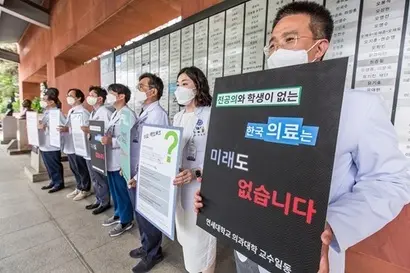
The patient community expresses dissatisfaction with: △the difficulty of active patient participation, △the lack of legal support for patients, and △the fact that mediation is only initiated when the respondent agrees to participate. They argue that throughout the mediation process, there is little room for patient involvement beyond writing the initial application, and that patients are merely providing documents when requested by investigators. Their claim is that at the end of the process, they are simply asked, "The negligence is this much and the compensation is this much; will you agree to the settlement?" Representative Ahn Ki-jong lamented, "It is not easy even for non-expert patients to write the application themselves."
The fact that mediation only begins if the respondent agrees to participate is also under fire. For general cases, excluding those involving death, unconsciousness, or severe disability, the respondent's consent is required before mediation can proceed. Representative Ahn Ki-jong stated, "This is a point we have pointed out since the initial introduction of the bill," adding, "However, since the introduction of the automatic mediation system (which triggers automatic mediation in cases like death), it has improved significantly in terms of patient relief, as a medical appraisal report is issued and the mediation process begins regardless of the respondent's will. Previously, hospitals often hired lawyers even during mediation, while patients had to choose between litigation or simply giving up if they lacked funds."
Reflecting these voices from the patient community, the government plans to introduce a "Patient Advocate System" and a "National Ombudsman System" through the Special Committee on Medical Reform. The Patient Advocate System aims to assist patients by providing expert consultation from a victim's perspective at the initial stage of a medical accident, selecting appraisal issues, and explaining appraisal results. The National Ombudsman System is a mechanism that monitors and evaluates medical accident appraisals by forming a three-party consultative body (Korea Medical Dispute Mediation and Arbitration Agency, patient/consumer/civic groups, and medical associations). The Patient Advocate System will target victims of serious injuries, including cases of death, unconsciousness for over a month, or permanent disability.