

[비즈한국] The hangover cure market is experiencing a resurgence following the end of the pandemic. As stick-type gel (jelly) products gain popularity among the younger demographic, the government has announced that starting next year, products wishing to display or advertise "hangover relief" claims must be supported by objective and scientific data derived from human clinical trials. With the burden of proof now increased, there are concerns that manufacturers may further raise prices, which are already considered high.
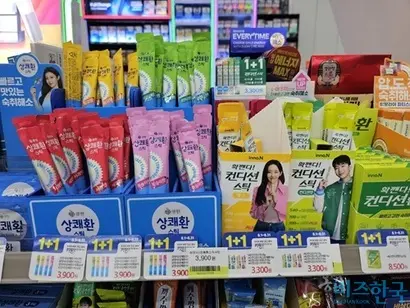
Sales of 'Stick-Type' Products Up 10% Compared to Previous Year
The hangover cure market is waking up once again. According to market research firm NIQ Korea, sales of hangover relief products last year reached approximately 350 billion KRW, an increase of about 10% compared to 2022. The NIQ Korea ‘2023 Second Half Fast-Moving Consumer Goods (FMCG) Trend Report’ analyzed that the market, which had stalled due to COVID-19, entered a full-scale recovery phase starting in the second half of 2022. NIQ Korea explained, "The consumer base for hangover cures has expanded to include women and younger demographics, and stick-type products are gaining popularity, driven by these new customers."
Specifically, sales revenue and volume in the second half of 2022 increased by 48.1% and 48.3% respectively compared to the same period the previous year, and the annual Moving Annual Total (MAT) for last year recorded 347.3 billion KRW, a 10.4% increase from 2022 (314.4 billion KRW). This is a notable performance compared to the overall FMCG and food market revenue growth rates, which stalled at 0.1% and 0.3%, respectively. In particular, the proportion of stick-type products in total sales grew nearly fourfold, from 5.1% in the second half of 2021 to 14.9% in the second half of 2022, and 21.1% in the second half of last year.
Hangover cures first entered the market in 1992. At the time, HK inno.N195940 launched "Condition," a hangover cure targeting office workers in their 30s and 40s. Subsequently, drink-type products such as Dawn 808 (1998), Morning Care (2005), Hutgae Power (2012), and Ready Q Drink (2014) were released one after another. After transitioning through pill forms (medicated herbs rolled into spheres) like Condition Pill (2012) and Sang-kwae-hwan (2013), stick-type gel (jelly) forms have been gaining popularity since 2019. Recently, forms have become more diverse, including film types and infusion teas that are inserted into alcoholic beverages.
Not 'Health Functional Foods' but 'General Foods'... KFDA: "Human Trials Required from 2025"
Manufacturers claim their products contain ingredients that help the body break down acetaldehyde, known as the cause of hangovers, but no product has been officially recognized for its hangover relief function. These products are classified as "food," not "health functional food." Searching for major hangover cures on the Ministry of Food and Drug Safety’s Food Safety Korea website reveals that drink formulations are categorized as: △Mixed Beverages (Condition, Sang-kwae-hwan BOOSTER, Morning Care, Hutgae Power) △Liquid Teas (Dawn 808) △Fruit and Vegetable Beverages (Ready Q Drink) △Carbonated Beverages (Kkaesukkang, Ready Q Curcumin Sparkling).
Furthermore, pill types are registered as other processed products (Condition Pill, Sang-kwae-hwan), while gel (jelly) types are registered as candies (Condition Stick, Ready Q Stick) and processed fruit and vegetable products (Sang-kwae-hwan Stick). Some pharmaceutical companies have released health functional foods under the same brand as their hangover cures. However, these products are intended for improving liver health rather than providing immediate hangover relief. A representative example is Dong-A Pharmaceutical's "Morning Care Liver Solution." As a health functional food, this product is designed to protect the liver from alcohol-induced damage and improve memory.
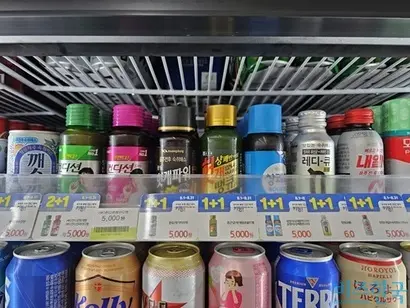
Despite not being health functional foods that resolve hangovers, hangover cures have long been criticized for being expensive and having high retail prices relative to their ingredients. Although the appearance of gel (jelly) products lowered the price range, drink-type products remain expensive, around 5,000 KRW. According to "Price Information Portal (Price-Info)," operated by the Korea Consumer Agency, the retail price of drink-type products at convenience stores is 5,000–5,500 KRW, which is higher than △cider (3,200–3,900 KRW) △energy drinks (1,600–2,400 KRW) △ion drinks (2,200–2,500 KRW) and △protein drinks (2,000–3,300 KRW).
This is interpreted as being influenced by "Condition," the first hangover cure. At the time of its 1992 launch, the product was released at the high price of 2,500 KRW per bottle (75ml). Lee Young-ae, a professor of Consumer Science at Incheon National University, explained, "When the existing price point is 5,000 KRW, consumers develop a subjective perception benchmark that 'a functional beverage of this level is 1.5 to 2 times more expensive than a regular beverage.' If it becomes much cheaper than this, consumers inevitably think the quality has dropped based on that benchmark. People might think lower prices are good, but from a company's perspective, they adopt a strategy of 'rather than having the quality doubted, it's better to keep the price high and sell through promotions.'"
The government plans to approach hangover cures from the perspective of "proving functionality." Last year, the Ministry of Food and Drug Safety announced that from January 2025, any product wishing to label or advertise "hangover relief" must be supported by objective and scientific data through human clinical trials or qualitative literature reviews of human trial results. Consequently, manufacturers are currently conducting human trials to prove the hangover relief functionality of their ingredients. Since the government has been discussing this matter for a long time, the prevailing view is that manufacturers will not face significant difficulties in providing this proof.