

[비즈한국] In response to the non-payment crisis involving Tmon and WeMakePrice, the government and the ruling party unveiled measures on the 6th aimed at preventing a recurrence. The core of these measures includes regulating settlement periods for the e-commerce industry and mandating the separate management of sales proceeds. Given that the root of the crisis lies in the weak financial structure and "round-robin" settlement practices of Tmon and WeMakePrice (T-Mep), which rank in the top 10 by sales volume, the intent is to manage blind spots and crack down on industry insolvency through institutional reform. The T-Mep crisis has sparked wider concerns about the financial stability of the entire e-commerce sector. Here is a look at the liquidity status of major e-commerce companies.
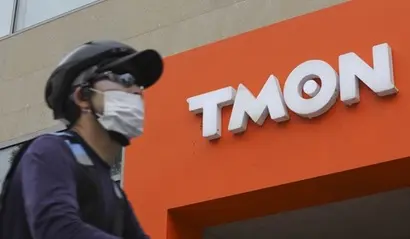
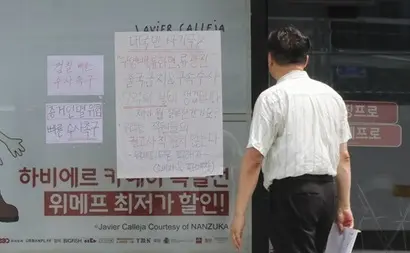
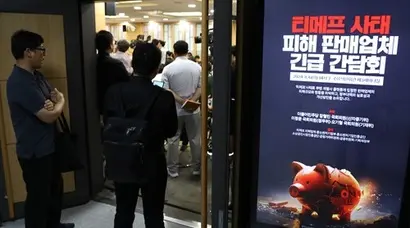
This massive settlement delay crisis stemmed from poor supervision and management of e-commerce companies that also serve as Payment Gateways (PG). Previously, e-commerce companies and PG firms set settlement deadlines and managed funds autonomously without clear legal regulations. Tmon and WeMakePrice also functioned as PG companies, receiving consumer payments directly.
However, both companies were "walking a tightrope" due to liquidity issues. The scale of current liabilities that both companies needed to repay within one year exceeded their current assets by over five times. The year before last, Tmon's current liabilities were 719 billion won, 5.5 times its current assets (131 billion won), while last year, WeMakePrice's current liabilities (309.4 billion won) were 5.3 times its current assets (58.4 billion won). Effectively, there was no way to monitor or grasp that Tmon, which was in a state of capital impairment, was misappropriating sales proceeds for up to 70 days.
Financial health is a growing concern for the e-commerce industry. According to each company's audit and business reports, firms backed by strong parent companies or those with financial flexibility through IPOs showed stable trends, while fashion platforms and others were found to have accumulated deficits or were in a state of capital impairment.
Massive Accumulated Deficits are a ‘Common Denominator’… Major Players Relatively Sound
As of July last year, the domestic online shopping market was led by Coupang (24.5%) and Naver035420 Shopping (23.3%), with the remainder of the market held by Shinsegae004170 Group (Gmarket, Auction, SSG.com) and small-to-medium-sized e-commerce firms.
The top-tier players, Coupang and Naver, showed relatively sound indicators. As of the end of last year, Naver held 3.5764 trillion won in cash and cash equivalents, and its current ratio (ratio of assets to liabilities) was 133%, putting it at the top tier with a stable structure. Naver Financial, which leads the company’s simple payment and comprehensive financial platform businesses, serves as a liquidity support cushion for its affiliates and has posted tens of billions of won in operating profit for four consecutive years, showing robust performance.
Industry leader Coupang carries a significant burden with 3.8675 trillion won in accumulated outstanding deficits as of last year, but its breathing room has been secured through its IPO. Its net working capital, which indicates a company’s short-term financial health, was -1.4942 trillion won last year. Net working capital is the sum of liquid assets and liabilities, and it must be positive to be a sound indicator. However, Coupang has recorded annual profits and is improving its cumulative deficit caused by investments like logistics centers, with its deficit also on a downward trend. Total equity (2.9834 trillion won) increased about fourfold compared to the previous year. Coupang Pay’s cash holding ratio was 81%, the second-highest after Musinsa Payments (86%).
For most e-commerce firms like Gmarket, the sum of the cost of sales and management expenses exceeds revenue, making losses inevitable. Gmarket appears stable in terms of its current ratio (112%) and net working capital (41.4 billion won). However, after posting operating profits in the 85 billion won range in 2020, it has accumulated losses in the tens of billions of won annually since being acquired by Shinsegae Group. SSG.com also recorded a current ratio of 69%. The Financial Supervisory Service considers a current ratio of 50% or higher necessary for electronic financial businesses. Lotte Shopping023530’s e-commerce arm, Lotte On, also has the safety net of the group’s funding power, but has posted losses of around 100 billion won every year since its launch in 2020. Last year’s operating loss was 85.6 billion won.
Small and Medium-sized Vertical Platforms ‘Unstable’… “Entering Low-Growth Phase, Must Pivot to Internal Management”
11st (11Street), which changed its strategy to a sale after failing to go public, saw its net working capital reach -106.5 billion won last year. Its current ratio is 91%. On the other hand, the ratio of cash available for short-term repayment was only 16%, a low level. For Tmon and WeMakePrice, these indicators were 1% and 2%, respectively. 11st has been accumulating losses for four years since 2020 and faces the challenge of resolving investment capital recovery following the delay in its IPO.
Kurly, which is expected to make another attempt at an IPO, had 2.2615 trillion won in accumulated deficits as of the end of last year, due to its long history of large-scale losses since its founding. Although it succeeded in turning an operating profit of 500 million won in the first quarter of this year through cost-cutting, it failed to curb the deficit as net losses grew.
Excluding Musinsa Payments and Kakao Style’s ZigZag, the reality facing small and medium-sized vertical platforms (centered on specific categories) is even more difficult. Musinsa has a current ratio of 103%, with a cash-to-current-liabilities ratio of 86%. While ZigZag shows growth indicators, it continues to post losses. Last year, it achieved its highest-ever revenue (165 billion won) and succeeded in turning a profit for the first time in four years, reducing its loss (19.8 billion won) by 32 billion won compared to the previous year.
Women’s fashion app Ably has recorded losses for seven consecutive years since its 2015 launch, accumulating a deficit of 204.2 billion won. The three major luxury platforms, B2B-type firms like Balaan, Trenbe, and MustIt, have also piled up accumulated deficits of 78.5 billion won, 65.4 billion won, and 23.6 billion won, respectively.
Once the government's new preventive measures are implemented, settlement deadlines—previously decided autonomously by e-commerce companies—will be subject to regulation, and the management of settlement funds will also be institutionalized. "Round-robin" funding will become impossible. An industry official stated, "We are putting our heart and soul into securing and maintaining payment stability," while adding, "Even companies that have been operating normally without issues could face difficulties due to the settlement deadline regulations." Another industry source said, "Prior to this crisis, companies were already trying to cut costs and improve profitability due to the sluggish industry climate. There is a general trend of focusing on financial stability."
Seo Yong-gu, a professor of business administration at Sookmyung Women's University, pointed out, "It would be appropriate for the government's preventive measures to provide guidelines, such as maximum settlement cycle standards. E-commerce grew by taking market share from offline retail, but it has now reached a mid-to-low growth phase as growth rates have fallen. Corporate value should be assessed based on various indicators like operating profit rather than just revenue, and companies must also focus on internal management and stabilizing their business models."