

[비즈한국] Around 9:00 PM on August 8, 2022, when record-breaking torrential rains hit Seoul, a 40-something woman with a developmental disability, her younger sister, and the younger sister's 13-year-old daughter were trapped and lost their lives due to flooding in a semi-basement apartment in Sillim-dong, Gwanak-gu, Seoul. On the same day, a woman in her 50s was found dead in a flooded semi-basement home in Sangdo-dong, Dongjak-gu, Seoul, unable to escape the rising waters. The historic downpour, the heaviest in 115 years, struck the city’s most vulnerable population—those living in semi-basements—first.
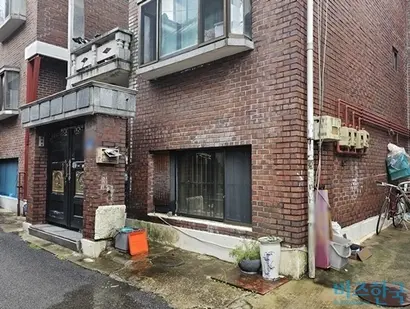
Semi-basement homes are inherently vulnerable to flooding because about half of their living space is located below ground level. Due to the nature of water flowing downward, heavy rain significantly increases the risk of water entering the premises. Conversely, doors and windows leading to the surface are often blocked by water pressure or security bars during a flood. This is why semi-basement homes require flood prevention facilities like flood barriers, backflow prevention valves, and submersible pumps, as well as emergency evacuation equipment such as openable security bars, flood alarms, and escape ladders.
From August 2022, when the flooding accidents occurred, through June of the following year, the Seoul Metropolitan Government conducted a full inspection of semi-basement homes in the city. In July of last year, it established a plan to install flood prevention facilities in high-risk households. How much of this plan has been realized? According to investigation results obtained by Bizhankook through a request for information disclosure, out of 237,619 total semi-basement units in Seoul, 28,439 (12%) were deemed high-risk, requiring flood prevention facilities (24,842 units) or emergency evacuation facilities (14,586 units).
Rejected over concerns about poor lighting, ventilation, and property value decline
As of the 6th, Bizhankook confirmed that 9,440 (38%) of the 24,842 semi-basement units identified by Seoul City as needing flood prevention facilities have yet to have them installed. This includes 5,405 (32%) of the 16,855 units that had already been recognized as high-risk due to past flooding history. Excluding units that have since been demolished, where residents have moved out, or which were deemed structurally unnecessary, there are currently 7,632 households (31%) effectively exposed to flood risks.
The primary reason for the delay is opposition from landlords. Seoul City classifies the reasons for non-installation in the 9,440 households as follows: landlord refusal (4,738 units), occupant unavailability after three attempts (2,894 units), structurally unnecessary (1,230 units), vacant (397 units), and demolished (181 units). Landlords who blocked installation reportedly cited concerns over poor natural lighting, ventilation issues, and a potential decline in property value.
The status of emergency evacuation facilities is even worse. Seoul City initially identified 14,586 units requiring such facilities during its survey; however, as of June, this number increased to 15,252 units during inspections by autonomous districts. Yet, only 5,108 units (33%) have actually installed them, leaving 10,144 units (67%) without necessary evacuation equipment.
An official from the Seoul Metropolitan Government's Water Safety Division stated, "We provide free installation for most households that want it, but there is currently no legal means to force installation if the landlord refuses. Since semi-basement units are private property, it is difficult to expand installation." An official from the City's Architecture Planning Division also explained, "Most of the households without evacuation facilities currently are those that did not respond or did not provide consent. The figure increased as autonomous districts identified additional households in need beyond the city’s initial full survey."
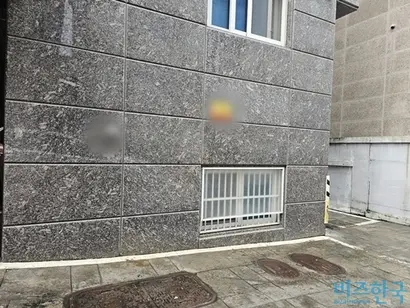
Tenants live in constant anxiety whenever it rains... Calls for "enforcement" grow
Residents who have experienced flooding still live in fear. A tenant in his 70s, identified as Mr. A, who lives in a semi-basement in Sillim-dong, Gwanak-gu, said, "It started raining hard just as I was about to leave the house. I waited, worried that water might come in, but fortunately, it stopped quickly. Two years ago, when the big rain hit, the room flooded, and I spent hours bailing out water with a bucket until the rain stopped. Rain is truly terrifying." Localized heavy rain hit Sillim-dong on the morning of the 7th when Bizhankook met with Mr. A. His home had no flood prevention facilities.
A real estate agent operating in Sillim-dong noted, "After the death of a resident in a local semi-basement during the 2022 floods, even students looking for cheap housing became aware that living in a semi-basement isn't just uncomfortable, it can be lethal. Most people looking for semi-basements now are international students. Even Koreans who look for semi-basements ask to see units located on higher ground."
There are ways to mandate the installation of flood prevention facilities. Under the Natural Disaster Countermeasures Act, the Minister of the Interior and Safety can mandate the installation of such facilities in areas deemed at risk of flood damage. However, the government and local authorities are often hesitant to designate these areas due to backlash from residents concerned about declining property values. Currently, only five areas in Seoul—Gwanghwamun in Jongno-gu, Hwagok 1-dong in Gangseo-gu, Bangbae-Sadang in Seocho-gu, Seocho District, and Gaehwa in Gangseo-gu—are designated as flood-risk zones.
Lee Won-ho, an executive committee member of the Solidarity for Housing Rights, pointed out, "Flood barriers are not installations that cause serious structural damage to a building. For the Seoul government to emphasize landlord consent while installing these facilities shows that they are more concerned with appeasing building owners than with safety." He added, "At the very least, Seoul City must exercise administrative enforcement to install these facilities in semi-basements that they themselves have classified as high-risk."
Seoul has the highest number of semi-basement residents in the country. According to the 2020 Statistics Korea Population and Housing Census, there are 201,000 households living in semi-basements in Seoul, accounting for 61% of the 327,000 such households nationwide. The proportion of semi-basement residents in Seoul (5.8%) is significantly higher than in Incheon (2.2%) or Gyeonggi-do (1.9%). Most of these residents are renters, with 51% in monthly rental agreements and 22% in *jeonse* (lump-sum deposit) arrangements.
Tenants live in semi-basements due to costs. A studio semi-basement in Sillim-dong currently costs around 30 million won for *jeonse* or 3 million won deposit with 200,000 won monthly rent, which is 30–40% cheaper than ground-floor units in the same building. Ji-soo, a committee member of the Min Dalpangi Union, said at a memorial ceremony marking the second anniversary of the tragedy: "I lived in semi-basements and converted rooftop rooms. These places were neither safe nor comfortable, but they were the best shelter a tenant suffering from low wages and unstable labor could find in the expensive city of Seoul."