

[비즈한국] Have you ever watched a work and felt a strong sense of empathy with the protagonist? Recently, the person I felt that way about is Du Leying (Jia Ling), the lead in the Netflix film "YOLO" (Original title: 热辣滚烫), which is causing a buzz on social media. Watching her holed up at home, lying on a couch cluttered with leftover food, and doing absolutely nothing, I suddenly thought, "Wait, is that me?" A feeling of kinship stirred my curiosity. I’m probably not the only one who felt that way, right?
Thirty-two-year-old Du Leying had a brief stint of employment after graduating from college, but at some point, she became an unemployed person living off her parents. A younger cousin who works at a broadcasting station suggests she participate in a job-seeking program, but she isn't interested. Her younger sister, who is divorced and also living with their parents, as well as her parents, strongly push for her to join the program, leading to friction. To make matters worse, she receives the devastating news that her boyfriend is secretly engaged to her best friend. Through this series of events, she accidentally finds herself living independently and takes a part-time job at a skewer shop, where she happens to cross paths with Hao Kun (Lei Jiayin), a coach at a nearby boxing fitness club.
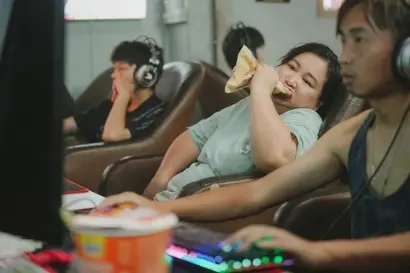
For a woman who hasn't been able to stand on her own feet for a long time, and who is neither pretty nor thin, having high self-esteem is difficult. In such a situation, the presence of a fairly handsome boxing coach who needs to sell gym memberships is bound to make one's heart flutter. However, appearance isn't everything. Du Leying is strongly drawn to Hao Kun because he appears to be a man with dreams and passion, things she lacks. Wouldn't anyone find someone who says, "People need dreams, and we should strive for them," and "You have to do your best at something at least once in your life," to be impressive?

As she begins boxing fitness and falls in love with Hao Kun, Du Leying starts to dedicate herself to him with her inherent purity. She earns her boxing match eligibility in a roundabout way to encourage Hao Kun, who lost a match due to a biased referee while representing the fitness club; she prepares healthy meals for him ahead of his weight cut; and she hands out flyers for the gym on his behalf, nurturing her love. Or rather, she believed she was nurturing it.
Hao Kun is a typical person—moderately pathetic and moderately cowardly. While he talks about his dreams of boxing, he shows no real enthusiasm for selling memberships at the gym, which actually pays his salary, claiming it doesn't suit his nature. Even though he has no romantic feelings for her—having only asked her out to sell her a membership—he is a man who also has the vanity of wanting to look like a "good person" to someone who approaches him with such purity. In the end, Hao Kun agrees to lose his much-dreamed-about boxing match for 30,000 yuan. While his previous cries of, "Is making money all there is to life? Isn't life about working hard for what you love?" sound hollow, he is just an average person, and one can't help but wonder if anyone would really choose to chase dreams alone if put in his shoes. He leaves, stepping on Du Leying's sincere heart.
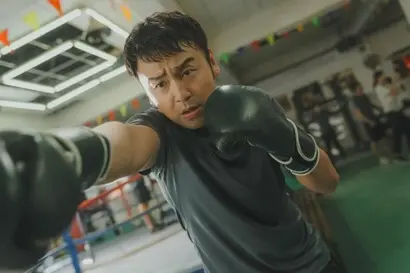
"YOLO" seems to head toward a romantic comedy between Du Leying and Hao Kun, but after Hao Kun leaves and Du Leying is victimized by "evil editing" on her cousin's job-seeking show, the film pivots into a full-fledged coming-of-age movie, tracking her journey as she overcomes despair and pours herself into boxing. Taking the flyer's slogan, "Have you ever won? Even just once!" to heart, Du Leying throws herself into boxing—a sport she had only pretended to like for the sake of her relationship—with genuine sincerity. The reason is simple: she just wants to win once. As she commits to boxing, she discovers its appeal: "Boxing is truly fun. During the match, we hit each other hard, but at the end, we hug."

If it stopped there, it would be no different from any other standard coming-of-age film about finding the will to live through a catalyst. What made this film a sensation is the fact that it captured Du Leying's growth process as the "real deal." From the moment Hao Kun leaves and Du Leying begins boxing in earnest, the film shows, without any omissions, the process of her passing the physical examination for a professional boxer through all kinds of exercise and training across spring, summer, autumn, and winter. In other words, Jia Ling (who served as both director and lead) gained about 20kg to play the overweight Du Leying, and then spent months losing 50kg through diet and exercise, capturing the physical transformation into the boxer Du Leying on camera—without prosthetics or CG effects!

Watching the sequences where Du Leying runs to the "Rocky" signature OST and hip-hop tracks, does weight training, and throws jabs and hooks, hot emotions naturally rise up. People who have given up on life like the overweight Du Leying, people like Hao Kun who talk about dreams but always compromise with reality, and people who justify themselves by saying, "I have so many battles to fight in life, do I really have to fight myself, too?"—all will fall silent in the face of Du Leying’s sweat and transformation. The power of the "real" is that strong.
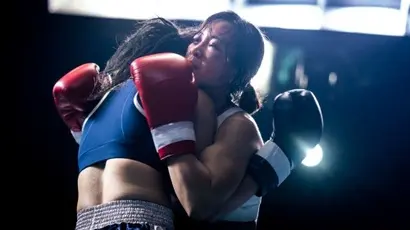
"YOLO" topped the Chinese box office in 2024 and dominated the Netflix charts, touching the hearts of many. The original work is the Japanese film "100 Yen Love," which is also available on Netflix, so it might be interesting to compare them. It's already August 2024. If you're self-deprecatingly thinking that this year is already over and you've completely forgotten about your goals from the beginning of the year, I recommend this film. It will give you the feeling that it isn't over yet, and that you really want to win just once. I also recommend it to anyone who has been hesitant to work out. Apparently, there was a boom in boxing clubs and gyms in China following the film's success. If you like Chinese-style comedy, which can be silly and trivial but still make you chuckle, you will enjoy it even more.

Who is the writer, Jung Soo-jin?
She has worked at various magazines, covering and writing about movies, travel, and popular culture. While she doesn't want to fall behind on trends, she has become an "old soul" who predicts nothing but tired clichés in the next scene while watching the latest dramas. She is trying to regain her lost edge while drifting through the vast world of OTT platforms; her current wish is for the release of an integrated OTT subscription plan.