

[비즈한국] Violence where one person strikes another should never happen. In a modern civilized nation, it is normal for someone who has been unjustly struck to express their pain and demand an apology or punishment from the perpetrator. However, the world is full of powerful evildoers, and there are times when victims, while suffering and groaning, cannot properly voice their grievances. Among these, the worst situation is when victims deny they were harmed, or when they discourage others from criticizing the perpetrator, claiming they "deserved it."
It is true that K-Defense has achieved tremendous success in recent years. In the past, when the government judged that the defense industry was not profitable, they sometimes forced large corporations to participate by dangling other business interests as bait or by appealing to their social responsibility. Considering this, the current "advancing K-Defense" is truly a remarkable change of times.
Even a K-Defense industry doing this well can face a crisis. This is because they are suffering in silence, afraid to read the room and complain about the problems. The government's R&D budget cuts that occurred last year have affected defense research and development projects, and the fact that several key development projects have now been halted is emerging one by one. The reason related reports are only appearing in the second half of the year is due to the timid pleas of the "subordinate" parties, hoping that "this year's budget will be restored."
Even mentioning these issues is delicate due to concerns, but to address the severity of the problem, I will inevitably cite a few company examples. First, Inconel 718, a core material needed for manufacturing turbofan aircraft engines, is a superalloy entirely dependent on imports. In the case of jet engines, the higher the heat the engine can withstand, the stronger the thrust and the better the fuel efficiency; thus, this material is essential for manufacturing high-efficiency engines capable of enduring flames over 1,500 degrees Celsius. The research budget for this was cut by 60% from 8.5 billion won. There are significant concerns that the localization schedule will be delayed by several years from 2026 due to these budget cuts.
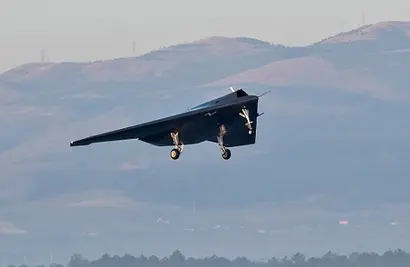
There are also cases where projects have been halted entirely due to budget exhaustion. Despite its modest size, one defense contractor has been conducting research on stealth technology for over a decade. The goal is to develop a strategic weapon that appears to be a "multi-purpose stealth drone." They have carried out various tasks to create a world-class stealth aircraft capable of penetrating deep into enemy territory while avoiding North Korea's anti-aircraft missile attacks. Because stealth technology—remaining invisible to enemy radar—is so difficult, they couldn't build it all at once; they flew a small-scale model in 2010 and validated the functions by building a full-scale aircraft structure for structural testing in 2016. They are now conducting research on the airframe structure of a wideband low-observable drone, and South Korea is expected to soon possess the technology necessary to build a wideband stealth aircraft.
The problem is that while research on models or mockups applying such stealth technology continues, the development budget for the actual multi-purpose stealth aircraft that would utilize this technology has been temporarily suspended. The defense contractor conducting this research had expected the wideband stealth drone to be developed and mass-produced as a future national strategic weapon, such as an unmanned reconnaissance or attack drone, and challenged themselves with even more difficult technology. However, the government's R&D budget cuts have made the development of such wideband stealth aircraft difficult.
There is no grave without an excuse, and many have raised counterarguments to this criticism. In the case of Inconel localization, some argued that a large company like Hanwha000880 would not give up over a few billion won, and that since Doosan000150 has entered the aircraft engine market, all jet engine-related government projects should be re-tendered, and Hanwha and Doosan should compete to win the research contracts.
Such arguments understand only part of the story. No company enters the localization of core national technology purely for profit. It is closer to trusting and challenging themselves based on a national vision promoted by the state. If the government flip-flops based on a momentary decision, who would trust it and challenge themselves with national projects? The sudden cut in government R&D budgets is a problem for both money and credibility. This is not something that can be solved simply by having companies cover the shortfall.
The bigger problem is the development of stealth drones. Combining reports from relevant sources, the stealth technology currently under development will be applied to the unmanned wingman currently being developed, so there is no problem there. However, an unmanned wingman (loyal wingman) is an aircraft that acts as a "worker" deployed to perform dangerous missions in place of a manned fighter jet. Because it must be cost-effective with a low price, applying stealth capabilities, especially wideband stealth capabilities, is difficult. Since the fighter jet and the unmanned wingman must fly together, mobility is required, which imposes certain limitations.
Additionally, the multi-purpose stealth drone has the potential to evolve into a strategic weapon like the U.S. RQ-180. Our military is currently deploying next-generation satellites, such as the 425 reconnaissance satellites and micro-SAR (synthetic aperture radar) satellites. While the Air Force utilizes Global Hawks and RQ-105K medium-altitude unmanned aerial vehicles (MUAV), satellites have fixed revisit cycles and are easily deceived, and drones are vulnerable to enemy anti-aircraft missiles, making it impossible to infiltrate North Korean airspace for precise reconnaissance. It is unequivocally serious that such projects have been halted due to a lack of defense R&D budget.
It is true that the coffers of South Korean defense companies are fuller than ever thanks to K-Defense. With high sales and many order announcements, some hasty opinions suggest that defense companies should just develop weapons with the money they have earned, and that the government does not need to help. However, the reality is the opposite; weapons where national research institutes hold the core intellectual property (IP) are still receiving attention in overseas markets. Decisions by national research institutes determine the direction of future weapons. Contrary to the calls for industry-led R&D, if companies are left responsible for core weapon systems, they are either forced to compete against each other or demand rights over core components.
The government must keep in mind its trust in companies, its will to foster the defense industry, and above all, the grand principle of national defense science that we must achieve an advantage over the enemy in future warfare through science and technology. The "R&D budget cut" disaster of last year must never happen again. Rumor has it that conditions will improve this year, but companies are doubting not just the security of their budgets, but whether our government truly has the will to foster defense science and the defense industry. The responsibility to resolve that doubt also lies with the government. If the government clips the wings of the soaring K-Defense, history will remember it.