

[비즈한국] In South Korea, the popularity of apartments holds a special significance. This is because they possess both residential and investment value. Apartments are the most popular housing type in Korea, a phenomenon rooted in various social and economic factors. Let’s summarize a few of these reasons.
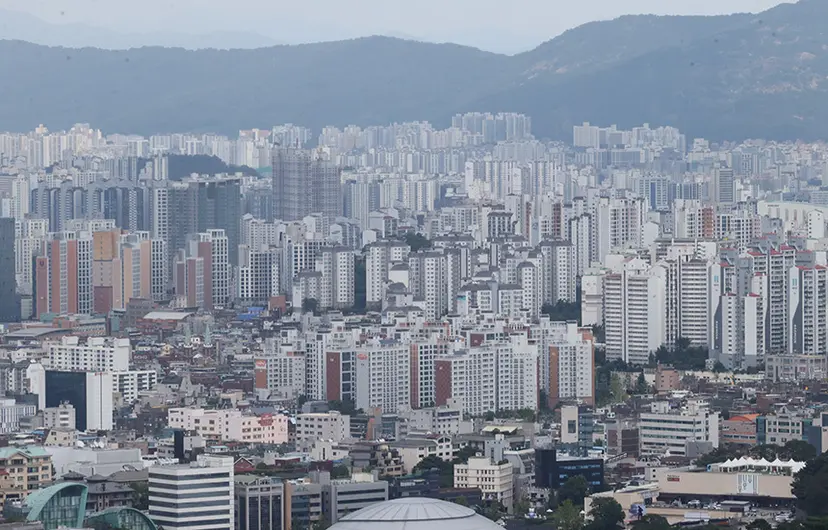
First, there is convenient living infrastructure. Apartment complexes are usually located in areas well-equipped with amenities. For instance, in large cities like Seoul and Busan, complexes located within close proximity to shopping malls, schools, and hospitals are highly popular due to their superior convenience.
This is an especially important factor for busy modern people and families. Furthermore, excellent access to public transportation serves as a major advantage for commuters. The most prominent examples are the major apartment complexes in Banpo-dong, Seocho-gu, which are currently hitting new record-high prices. Banpo Xi, Raemian Firstige, Acro River Park, and One Bailey are great examples of this.
Second, there is the aspect of security and safety. Apartment complexes are well-equipped with security features such as guard systems, CCTV, and access control systems. This is effective for crime prevention and is a factor particularly valued by households with daughters. In the case of high-rise apartments, the structure makes it difficult for outsiders to enter, providing a safer environment.
Third, maintenance of common facilities and outdoor spaces is handled through management companies or management offices, which is an advantage for residents who, unlike those living in detached houses, do not need to worry about individual maintenance tasks. This means that regular cleaning, trash collection, and repair work are handled systematically, allowing for a convenient life.
Due to these advantages, the number of households preferring apartments is increasing every year. From the government’s perspective, apartments also play a crucial role. Because of South Korea's high population density and limited land area, space efficiency is an important issue. High-rise apartments can accommodate many people in a limited area, thereby contributing to solving housing supply problems.
Because the preference for apartments is high, apartment investment is also popular as a target that can offer stable and attractive returns.
Apartments in large cities consistently have residence or rental demand, allowing for stable investment returns. For example, large cities like Seoul have high population density and are hubs for jobs and schools, leading to high rental demand. This stability can make them an attractive destination for investors seeking long-term returns.
Apartments are highly likely to see an increase in asset value over the long term. In particular, apartments in areas where development projects or improvements to transportation networks are planned can have higher future value. For instance, core areas such as Gangnam-gu and Yongsan-gu in Seoul are expected to see asset appreciation due to increased demand from job growth and improvements in living environments through reconstruction and redevelopment.
In particular, structural factors such as an increase in the fixed resident population in areas that were previously not residential will also act as a factor in raising the value of apartments.
However, one should not invest in apartments blindly. One must approach it through diverse analysis. For example, during a period of market-wide upswing, buying at an excessively high price can be toxic for short-term investors.
Due to the nature of real estate, if supply and demand do not align, unpredictable situations where prices rise and fall in the short term often occur, so it is necessary to be cautious with investment.
Rather than paying too much attention to short-term fluctuations, one should invest by looking at mid- to long-term investments in areas where price increases are ultimately expected, anticipating future returns.
Therefore, a strategy of purchasing properties with future value at a lower price by taking advantage of market downturns is the best real estate investment strategy. Another method is investing early in assets with high future value, and reconstruction or redevelopment investments are examples of this. As you are investing time, you can expect higher returns ex-post.
Apartments are the most popular form of housing in South Korea, favored for various reasons such as convenient living infrastructure, security, and efficient space utilization. Additionally, apartments can serve as attractive investment targets due to reasons like stable returns and the potential for asset appreciation. However, since investment always carries risks, it is crucial to closely analyze market trends and understand location, product quality, and price competitiveness while keeping future value in mind. This is why apartment investment must be approached carefully from a mid- to long-term perspective.
If you are considering investment regions and products based on the apartment market situation as of August 2024, you could consider the following areas and strategies.
One must keep in mind that even if it seems like everything in Seoul will rise, that is not the case. Core locations in the heart of Seoul, such as the Gangnam area, Yongsan-gu, and Jamsil, still hold high investment value. These regions are expected to have stable demand and future value appreciation, and in particular, new apartments and complexes with active reconstruction will continue to draw attention.
Although growth has slowed recently due to rising construction costs and the issue of commercial unit fragmentation, areas scheduled for reconstruction and redevelopment still have a high potential for increased future value. However, for these investments, a business feasibility review focusing on thorough future value is essential, and one must carefully watch for regulation and policy changes from reconstruction cooperatives.
Due to demographic changes such as the recent increase in one- to two-person households, the demand for small apartments is increasing. This is increasing their investment appeal, especially in tandem with the problem of apartment supply shortages within Seoul. However, one must verify that while demand for small apartments has increased, it is not the dominant trend.
Even though the market climate is not good right now, specific areas in major regional cities such as Busan, Daegu, Gwangju, and Daejeon are also positive investment areas. Of course, compared to Seoul and the capital region, risks regarding future value may be relatively higher, so a cautious approach is necessary.
Apartment investment requires a differentiated approach by region and location. I hope this 'Real Estate Insight' column is helpful for your investment decisions.
Kim Hak-ryul, head of the Smart Tube Real Estate Research Institute and famous by his pen name "Pashong," previously served as the team leader of the Real Estate Research Division at Gallup Korea. He operates and hosts the Naver blog "Pashong's World Exploration" and the YouTube channel "StuTV." His books include 'Absolute Principles of Seoul Real Estate (2023)', 'The Future of Incheon Real Estate (2022)', 'Kim Hak-ryul's Absolute Principles of Real Estate Investment (2022)', 'Future Map of South Korean Real Estate (2021)', 'From Now On, Only Places That Rise Will Rise (2020)', and 'South Korean Real Estate User Manual (2020)'.