

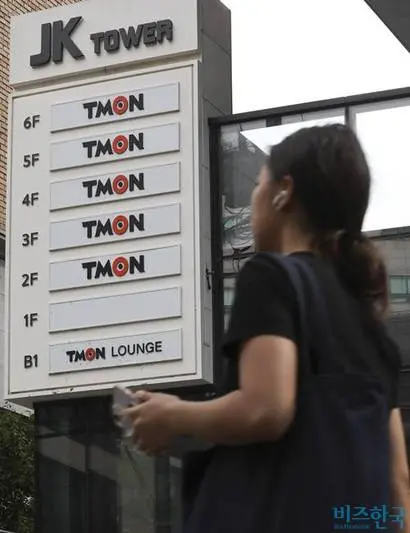
[비즈한국] Compensation for consumer damages resulting from the TMON and Wemakeprice crisis is showing slow progress. With travel agencies, credit card companies, and PG (Payment Gateway) companies taking different stances on consumer refund decisions, concerns are rising that whether a consumer receives a refund may depend on 'where they made the payment.'
What is the logic behind PG companies' 'refusal to refund travel products'?
PG companies act as intermediaries that handle payment processing for small-scale online shopping malls that cannot contract directly with credit card companies. When a consumer pays for a product with a credit card, the PG company delivers the funds to merchants like TMON or Wemakeprice.
Financial authorities have been pushing for PG companies to refund consumers first, given that TMON and Wemakeprice are unable to process the refunds themselves. Article 19 of the Specialized Credit Finance Business Act stipulates that if the sale of goods or provision of services is not carried out properly, the PG company must comply when a consumer, who is a credit card user, requests a refund.
The problem lies with travel products and gift certificates. Some PG companies have informed financial authorities that they cannot provide refunds, stating, "Unlike general products, the responsibility for refunds for travel products or gift certificates lies with the travel agency or the gift certificate issuer." Their argument is that "even if the travel agency has not received payment, a contract between the travel agency and the consumer is formed upon travel confirmation." Furthermore, they argue that since some travel agencies like Yanolja have provided compensation to consumers in the form of points, providing a refund would constitute a 'double refund,' which they cannot accommodate.

It is reported that some PG companies received a list of merchants—such as Yanolja, Yeogi-eottae, and Casamia—that had independently started compensating customers from TMON and Wemakeprice. It appears they requested this list to minimize their own financial liability.
A Yanolja representative voiced concerns, stating, "Apart from the cancellation and refund process through TMON or Wemakeprice, we provided points to support our customers so they could prepare for their vacations without issues. Since Yanolja is not the entity responsible for the refund, the points were issued as a form of consolation money, not a refund; therefore, some PG companies raising the issue of 'double refunds' is only worsening customer damages." In fact, online communities for victims of the TMON/Wemakeprice crisis are filled with posts from users who claim that certain PG companies have notified them that "customers who received compensation from the companies are not eligible for refunds."
PG companies also argue that for gift certificates, once a PIN number is issued, the contract is considered concluded even if the certificate hasn't been used, meaning the refund must come from the travel agency or gift certificate issuer, not the PG company.
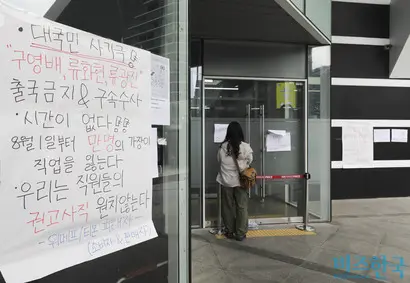
Financial authorities and the Credit Finance Association have begun a legal review to determine whether PG companies are legally obligated to issue refunds for travel products and gift certificates purchased on TMON and Wemakeprice. It is expected that refunds for these items will be put on hold for the time being.
'Luck of the draw' for damage relief depending on where payment was made
It is inevitable that people are pointing out that consumer damage relief has become a game of luck depending on the payment method. Currently, PG companies operated by large corporations like Naver Pay, Kakao Pay, and Toss Pay are issuing refunds to consumers who purchased travel products on TMON/Wemakeprice. This has led to talk that even if one purchased the same travel product, the method used and the PG company selected can determine 'whether and when' compensation is received. There are growing concerns that victims who paid in cash or via bank transfer will find it even harder to receive compensation (refunds).
A lawyer who previously served as a judge expressed concern, saying, "Because legal safeguards have not kept pace with the growth of online transactions, this 'shifting of responsibility' seems to occur whenever such a crisis happens. While the primary responsibility lies with TMON and Wemakeprice, there is a clear need to strengthen legal safety nets to protect consumers when such a series of events occurs."