

[비즈한국] The ‘worst heatwave in history’ continues. Even if you want to escape the heat for a vacation, accommodations in popular destinations are already booked out or prohibitively expensive. Searching for a place to stay often exhausts you even before the trip begins.
Ah, wouldn't it be wonderful to have your own vacation home that you could visit anytime? Surely, you’ve thought about this at least once. While less popular these days, the ‘condo membership’ programs that were trendy decades ago were perhaps one of the business models that successfully tapped into this desire. It has been a long time since famous hotel brands, including Marriott, began offering such ‘timeshare’ style shared vacation properties.
Recently in Berlin, a startup called ‘MYNE’ has been gaining attention by allowing people to own shared vacation homes in a more advanced form than traditional timeshares. Let’s hear the story of MYNE, which is raising its profile across Europe after attracting large-scale investments.

A ‘Shared Vacation Home’ platform focused on solving customer pain points
The only way to go on vacation anytime without the hassle of booking is to own a vacation property. However, most people give up on this idea due to high costs and the difficulties of management. MYNE is gaining attention as an innovative business model that solves these exact problems.
Founded in 2021, MYNE is a startup headquartered in Berlin, Germany. The company started as a platform to manage co-ownership of luxury vacation homes. Founders Nikolaus Thomale and Fabian Löhmer focused on the fact that while many people dream of owning a luxury vacation property, they often give up due to the high costs and management burden.
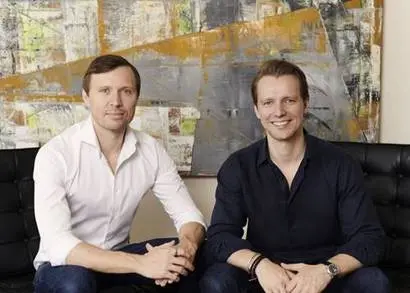
MYNE’s business model is based on co-ownership. By investing a minimum capital of 50,000 euros (approximately 7.4 million won), eight owners collectively own a single vacation property and share the usage rights, or the time they can spend there. Unlike traditional timeshare methods, this model provides actual property ownership. Owners hold a one-eighth stake in the home.
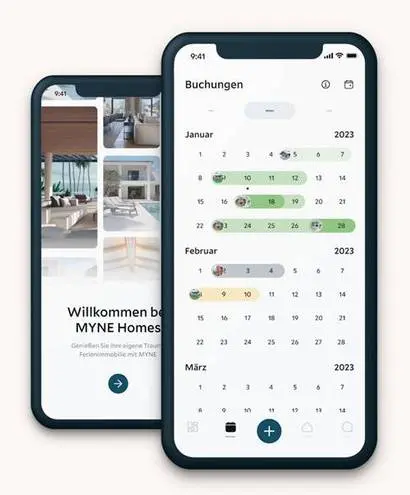
The MYNE platform provides services such as facility management, maintenance, and rentals, allowing owners to use the accommodation conveniently. The monthly service fee paid to MYNE is 70 to 90 euros (100,000 to 130,000 won) per person. Owners coordinate their usage schedules through the MYNE app, and during periods when they are not using the vacation home, they can rent it out to third parties to earn additional income. MYNE manages the entire rental process as well. They support owners in enjoying maximum benefits with minimal effort.
People investing in the innovation of real estate models
MYNE’s service offers value that goes beyond simple ownership. Owners can own luxury vacation homes at an affordable price and use them conveniently. Furthermore, thanks to MYNE’s management services, owners are freed from worries regarding the maintenance or upkeep of the property.
One of the areas MYNE puts the most effort into is ensuring that customers own a ‘luxury vacation experience.’ Their philosophy is not just to own an ordinary property, but to provide top-tier facilities and services that offer a luxurious and consistent experience. The MYNE team decorates and manages the homes according to the owners’ requirements, ensuring the properties are in peak condition whenever the owners use them.
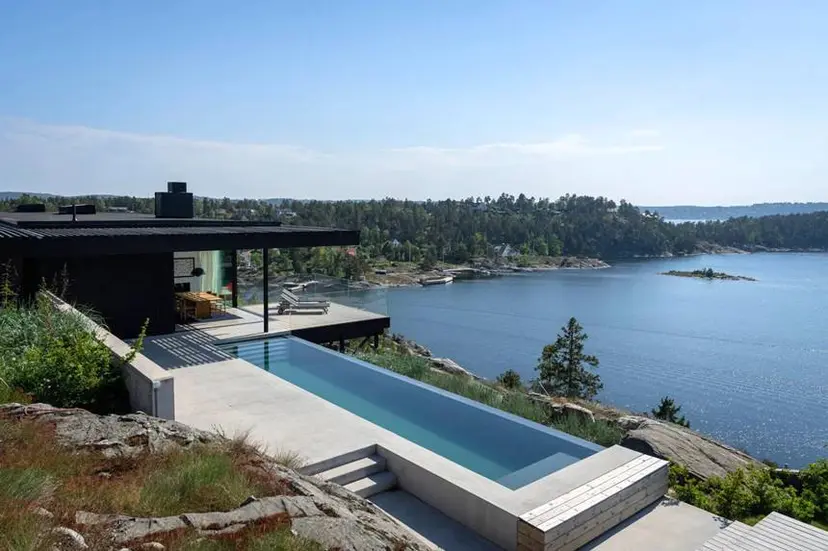
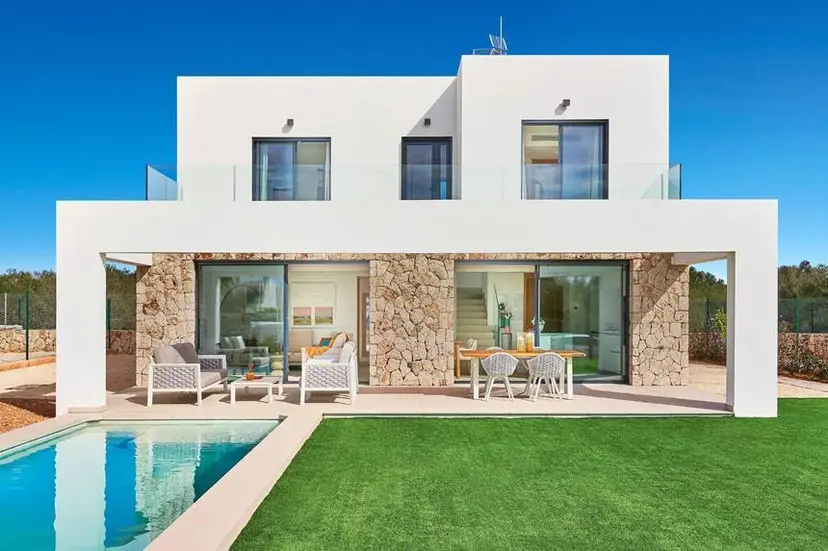
MYNE received significant attention from its inception and has grown rapidly to occupy a leading position in the European market. They have expanded their business across various European countries, including Germany, Austria, Italy, Spain, Portugal, and France.
In July 2023, MYNE successfully raised approximately 23.5 million euros (33 billion won) from investors. This capital played a crucial role in MYNE’s growth and expansion. Notably, the funds were used to acquire Villa Circle, a Dusseldorf-based startup and competitor. Villa Circle had previously operated a business selling luxury vacation properties as co-ownerships in regions like Spain, Austria, Germany, and the Côte d'Azur. All luxury properties and customers owned by Villa Circle were transferred to the MYNE platform. Approximately 15 Villa Circle employees also joined, further enhancing MYNE’s service quality and expansion capabilities. Thanks to this acquisition, MYNE added more luxury properties to its portfolio and secured a wider customer base, strengthening its market dominance.
Recently, MYNE announced its expansion into the Swedish market, following Germany, Austria, Italy, Spain, Portugal, and France. Sweden is considered a market familiar with the sharing economy and possessing high purchasing power. Initially, they plan to offer four luxury vacation properties located in the Stockholm Archipelago and popular northern ski resort areas. Scandinavian countries are popular vacation destinations for Germans. Already, approximately 10,000 Germans own vacation properties in Sweden. Sweden is seen as a highly accessible market for Germans due to its geographical proximity and excellent infrastructure.
The expansion into the Swedish market is part of MYNE’s growth strategy and is a significant step in exploring opportunities and expanding its customer base in a new market. Nikolaus Thomale stated with confidence, “Sweden is the perfect market for our model to succeed. We will be able to grow quickly by leveraging Sweden’s sharing economy culture and high purchasing power.” They continue to aim for further expansion within Europe.
MYNE is a great example of how even existing business models can evolve into something entirely new when the focus is placed on ‘solving problems.’ Instead of complaining and grumbling, the process of contemplating how to solve a problem and turning it into a business model—this process encapsulates the startup spirit. The example of MYNE, which makes people’s dreams of owning a vacation home a reality, resonates even more during a summer like this when the discomfort index is high.
Author Lee Eun-seo majored in law in South Korea and studied theater in Berlin. Based in Berlin, a city of art and a European startup hub, she leads 123factory, growing alongside the city while connecting the startup ecosystems of South Korea and Germany.