

[비즈한국] ‘The most persecuted people in the world.’ This is the sad nickname given to the Rohingya.
The Rohingya are a Muslim minority group that once lived in Rakhine State, Myanmar. Within Buddhist-majority Myanmar, they have long faced discrimination and persecution. Then, on August 25, 2017, they were subjected to a horrific genocide by the Myanmar military and far-right nationalist forces. Violence that spared neither men, women, nor children continued for a month. More than 10,000 Rohingya died, and nearly 2,000 women were raped. The place where the Rohingya fled to escape the massacre is Cox's Bazar in neighboring Bangladesh, where the refugee camps are currently located.
In the Cox's Bazar refugee camp, where Rohingya refugees stay, there is the Shanti-Khana Healing Center, established by the South Korean human rights organization ADI (Asian Dignity Initiative). Shanti-Khana means ‘House of Peace,’ and it is a healing center that supports Rohingya refugee women. The book ‘I Want to Dance, But My House Is Too Small’ contains the stories of Rohingya women growing their hopes at Shanti-Khana.
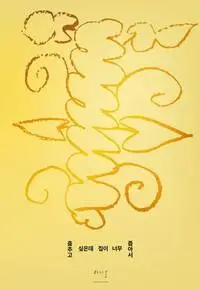
I Want to Dance, But My House Is Too Small
: Going to 'Shanti-Khana,' the home of Rohingya refugee women
Written by Gong Sun-ju, Oro Min-kyung, Lee Seung-ji, Lee Yu-kyung, Jeon Sol-bi | Fascicle Publishing
280 pages, 22,000 won
Currently, about 1 million people live in the Rohingya refugee camps in Bangladesh, 52% of whom are women (UNHCR, 2023). Even in the dire conditions of the camp, women are among the most vulnerable, at the very bottom of the hierarchy. Due to the norms of the Muslim community, Rohingya women cannot go out during the day without a man, nor can they learn to read or write. In the camps, when they receive aid from NGOs, they must sign their names; since many women are illiterate and forbidden from going out, they often have to ask other men for help, which frequently leads to unfair demands (most of their husbands died in the massacre). Amidst the difficulty of making a living, they are exposed to external threats and sexual violence.
Shanti-Khana helps Rohingya women resolve these difficulties. Through psychological recovery programs, literacy education, and livelihood training, it helps women build the strength to live for themselves and grow into community leaders. Unlike women’s communities created by other NGOs, Shanti-Khana is special in that it is self-led by Rohingya refugee women.
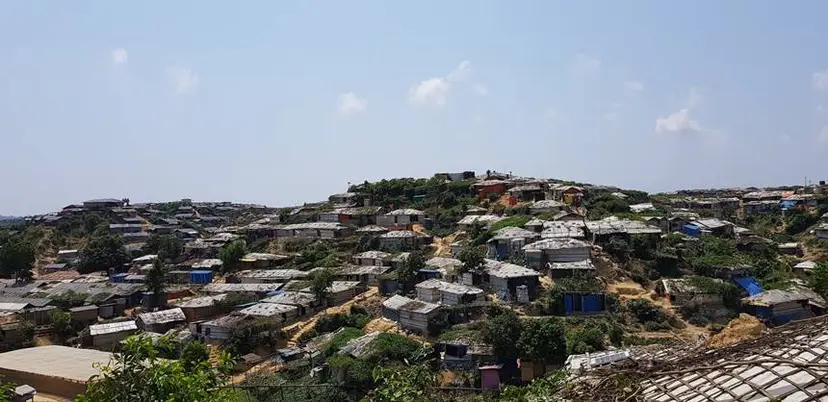
The shelters (temporary residences) inside the camp where refugees stay are too narrow, dark, and hot for a family to even just lie down and survive day by day. Furthermore, the pressure of a conservative culture is added to women. That is why Rohingya refugee women say, ‘I want to dance, but my house is too small,’ and come to Shanti-Khana. Because here, they can dance together and share both joy and sorrow.
When you enter Shanti-Khana, two members of the Rohingya Women’s Psychological Support Team greet visitors warmly, approach them to talk kindly, and guide them with friendliness. The visitor feels secure and at ease, as if they have become someone special. Refugee women come to the center to practice yoga and meditation to heal their bodies and minds, learn English, tend to a garden, cook and eat together, and share stories. They revive their bodies and minds, which had been frozen by the experience of horrific persecution and massacre. They cultivate hope in their daily lives once again, even amidst a refugee camp lifestyle that is no different from a prison. As of 2023, about 6,000 women have visited Shanti-Khana.
Shanti-Khana is a breathing hole and a hideout where Rohingya refugee women can catch their breath, as well as a place of learning where they discover how to respect and protect themselves.
“In Myanmar, I was just a Rohingya woman, but after coming here, I became an ‘Apu’ (a respectful title) who is respected in the Rohingya women’s community. I have professional work, I can walk the streets, I can confidently speak about my NGO activities in front of men, and I can sign my name in English.”
These are the words of a Rohingya woman who has shaken off the memories of the massacre and proudly reveals herself. As the women’s ‘resilience’ shines through Shanti-Khana’s programs, the perspectives of men and the community have also changed. They have begun to view women learning and engaging in external activities positively, and families who support women’s activities have emerged. Women’s healing is causing change in their families and the Rohingya community, and they are making history.
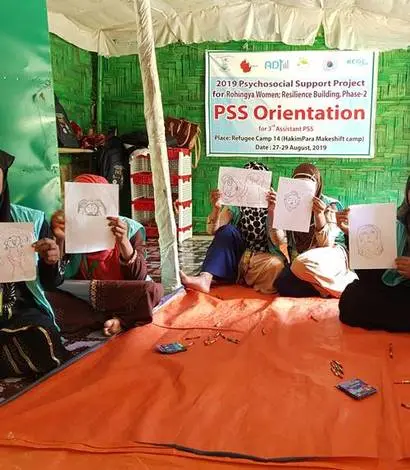
‘I Want to Dance, But My House Is Too Small’ contains writings by Rohingya refugee women weaving their daily lives at Shanti-Khana, the early activists who established the center, the current activists operating it, and the creators in solidarity who intend to convey the story of Shanti-Khana. It vividly unfolds the joys, sorrows, and concerns of the activists who built and protected the center: from Gong Sun-ju (Byeolbit) who conceived the Shanti-Khana center on bare ground in 2018 and created programs to bring people together, to Jeon Sol-bi and Oro Min-kyung who created programs with images and texts, sharing moments of laughter and tears with the women, to the stories of the Bangladeshi staff who manage the center and the refugee camp (Viva Lee Seung-ji), and the history of the suffering and persecution of the Rohingya people (Lee Yu-kyung).
The lotus flower blooms beautifully in the mud. The Rohingya women, who are rebuilding their daily lives in the face of harsh reality, resemble elegant and strong lotus flowers. Life continues even after persecution and massacre. That is why they dance again. They dream. They live.