

[비즈한국] For several years, the private clinic market has been described as being "saturated," leading to fierce competition. As a result, there is a steady increase in cases where doctors treat patients in fields outside their specialties or open clinics as general practitioners without having completed residency training. With large numbers of resigned residents expected to enter the private sector, patient advocacy groups are voicing concerns about a potential decline in the quality of medical care. We examined the extent to which the specialties of physicians align with the medical services provided in Gangnam-gu, the district with the highest number of clinics in Seoul.
34% are “Specialty Mismatched or General Practitioners”
As of the 30th, it was found that 34% of clinics in Gangnam-gu, Seoul, were either treating patients in areas outside their certified specialties or were run by doctors without specialist certifications. We analyzed the medical specialties and physician status at each institution using the Health Insurance Review and Assessment Service's (HIRA) "Find by Hospital Type" search tool, setting the parameters to "Clinic" for type, "All" for medical department, and "Seoul Gangnam-gu" for location. We conducted an exhaustive survey of the situation in Gangnam-gu, which has the highest number of clinics (1,949) out of the 9,944 clinics in the Seoul area.
Looking at the details, 490 clinics (25.14%) showed a mismatch between their specialty and the services provided. This includes cases where: the doctor does not practice their certified specialty; they provide additional services outside their specialty; or the clinic's name excludes the specialist designation. While only 24 clinics (4.89%) were run by specialists in niche fields like tuberculosis, nuclear medicine, or radiation oncology, there were 147 clinics run by family medicine specialists, accounting for 30% of all mismatched institutions. Cases where doctors opened clinics as general practitioners without residency training reached 174, or 8.92%.
Even for those trained in specialized fields such as preventive medicine, laboratory medicine, or pathology, it was common to see them operating as dermatology, plastic surgery, or internal medicine clinics. Cases were also found where emergency medicine specialists were practicing dermatology and plastic surgery. Among general clinics with no listed specialist, family medicine, obstetrics and gynecology, surgery, and pediatrics were the most prominent. There was one clinic with a Korean medicine department, which operated with a physical medicine and rehabilitation specialist alongside services in surgery, orthopedics, and rehabilitation.
The status of medical institutions also revealed a concentration of medical resources. There were 9,944 clinics with fewer than 30 beds registered in Seoul. Looking by autonomous district, 1,949—or 19.59% of the total—are concentrated in Gangnam-gu. This figure is roughly equivalent to the combined total of the nine districts with the fewest clinics. Following Gangnam were Seocho-gu (868), Songpa-gu (633), Gangseo-gu (474), and Gangdong-gu (425). The top five districts combined account for 4,349 clinics, or 43.73% of the total. The district with the fewest clinics was Yongsan-gu (157).
“Opening General Clinics to Overcome Low Reimbursement and Competition”
Why do doctors open general clinics instead of utilizing their specialties? Private practitioners cite "low reimbursement rates," "declining competitiveness," and the "increasing number of general clinics" as reasons. A specialist in their 20th year of practice, identified as A, explained, "I majored in general surgery, but because the reimbursement is low, quite a few people open general clinics that provide dermatology and other services. Thoracic surgeons also often open clinics that focus primarily on varicose vein treatments. On the other hand, the so-called 'top-tier' fields—dermatology, ophthalmology, plastic surgery, orthopedics, rehabilitation, and radiology—mostly display their own specialties."
A added, "Even if one has a specialty, we live in a capitalist society, so if one cannot compete in that field, they choose to open a general clinic to walk a different path. Internal medicine and pediatrics used to be popular, but recently, with fewer children, even pediatric specialists are turning to general practice." They further noted, "The number of people opening general clinics without specialist certifications is growing, so in some ways, it is unavoidable in order to compete with them."
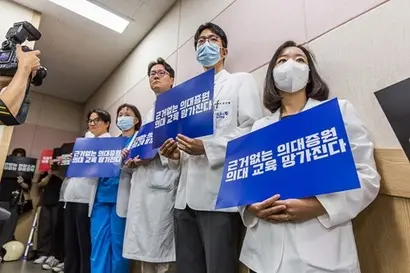
The number of residents who did not express an intention to return by the 15th, the deadline set by the government, reached approximately 10,000. It is known that some of them are considering giving up their specialist qualifications and entering the private market. As the government and the medical community watch to see where they will head, it is reported that Park Dan, head of the emergency committee of the Korean Intern Resident Association (KIRA), recently requested the Seoul Medical Association to "help resigned residents find employment in private clinics." Within the private sector, there is also a view that unless clinics focus on areas like aesthetics, the role of resigned residents may be limited.
The Korean Association of Private Medical Practitioners (KAPMP) plans to form a task force in coordination with the Korean Medical Association (KMA) to support the career paths of resigned residents. Park Keun-tae, the new president of the KAPMP, will head the task force. In a phone call with Biz Hankook, Park stated, "Not all resigned residents want to get hired. Rather than the concept of hiring, we are considering various programs that private clinics can provide to help them. We are also looking into holding seminars. We intend to support their study or provide experience in the private sector."
Park continued, "These resigned residents were people who aimed to become specialists. Therefore, I believe most of them will eventually return. The government should have provided an exit ramp, but they didn't, which is why the residents are not returning." He further stated, "They have a very strong mindset right now to 'act in a single formation.' Since the government's stance on the 'discussion from scratch' they mentioned early on has not changed, the residents are not returning. The KAPMP intends to play the role of a stepping stone to help them from the middle."