

[비즈한국] There is a saying: "The value of being together." This phrase appeared in a corporate image advertisement about ten years ago. It is a brilliant slogan that carries the meaning that the power of togetherness can change the world. "Being together" implies empathy or communication, and this power can create a new paradigm. Art, too, holds value when it gains empathy from people. Empathy arises from the spirit of the times and a universal artistic language. The "Korea Art Support Project" also aims to present the thoughts of various people through an accessible artistic language. As we reach Season 10, we support artists who strive to practice Confucius's idea that "good art must be easy to understand."
The 20th century saw a flourishing of diverse "isms" in art, to the point where it could be called a department store of art. This was because it accepted all the various perspectives on beauty. While there are many reasons for this, what encompassed it all was "newness."
Among these, one of the movements that contributed significantly to expanding the realm of contemporary art is "conceptual art." It was a trend that viewed the thought itself as art rather than the result of the work. The idea that an idea itself could become art became a driving force in enriching the soil of art.
The person who created the starting point for conceptual art was Marcel Duchamp (1887-1968). Duchamp, who lived most of his life as a professional chess player, became the most influential figure in contemporary art with a single ingenious idea. It was a somewhat absurd-seeming idea: attaching new meaning to ready-made objects with clear purposes to turn them into artworks.
The work that realized Duchamp's idea shocked the art world at the time. He bought a men's urinal—a product from a urinal manufacturing company named Richard Mutt—installed it in an exhibition space (at the Society of Independent Artists exhibition in New York in 1917), and titled it "Fountain." He even listed the exhibiting artist as "Richard Mutt." However, this piece was not displayed because it was deemed vulgar. Perhaps this was the inevitable controversy that Duchamp had foreseen. As the debate continued, "Fountain" became the most famous work in Western contemporary art.
A urinal is merely a round ceramic object until it is produced in a factory and installed in a restroom. This is because it is an object before a function is assigned to it. In art, this is called an "objet." Duchamp injected the concept of a "fountain" into it. From that point on, the urinal, which was solemnly illuminated and exhibited, could be born as an artwork called "Fountain."
If Duchamp had not given it the title "Fountain" but instead presented it under a title like "Hat," the urinal that became the most famous contemporary art piece of the 20th century would likely be known as "Hat."
Duchamp essentially struck a blow to the artistic mysticism that had been passed down for thousands of years. He showed just how hollow the concept of being "artistic" could be. Thanks to Duchamp's ingenious idea, 20th-century artists were able to produce works that garnered praise without having to go through the labor of painstaking creation.
Conceptual art, which started in this way, made many artists into stars. A representative figure is the Pop Art artist Robert Indiana. He became a world-renowned artist by turning the language that directly shows concepts into physical icons. His work "LOVE," widely known as a sculpture, is an example. This piece can even be seen in lobbies of buildings or hotels in Korea.
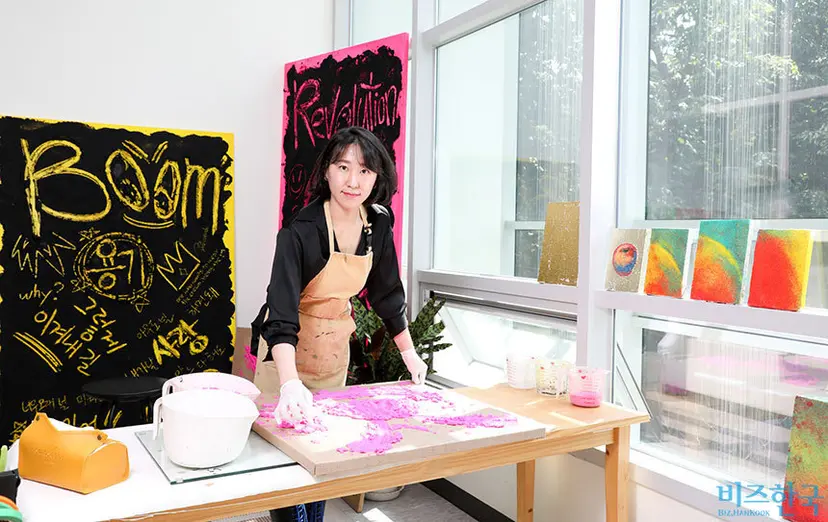
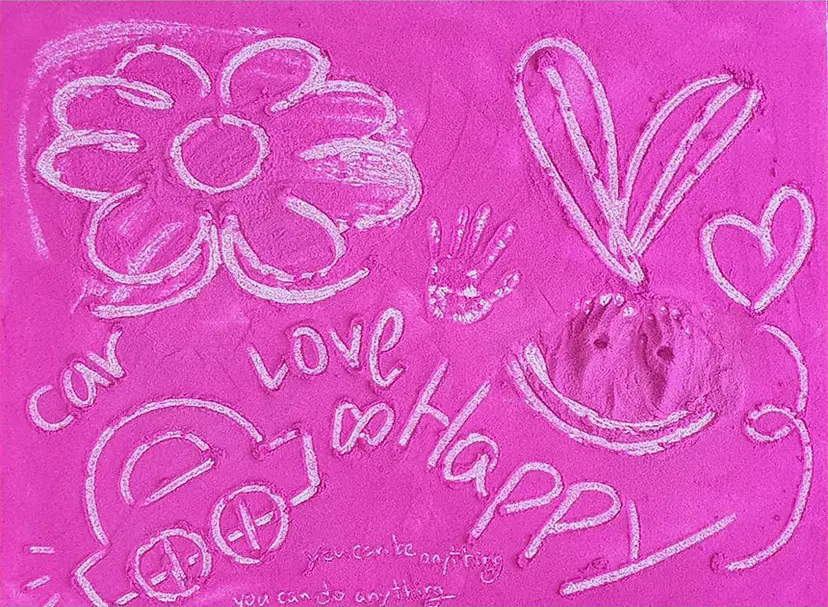
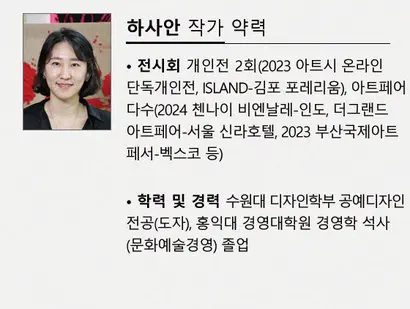
Ha Sa-an also presents conceptual painting through ideas using language. His work demonstrates the message that language holds. He addresses various issues of this era through text-based paintings, ranging from heavy subjects like war and the environment to the sweet messages found in popular song lyrics.
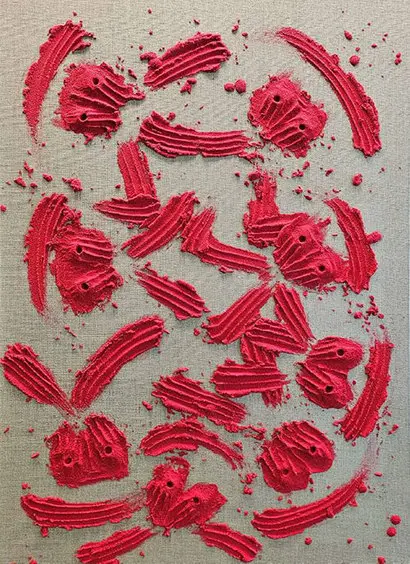
However, he does not stop at the concepts displayed by language. He emphasizes materiality using color sand he developed himself. He is attempting a new form of conceptual painting on the borderline between concept and material.