

[비즈한국] Düsseldorf, Germany, hosts an exhibition called Medica, which has been driving innovation in the global medical industry. Established in 1969, Medica boasts a rich history and tradition. South Korea is a vital nation, consistently ranking in the top five participating countries at Medica each year. Every year, over 300 Korean companies showcase their presence, following those from Germany and China.
Germany is the largest medical market in Europe and a leader in medical technology, home to over 30 health clusters. Although South Korea is a small country, it possesses a national brand that symbolizes technological prowess and innovation, boasting competitiveness in the medical industry. In particular, in areas leading future innovative technologies such as IT and semiconductors, technical expertise recognized in Korea serves as a sufficient condition for entering the global stage. In fact, visiting Medica each year, one can easily encounter global companies and investment firms seeking out the Korean Pavilion to be the first to experience the technologies of Korean companies that quickly adopt cutting-edge tech.
To take over the largest healthcare market in Europe, innovative Korean startups have thrown down the gauntlet. On Friday, July 19, Korean healthcare startups aiming to challenge the German market gathered in Berlin. It was an intriguing venue where small but strong masters, ready to capture the global market, came together. Armed with cutting-edge technology, these symbols of Korean innovation showcased their ideas and technical prowess before investors, accelerators, and various potential clients in the German health and medical sectors.
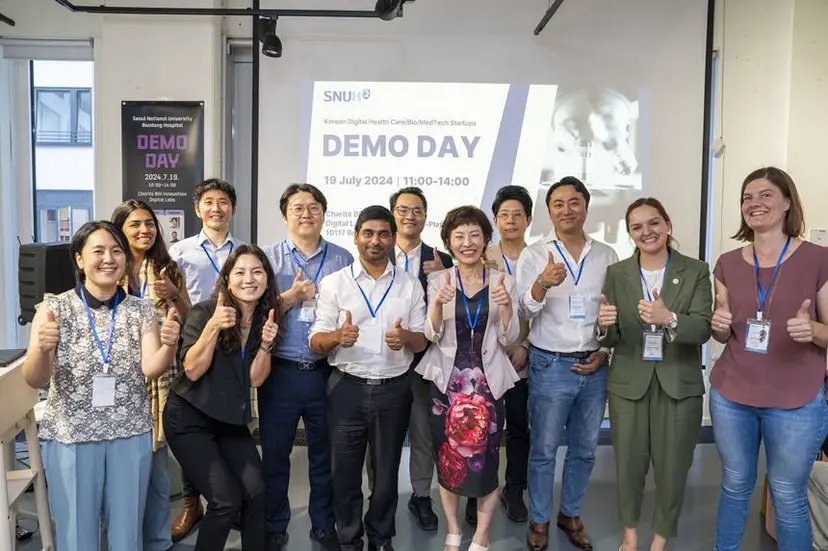
WellPep, SensoriCure, BioNutrion, Talos, and Thyroscope Participate
The event was held in collaboration with Seoul National University Bundang Hospital and supported by the Korea Health Industry Development Institute (KHIDI) and the National Research Foundation of Korea (NRF). In Berlin, it took place at the BIH Charité Digital Lab, a startup accelerator under the Charité – Universitätsmedizin Berlin, the largest university hospital in Europe with a 300-year history.
Choi Byung-yoon, Director of the Research Planning Center at Seoul National University Bundang Hospital, and Stefanie Grundwald, Director of BIH Innovation at Charité, gave keynote presentations. From the city of Berlin, Flavia Kruse, Director of the Healthcare sector at Berlin Partner—the city’s agency for economic and technology promotion—attended to present an overview of Berlin's medical ecosystem.
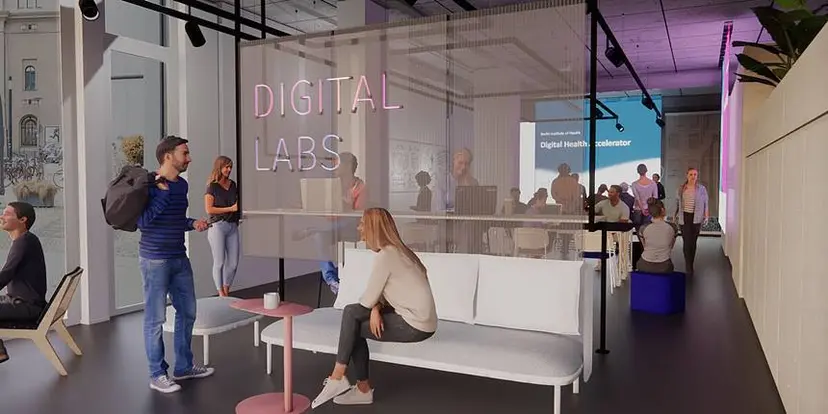
Five health-tech startups from Korea participated. First, WellPep, a startup that develops peptide-based cosmetic ingredients and new drugs, specializes in material manufacturing and development in this field. Kim Jae-ho, head of the WellPep Research Institute, attended the event to scout for potential investment and R&D partners in Germany.
SensoriCure is a startup that began in the research and development field of hearing loss diagnosis and treatment, co-founded by otolaryngologists Professor Choi Byung-yoon and Professor Kim Bong-jik. In Korea, they are developing therapeutic agents as well as diagnostic products through collaboration with various companies and institutions. They came to this demo day to find partners with a focus on research collaboration with relevant organizations in the field.
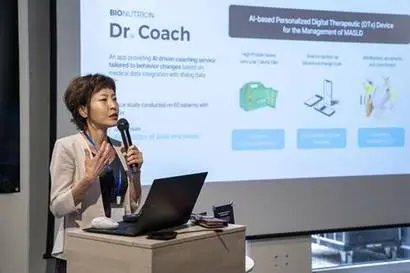
BioNutrion was founded by Kim Ju-young, a family medicine specialist who has operated an obesity clinic for over 10 years. As a doctor, CEO Kim met patients suffering from obesity for a long time. In the process, she realized that this chronic disease cannot be solved solely with the help of the medical system, and is a grueling battle that requires long-term dietary treatment and cognitive behavioral therapy in parallel.
Conducting research on dietary programs and developing the dietary substitute "Green Proteke" became the catalyst for founding BioNutrion. In 2022, she quit the hospital and jumped into life as an entrepreneur in earnest. She also developed the "Dr. Coach" app so that patients could consistently receive coaching and follow nutritional programs to lose weight without visiting a hospital. As both a doctor and entrepreneur, she also operates the "Dr. Coach TV" YouTube channel to deliver accurate information about health and obesity in an easy and fun way.
Through this demo day, she received a great response from German large corporate venture capital (CVC) firms and investors interested in dietary substitutes and the digital healthcare field.
Talos is a startup that predicts and prevents the risk of cerebral aneurysms with its AI-based medical software, "AnRisk." CEO Kim Taek-kyun of Talos was also a neurosurgeon until recently, making the title "doctor" more familiar to him. Now, he is dedicated to the business, operating not only in Germany but also in markets like Japan and the U.S. "AnRisk," created by Talos, helps predict and effectively prevent the onset of cerebral aneurysms through regular check-ups. Since the current hot keyword is AI, it received a lot of attention from attendees. In Germany, the solution can be easily applied if health check-up data is available, so the response from local hospital officials was particularly enthusiastic.
Thyroscope, which developed a digital solution that allows users to know the risk of thyroid dysfunction—previously only verifiable through blood tests—via an app, has been knocking on the doors of the German market for a long time. With the "Digital Healthcare Act (DVG)" coming into effect in Germany in December 2019, health apps were included in the list of benefits covered by statutory health insurance. This made Germany the first country in the world to implement "digital medicine" as policy, leading many digital healthcare startups to consider entering Germany.
Thyroscope identified this proactively, visiting Germany whenever the opportunity arose to meet potential clients and investors. Park Jae-min, CEO of Thyroscope, announced the prelude to a full-scale European expansion, stating, "Last year, with the support of the Saarland state government, we are in the process of establishing a German subsidiary based in Saarbrücken." Their participation received a warm response, as digital healthcare is one of the most noted areas in the global healthcare market, and investor interest was high given that they have already physically entered Germany.
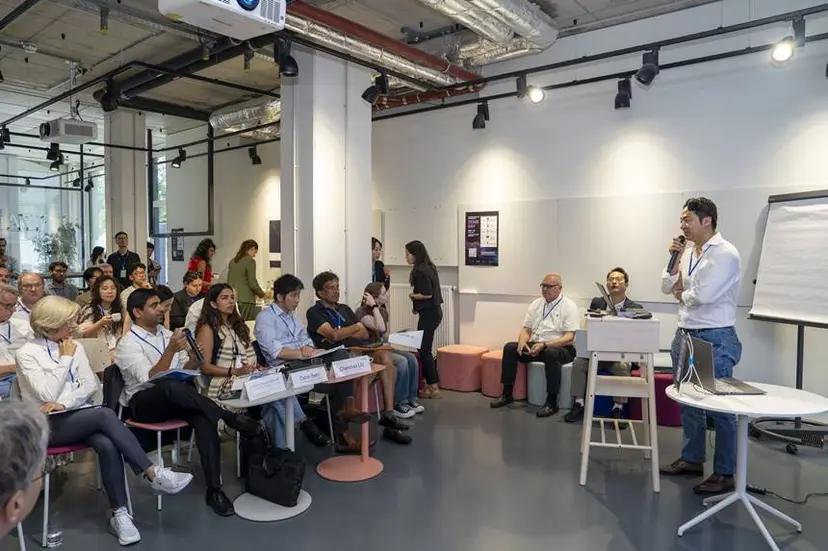
The demo day became a rich venue for exchange as it was attended by G4A, the startup accelerator of the global German pharmaceutical company Bayer; Rox Health, the venture builder of the Swiss global pharmaceutical company Roche; Zeiss, a major German optics company that has been actively investing in the med-tech field; and officials from the innovation division of Charité Hospital.
Germany, the First to Implement Digital Healthcare, is an 'Opportunity' for Korean Startups
The German medical system has historically strong foundations and boasts a well-crafted health insurance system dating back to the industrial era. As mentioned earlier, it is also a country that provides the most advanced policy support for the future of medicine by being the first in the world to accept digital healthcare-related solutions into the medical insurance fee system.
While Germany leads in policy, the slow speed of market digitalization acts as a significant opportunity factor for relevant startups. Although many innovative startups are emerging, there is room for latecomers to challenge the market because the pace of change is slower compared to Asia or the U.S., which are changing rapidly based on digitalization.
Germany is also facing new challenges due to an increasingly aging population and the rise of chronic diseases. In particular, the lack of medical infrastructure in suburban areas is one of the serious issues Germany must solve. While there are regional hub cities like Berlin, Munich, Hamburg, and Frankfurt, a larger population lives in suburban areas far from medical infrastructure. To address this, the interest of the German government and medical institutions is focused on introducing innovative approaches such as mobile medical services.
In particular, fields like medical data analysis, AI-based diagnosis and treatment, and digital healthcare devices have high potential in the German market. Among them, Berlin is a key hub for the health sector, with some 300 med-tech companies based around Charité, the largest university hospital in Europe, and global pharmaceutical companies like Bayer, Pfizer, Sanofi, Takeda, and Berlin-Chemie gathered there.
This demo day served as an important stepping stone for Korean healthcare startups to enter the German market. Participating startups introduced their innovative solutions, obtained meaningful feedback through networking with investors, and were able to lay the foundation for future global expansion.
I hope that this event will further strengthen cooperation between Korea and Germany in the healthcare field and that many Korean startups will create success stories in the European market. Cheering for the bright future of Korean healthcare startups, may the passion and spirit of innovation they showed at this demo day shine in the European market as well.
The author, Lee Eun-seo, majored in law in Korea and studied theater in Berlin. Settled in Berlin, a city of art and a European startup hub, she leads 123factory, which connects the startup ecosystems of Korea and Germany while growing along with the city.