

[비즈한국] How far can the realm of dating reality shows expand? We’ve seen shows where ex-lovers gather to find new connections, siblings watch each other explore romance, and people of the same gender show off their flirting skills to the fullest. Watching television these days, it feels as if the entire country is obsessed with dating. ‘Divine Love’ (Shin-deul-lin Yeonae), which concluded its run on July 23, stands at the center of this seemingly endless genre. As the title suggests, it features people belonging to the so-called “divine realm”—shamans, fortunetellers, and tarot masters—searching for their romantic partners, a concept that has become a hot topic among Gen Z.

‘Divine Love’ is a dating reality show where diviners, who usually predict the romantic fortunes of others, gather to predict their own and find a partner. Four men and four women spend a week living together in what they call the “Divine House” to find their destiny. Interestingly, even before they meet face-to-face, they choose their fated partner solely by looking at their “destiny cards,” which contain their Saju (birth data). It is surreal to watch them shake bells, analyze Saju, or flip tarot cards to predict their fated match based purely on mystical readings.
The key differentiator of ‘Divine Love’ lies in the participants’ occupations. While the format and rules are not much different from other dating shows, the participants’ stories, their ways of approaching potential partners, and the dilemmas they face differ greatly from the general public, providing a fresh viewing experience.
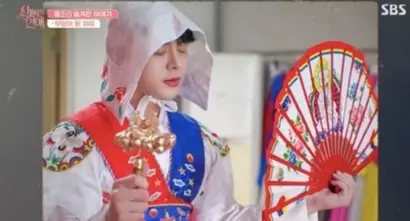
For instance, tarot master Choi Han-na and shaman Lee Hong-jo initially chose each other’s destiny cards and naturally flirted early on. However, once Lee Hong-jo’s occupation as a shaman was revealed and the romantic fortune readings from Lee’s “Obanggi” (divination flags) and Choi’s tarot cards came out negative, Choi’s anxiety escalated. Writing letters on talismans instead of stationery to ask for dates, visiting temples for date spots, or engaging in unique “divine” flirting like “Shall we go to my shrine?” are all hallmarks of the show.
At first, viewers were puzzled, thinking, “Is it really that deep?” as they watched the cast members sway and agonize over their own or others’ readings. Many must have been stunned by Choi Han-na’s despair over bad tarot cards or the sudden departure of the fortuneteller Lee Jae-won. Lee Jae-won, who was certain of his connection based on his own readings, became agitated after receiving zero votes on the third day and abruptly announced he was leaving. While editing likely played a role, it can be inferred that his distress wasn't just about romantic rejection, but also the fear that his personal readings might not align with reality. Even if viewers couldn't fully relate to their mindset, they likely began to grasp the intense agony these individuals feel in the gap between their “calling” and reality.

The fundamental question of whether we really need to watch diviners trying to find love is answered naturally throughout the show. It’s hard not to feel for them when hearing shaman Lee Hong-jo say, “It’s not exactly a job I can brag about,” or shaman Ham Su-hyeon share that she never even dreamed of dating after receiving the spirit. Watching the diviners move from limiting themselves due to their profession to eventually following their own hearts and forging their own paths—rather than just accepting fate—made me realize that ‘Divine Love’ helped shatter some of the world’s stereotypes and prejudices.
‘Divine Love,’ which ended in six episodes, saw the birth of two couples, and it is significant that neither couple ended up with the person they initially chose based on their destiny cards. The dramatic backstories of each participant—Ham Su-hyeon, who became a shaman after nearly 10 years as a bank clerk; Lee Jae-won, who became a fortuneteller after graduating from a prestigious university with a degree in mathematics; and Heo Gu-bong, who is familiar with temples from a young age due to his father being a former monk—added sincerity to the show and contributed to its popularity. With such high buzz, expectations for a second season are already rising.
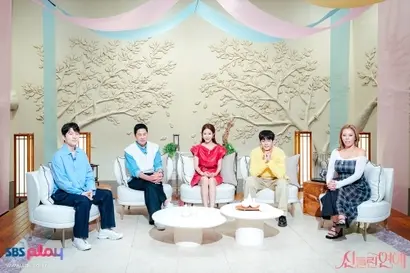
In South Korea, it is common for people to check for “auspicious days” when moving or to get their “Gung-hap” (compatibility) read for fun before dating or marriage. It’s estimated that the divination market, both in-person and online, ranges from hundreds of billions to several trillion won. For a public that knew they existed but hadn’t been truly curious about them, ‘Divine Love’ earned empathy by showing the human side of these diviners who dream of ordinary love and struggle with the tides of emotion. Aside from being in a divine profession, their struggles over whether to accept or defy their (seemingly predetermined) fate make them just like us.
‘Divine Love,’ which will be recorded as a work that made a mark on the dating program genre by achieving both exoticism and a sense of shared empathy, is available to watch on Wavve. Unlike other content dealing with the spirit world, such as the movie ‘Exhuma’ (Pamyo), where a shaman performs an exorcism in stylish sneakers, or the TVING documentary series ‘Shaman: Ghost World,’ this show is lighthearted and not scary. It also leaves one with higher expectations (?) for what areas future dating programs might explore.
About the writer, Jung Su-jin?
Having worked for several magazines, I have covered and written about film, travel, and pop culture. I don't want to fall behind the trends, but I’ve become an old soul who predicts only the most obvious clichés in the latest dramas. I am currently drifting through the vast world of OTT platforms, trying to regain my edge, and my current wish is for a unified OTT subscription plan.