

[비즈한국] Although measures to improve the hygiene management of unmanned stores, which have increased since the COVID-19 pandemic, are being prepared every year, voices are still being raised that they are insufficient. Bizhankook inspected the sanitary conditions of several unmanned stores firsthand over two days, on the 22nd and 23rd. As a result, not a single store was found to be in compliance with the Ministry of Food and Drug Safety's 'Hygiene Management Guidelines for Unmanned Food Sales Stores.' Furthermore, increasing instances of unscrupulous business practices have emerged as a new problem.
Zero out of 4 unmanned stores complied with hygiene guidelines
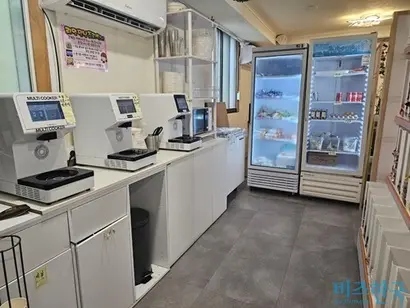
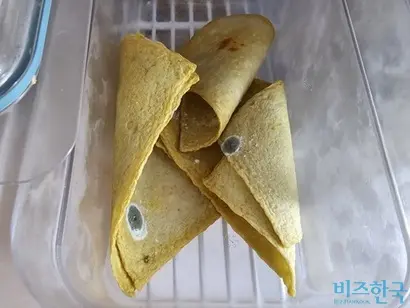
On the afternoon of the 22nd, at an unmanned store in Seoul. The areas around one beverage vending machine and three ramen cookers were swarming with fruit flies. Perhaps because fruit flies were a regular problem, insecticide was sitting on a shelf. To the right of the ramen cookers, used ramen containers and cups were piled up without a separate screen, emitting a foul odor. Inside the refrigerator, bean sprouts, fish cakes, and rice cake soup slices were displayed; the bean sprouts had turned black, and the fish cakes were moldy. Checking the expiration dates on the packages, they were 1 day and 9 days past due, respectively. Three unopened bags of fish cakes on the top shelf had also all expired.
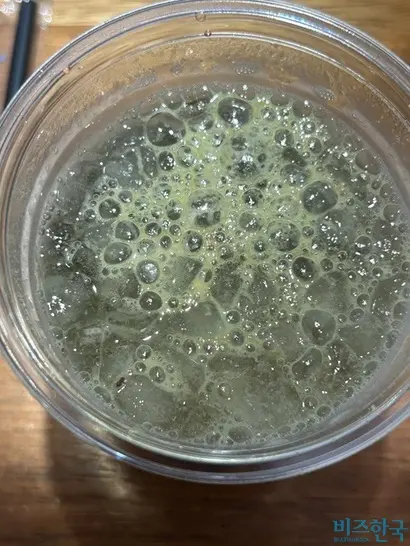
Another unmanned store in Seoul. The shelves under the beverage machine and the carpet were messy with drink stains, and several cobwebs hung from the corners of the ceiling. A bug zapper inside the store was left with insect carcasses still inside. When the ade I ordered came out and I went to put the lid on, I noticed two fruit flies floating in the drink. Since only 3 minutes had passed since the card payment, there was a high possibility that the flies had entered from inside the beverage machine. When asked about this, the manager explained, "Because of the midsummer weather, the fruit flies must have swarmed after the drink was dispensed," and the drink was refunded.
The four unmanned stores visited over the two days of the 22nd and 23rd did not comply with the 'Hygiene Management Guidelines for Unmanned Food Sales Stores' issued by the Ministry of Food and Drug Safety. In addition to the Food Sanitation Act, which requires food to be handled in a "clean and sanitary" manner, such as by observing expiration dates, the guidelines state that hygiene conditions and equipment malfunctions must be checked daily, recorded on a checklist, and kept on-site. Furthermore, the business registration number and serial management number must be displayed on the vending machines. However, not a single place followed these guidelines. There were also no stores that followed the 'recommendations,' such as providing hand sanitizer when using syrup or installing air curtains at the entrance to prevent pests.
Free-business category exempt from reporting; unscrupulous operations are active
Unmanned stores are usually managed once in the morning and once in the afternoon. It is said that many are operated by the owner directly on weekdays and by hiring part-time workers on weekends. There is bound to be a difference in cleanliness compared to regular stores where staff are stationed. Even if management is left to the individual conscience of the owner, the fact that even the basics, such as expiration dates or Ministry of Food and Drug Safety guidelines, are not being kept suggests how negligent they are about hygiene. Moreover, the period during which the reporter visited was right after the local government had finished its '3rd inspection of delivery-specialized restaurants and unmanned stores' for five days from the 15th to the 19th. This raises doubts about whether the local government inspections are being carried out properly.
Under current law, businesses that display processed foods for unmanned sale or where customers pour water themselves to cook ramen fall under the 'free-business category' and are not subject to business reporting. In fact, if you search for the names of unmanned ice cream shops or unmanned convenience stores on the Ministry of Food and Drug Safety's Food Safety Korea portal, most do not show up. The aforementioned unmanned ramen store also did not appear in searches. Since they do not report their business, it is difficult to even identify the stores, and it is a structure where it is difficult to take special measures unless a customer reports a problem or the local government confirms it through inspection.
Cases of unregistered and unreported businesses exploiting these loopholes are frequent. The aforementioned unmanned ramen store also operates beverage vending machines, so it should have reported its business as a 'food vending machine business,' but it was not registered. The Ministry of Food and Drug Safety classifies businesses as 'snack restaurants' if they involve activities such as serving, selling divided desserts, or cooking with employees and robots alongside vending machines; if these activities are absent, they are classified as 'food vending machine businesses.' In the case of the unmanned ramen store, they didn't have to report their main business, so they took advantage of this to operate the beverage machine without registration as well.
The forms of unscrupulous business are diverse. This store used a trick to avoid being regulated as a 'snack restaurant' by adding seasonings or toppings 'prepared by the owner at the workplace (already prepped).' They kept toppings like bean sprouts and fish cakes in the refrigerator without prepping them, but placed scissors nearby so customers could prep them themselves.
Starting this year, the Ministry of Food and Drug Safety has begun to strengthen hygiene and safety management for unmanned stores. They increased inspections from once a year to four times a year and prepared hygiene guidelines in May that specify guidance and inspection items for each type of establishment. They stated that they would inspect unmanned stores not subject to business reporting for sanitary handling, but no definitive solution has been put forward yet. Critics point out that measures are needed to prevent increasing unregistered and unreported cases and to encourage active monitoring by business owners.