

[비즈한국] Over the past three years, only 16% of medications that experienced supply interruptions or shortages have had their supply resumed. While the government has formed a public-private consultative body and is focusing on measures such as raising drug prices to address instability in the drug supply chain, critics point out that it is neglecting fundamental solutions, such as securing production facilities for raw materials and essential medications.
An Average of ‘181’ Medications Face Supply Interruptions or Shortages Each Year
The number of medications experiencing supply interruptions or shortages is not decreasing; rather, it is steadily increasing. As of the 19th, a year-by-year analysis of the "Status of Supply-Interrupted/Shortage Medications" published on the Ministry of Food and Drug Safety’s Integrated Drug Information System shows: 110 in 2019, 157 in 2020, 180 in 2021, 231 in 2022, 230 in 2023, and 161 in 2024. After a sharp increase in 2020 when the issue of supply instability first emerged, the numbers have not decreased.
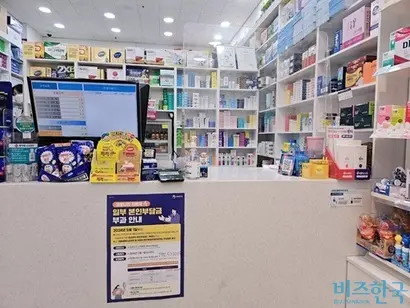
Frontline pharmacies are also feeling this impact. According to a survey conducted by the Korean Pharmaceutical Association last December among its member pharmacists nationwide, 37% of respondents stated that the number of drugs with unstable supply at their pharmacy was 11 or more. Those who answered 7–10 and 3–6 items each accounted for 30%. In total, 97% of respondents said they were experiencing supply instability for at least three or more items.
Respondents identified the following as medications requiring equal supply distribution: Sudafed (nasal treatment) at 31%, Emotin (rheumatoid arthritis/osteoarthritis treatment) at 21%, Dulcolax-E (constipation treatment) at 13%, Tulobuterol Patch 1mg (bronchial asthma treatment) at 8%, Acetaminophen 325mg (central analgesic) at 7%, and Bronase Enteric Tablets (anti-inflammatory enzyme) at 5%. In the case of Sudafed, it remained the top priority despite having recently undergone equal distribution.
The situation for essential medications is no different. Health authorities designate drugs that are essential for healthcare but are difficult to supply reliably through market mechanisms alone as "National Essential Medications" and are working to build a supply base for them. As of the 19th, 456 items are designated as National Essential Medications. However, according to the Korea National Institute for Rare & Essential Medicines, nearly half of these items are either unapproved or not distributed domestically. One-quarter of the medications reported as having supply interruptions last year fall under the category of National Essential Medications.
Public-Private Consultative Body Focuses on Price Hikes; Production Facilities Still Lacking
So, how much progress has been made in resuming the supply of these drugs? The Korea National Institute for Rare & Essential Medicines operates seven "On-site Supply Monitoring Centers," including the Korean Pharmaceutical Association, the Korean Society of Health-System Pharmacists, and the Korea Biotechnology Industry Organization, to announce resumed items monthly. A comparative analysis of the Ministry of Food and Drug Safety’s "Supply-Interrupted/Shortage Medications" list and the Institute’s "Resumed Supply Items" reveals that only 16% have resumed supply. Between 2022 and 2024, there were 622 medications with supply issues, of which only 101 items (16.23%) have had their supply resumed.
Following the so-called "Tylenol Crisis," the government formed a public-private consultative body last March to address the instability of the drug supply chain. Participants include the Ministry of Health and Welfare, the Ministry of Food and Drug Safety, the Health Insurance Review and Assessment Service, the Korean Medical Association, the Korean Pharmaceutical Association, the Korea Pharmaceutical and Bio-Pharma Manufacturers Association, and the Korea Pharmaceutical Distribution Association. The consultative body has been focusing its efforts on overcoming "low profitability" by discussing conditional drug price increases for production expansion. However, as the statistics show, the number of supply-interrupted/shortage drugs did not decrease even last year when the body was in operation. If the trend observed through July continues until December, this year’s numbers are likely to exceed those of last year.
In response, critics suggest that the government must prepare for fundamental supply stability by strengthening manufacturing capabilities, such as securing production facilities for raw material drugs and essential medications, beyond short-term fixes like price increases. In fact, according to the "Global Issue Panorama No. 8" published by the Korea Pharmaceutical and Bio-Pharma Manufacturers Association, an analysis of supply interruption reports monitored by the Korea National Institute for Rare & Essential Medicines last year cited the following reasons: domestic and foreign manufacturing issues at 105 cases (24.3%), increased demand at 92 cases (21.3%), profitability issues at 64 cases (14.8%), unstable raw material supply at 63 cases (14.6%), and administrative issues at 57 cases (13.2%). Excluding profitability and demand, "manufacturing issues" and "unstable raw material supply" account for nearly 30%.
Leading up to the last general election, both the ruling and opposition parties pledged to stabilize the supply of essential medications. The Democratic Party of Korea proposed supporting production facilities for essential/orphan drugs, expanding stockpiles, and resolving supply instability through the establishment of public pharmaceutical companies and drug distribution corporations. The People Power Party announced the amendment of the Pharmaceutical Affairs Act, including the establishment of a supply management committee, as well as support for the localization of essential vaccine raw materials and technology development for domestic drug self-sufficiency. Since the opening of the 22nd National Assembly, the only related bill introduced was the partial amendment to the Pharmaceutical Affairs Act, proposed by Representative Han Jeoung-ae of the Democratic Party of Korea on the 12th. The amendment includes provisions for establishing a supply management committee and issuing emergency production and import orders for medications facing supply instability.